Direct answer
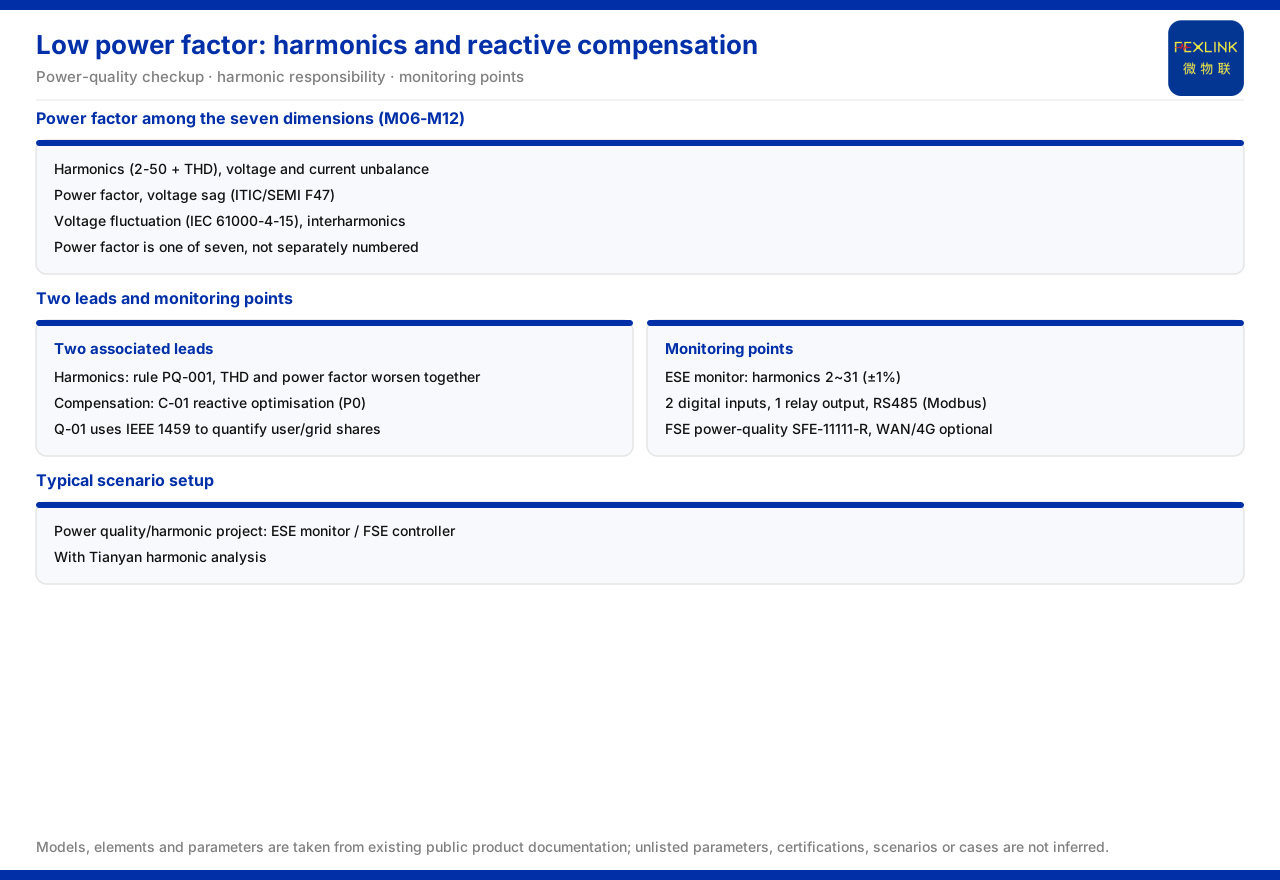
When the power factor is low, the product knowledge base gives clues along two paths: harmonics and reactive-power compensation. On the harmonic side, an association rule states that total harmonic distortion and power factor worsen together, pointing to harmonic interference with reactive power; on the compensation side, the energy-saving countermeasures block contains a reactive-power compensation optimization model. In addition, a harmonic responsibility allocation model quantifies the user-side and grid-side harmonic contributions, helping judge which side the problem is on.
One boundary comes first: in the power-quality checkup sub-model group, power factor is a listed dimension, but the material does not mark it as an independent model number. This article therefore describes power factor's place among the listed capabilities and its relationships, not a dedicated model. For harmonics, the knowledge base has separate equipment and algorithm landing points, also covered below.
1. Where power factor sits
The Qianzhi engine contains dedicated sub-models, one group being the power-quality checkup, which lists seven dimensions in order: harmonics (2nd to 50th plus total harmonic distortion), voltage imbalance, current imbalance (by sequence components), power factor, voltage sags (ITIC/SEMI F47), voltage fluctuations (IEC 61000-4-15) and interharmonics. Power factor is one of the seven, listed alongside the other six.
Crucially, the knowledge base does not mark power factor with an independent model number here. It is an analysis dimension, not a separately numbered model. This prevents reading a dimension as a standalone product capability, or inventing a number for it when citing.
2. Two paths of a low power factor
The clues group into two paths. The harmonic path: among the Wanxiang engine's cross-dimensional association rules, one describes total harmonic distortion and power factor worsening together, pointing to "harmonic interference with reactive power". It observes two quantities at once: when distortion rises and power factor falls, the problem points to the influence of harmonics on reactive power, not merely to insufficient compensation equipment. This rule series has 3 rules, of which this is one. The compensation path: the Tianyan engine's energy-saving countermeasures block includes a reactive-power compensation optimization model, the first model of that block; once the problem is confirmed reactive-related, it gives a direction for improvement. The two paths are not exclusive.
3. Harmonic responsibility allocation
When harmonic and power-factor problems coincide, it is necessary to judge whether harmonics come from the user side or the grid side. The Tianyan engine has a harmonic responsibility allocation model using IEEE 1459, quantifying the user-side and grid-side harmonic contributions, listed among the first models. The knowledge base also records a practical result: the cost of one rectification fell from RMB 80 ten-thousand yuan to RMB 28 ten-thousand yuan. This is a practical record and is only restated here. Its meaning is to show the role of allocation: first identify the contributing side, then decide responsibility and investment, avoiding blind equipment additions.
4. Power-quality monitor
The knowledge base lists the ESE power-quality monitor (ESE-22111-R). It shares the architecture of the three-phase imbalance monitor and adds harmonic monitoring to phase monitoring, covering the 2nd to 31st harmonics at ±1% accuracy; it provides 2 digital inputs and 1 relay output, with RS485 (Modbus) communication. For a low power factor, its value is providing phase and harmonic data together: a single power-factor value cannot identify the cause, which often requires the current–voltage phase relationship and harmonic distortion. Collecting both on one device supplies the input for analyzing the two paths.
5. Power-quality controller
The multi-parameter controller also offers a power-quality landing point. The controller splits into three tiers: the meter type has no phase or harmonic monitoring; the three-phase balance type adds phase monitoring; the power-quality type adds harmonic monitoring to phase monitoring. The phase and harmonics needed for power-factor analysis match the power-quality type. The knowledge base records that the FSE multi-parameter electrical intelligent controller (power-quality type) corresponds to flagship model SFE-11111-R, with WAN (Ethernet) or 4G networking. For projects already using the controller architecture, the power-quality type can add phase and harmonic monitoring to the same device without another class of equipment.
6. Typical scenario combination
The recommended combination for the "power quality/harmonic targeted governance" scenario is the power-quality monitor or the power-quality controller with the Tianyan engine harmonic analysis. This separates monitoring from analysis: the device side collects phase and harmonic data, the algorithm side handles harmonic analysis and responsibility allocation. Mapping this onto the two paths gives a handling framework: collect data with the monitor or controller, judge with the Wanxiang engine association rule whether distortion and power factor worsen together, judge the contributing side with the Tianyan engine harmonic responsibility allocation model, and give a direction with the reactive-power compensation optimization model.
7. Checklist
1. Power factor is one of the seven dimensions of the power-quality checkup group, not marked as an independent model number; 2. The harmonic path corresponds to one association rule (distortion and power factor worsening together, pointing to harmonic interference with reactive power); the series has 3 rules; 3. The compensation path corresponds to the reactive-power compensation optimization model, the first model of the energy-saving countermeasures block; 4. The harmonic responsibility allocation model uses IEEE 1459 and quantifies user-side and grid-side contributions; the material records a rectification cost falling from RMB 80 ten-thousand yuan to RMB 28 ten-thousand yuan; 5. Monitoring landing points: the power-quality monitor (harmonics 2nd to 31st, ±1%, 2 digital inputs, 1 relay output, RS485 Modbus) and the power-quality controller (SFE-11111-R, WAN or 4G); 6. The typical scenario combination is the monitor or controller with the Tianyan engine harmonic analysis.
The checklist produces no new parameter conclusions; it separates the place of power factor among the listed capabilities from the confirmable monitoring and analysis capabilities around harmonics.
Scope and limitations
First, this article restates only content listed in the product knowledge base, with its factual boundary limited to the seven dimensions of the power-quality checkup group, the Wanxiang engine association rules, the Tianyan engine energy-saving countermeasures and harmonic responsibility allocation, the parameters of the power-quality monitor and controller, and the typical scenario records.
Second, power factor's place in the checkup group is cited as listed; the material does not mark it as an independent model number, and this article neither supplies a number nor infers its definition, limits or calculation method.
Third, the association rule and the two models are cited as listed; the rectification cost figure is a practical record only restated here, not a commitment to results in other projects.
Fourth, the monitor and controller parameters are cited as listed; this article does not infer unlisted models.
Fifth, references to IEEE 1459, ITIC/SEMI F47 and IEC 61000-4-15 are limited to the knowledge base's listing, without elaborating on clauses, limits or scope.
Sixth, analysis and treatment must be determined with on-site load composition and the project scheme; this article gives no calculation result or scheme for specific engineering.