Why Does the ESF Carry Four Temperature Channels?
Direct answer: the electrical fire monitoring and control device carries four temperature channels so that one device can connect four temperature measurement points at once, covering several heat-generating locations within the same monitored object instead of watching a single point. This is visible directly from the model parameters: the electrical fire monitoring and control device (ESF series), for example ESF-22110-R and ESF-12110-R, both configure four temperature channels together with one residual-current channel. The four temperature channels are not an isolated add-on but part of the same device's sensing capability alongside residual-current monitoring. It should be noted that the documentation lists channel counts and temperature parameters but does not prescribe where the four channels should be placed; the specific points are a site design matter, not fixed content of the model.
Reading the Four Temperature Channels From the Model Parameters
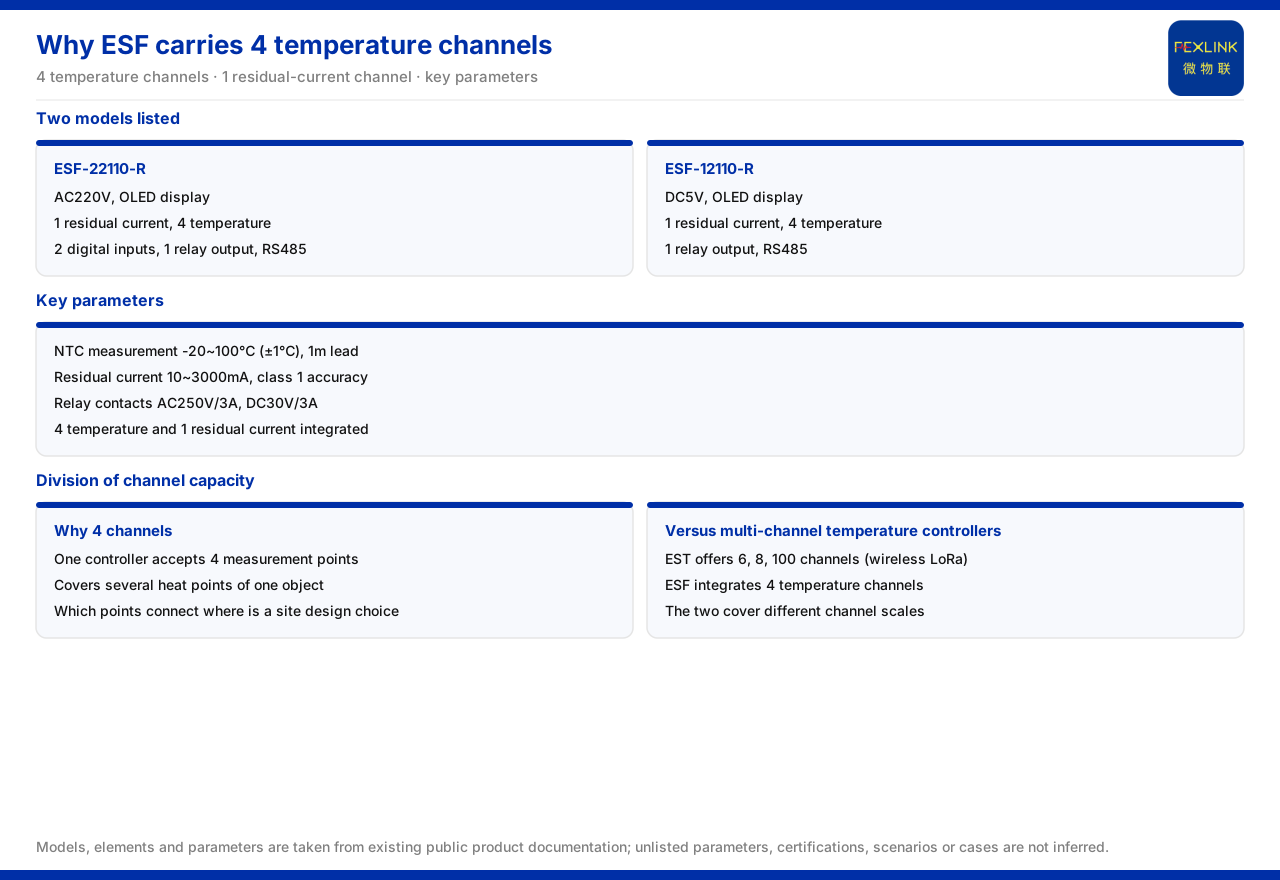
The documented ESF model table lists two models: the electrical fire monitoring and control device (ESF series), for example ESF-22110-R with AC220V supply, OLED display, one residual-current channel, four temperature channels, two digital inputs, one relay output, and RS485; and ESF-12110-R with DC5V supply, OLED display, one residual-current channel, four temperature channels, one relay output, and RS485.
Comparing the two shows they are identical in temperature channel count, both four; the differences are mainly in supply and part of the input/output configuration. This shows that the four temperature channels are a common feature of this series, not an incidental configuration of one model. For selection, the temperature channel count is a definite constraint: how many measurement points one device can connect is fixed by four.
The Temperature Capability Behind Four Channels
Beyond the channel count, the measurement parameters also matter. The documentation specifies NTC temperature measurement with a range of -20~100℃, accuracy of ±1℃, and an external lead length of 1m.
Combining these parameters with the four channels gives the temperature monitoring profile of one device: it can acquire up to four measurement points over -20~100℃ at ±1℃ accuracy; each point's 1m external lead determines how far the sensor can extend from the device. Again, the documentation gives measurement range, accuracy, and lead length as definite parameters and does not state where the four channels should be placed inside a cabinet. During selection and use, "confirmable parameters" and "placement needing design" should be kept apart.
Why Four Channels Rather Than One
From the goal of electrical fire monitoring, the reason temperature is taken to four channels is that heat-generating locations are usually more than one. In a distribution circuit, the parts that may overheat are often distributed across several joints — for example, conductor connections and the contact parts of switches or protective devices. With only one measurement point, uncovered parts may have their temperature rise discovered late or not at all.
Four channels provide multi-point coverage: under the same device, several locations can be measured at once, extending point monitoring to multi-point monitoring. This is especially meaningful where coverage must be raised within a limited number of devices. Conversely, four channels should not be read as "the more the better" — the channel count should match the number of locations needing monitoring; too few points leave blind spots, and idle channels add cost. Four is a configuration that balances coverage against device count.
Division of Labour With the Multi-Channel Temperature Controller
Broadening from a single device to the whole monitoring scheme reveals different channel scales for temperature monitoring. The documented multi-channel temperature intelligent controller (EST series) offers temperature channel counts of 6, 8, and even 100 (wireless LoRa), while the ESF integrates four temperature channels.
This forms a division of labour: when the monitoring scale is large and many temperature channels must be centrally connected, the multi-channel temperature intelligent controller can carry it; when residual-current monitoring plus a moderate amount of temperature monitoring is needed on the electrical fire controller, the ESF's four channels suffice. The two are not substitutes but layered configurations by channel scale and monitored object. Understanding this division helps avoid the mismatch of "many temperature points propped up by a few four-channel devices" or "a large-scale temperature controller for only a few points."
Why Residual Current and Temperature Share One Device
Besides four temperature channels, the ESF has one residual-current channel, with key parameters of a residual-current measurement range of 10~3000mA and accuracy class 1. Putting residual current and temperature on the same device matches the usual electrical fire monitoring idea of watching both "current anomaly" and "temperature anomaly": residual current reflects an abnormal trend at the insulation or leakage level, and temperature reflects one at the joint heating level; the two complement each other.
From a scheme perspective, this integration reduces device count and wiring complexity: if a point needs both residual-current and temperature monitoring, one ESF covers it, without a separate device for each measurement type. This is the practical value of placing four temperature channels and one residual-current channel in the same model.
Output and Interlock Capability
Beyond the sensing capability on the input side, the ESF also has output and status input interfaces. Taking ESF-22110-R as an example, it has two digital inputs and one relay output; the relay contact capacity is AC250V/3A and DC30V/3A. These interfaces give the controller the ability to interact with external signals and execute output actions beyond acquisition.
From the chain of monitoring to interlock: once a temperature or residual-current anomaly is acquired, it can participate in alarm or control logic through the relay output and be uploaded via RS485. The four temperature channels do not stop at "reading a value"; they sit within the complete loop of acquisition, judgment, output, and upload. Where local interlock and remote upload coexist, these input/output interfaces are as important as the temperature channels.
Configuration in Typical Applications
Among the documented typical application scenarios, the recommended combination for "low-voltage distribution cabinet electrical fire early warning" includes the electrical fire monitoring and control device (ESF series, such as ESF-22110), a multi-channel leakage controller, a temperature controller, and an IoT access device. This combination shows that the ESF carrying four temperature channels is part of an overall early-warning scheme, working with leakage monitoring and centralized temperature monitoring modules.
In this configuration, the ESF handles residual-current and four-channel temperature monitoring within its coverage, the multi-channel leakage controller handles multi-channel leakage monitoring, the temperature controller handles larger-scale temperature channels, and the access device aggregates and uploads. Each module does its own job, with channel scale matching monitored object.
Boundaries to State
What the documentation confirms is: the ESF integrates four temperature channels and one residual-current channel; temperature uses NTC with a range of -20~100℃, accuracy ±1℃, and an external lead length of 1m; residual current is 10~3000mA with accuracy class 1; some models have digital inputs and relay outputs with a relay contact capacity of AC250V/3A and DC30V/3A. What it does not prescribe is where these four temperature channels should be installed, nor a placement list preset by scenario.
So "why carry four temperature channels" can be given a definite explanation — it provides multi-point temperature coverage within the same device and integrates with residual-current monitoring; while "where to place the four channels" must be determined on site by joint locations and heating risk. Explaining the meaning of the channel count without prescribing placement for the site is the most accurate use of this documentation.
Summary
The core value of the ESF's four temperature channels is integrating multi-point temperature monitoring into one electrical fire controller: at -20~100℃ and ±1℃, it watches four points at once and works with one residual-current channel, then completes interlock and upload through the relay output and RS485. Where a larger temperature channel scale is needed, the multi-channel temperature intelligent controller can carry it; where residual current plus moderate temperature monitoring is needed, the ESF's four channels suffice. The channel count means coverage; specific placement is a site design — the two must not be confused.