Direct answer
If a power-using device can be heard out, energy analysis need not install a separate collection device for every piece of equipment. Non-intrusive load monitoring (NILM) is exactly this idea: from the current waveform of the main circuit, identify which device is operating and how much power it consumes. Based on the wording listed in the product documentation, this article explains the NILM evolution direction of the Wanxiang engine toward V5.0, the signature identification model of the Tianyan engine, its position in the selection correspondence, and its placement in the family data chain; it infers no recognition accuracy for any specific site.
1. From V4.0 to V5.0: one line of evolution
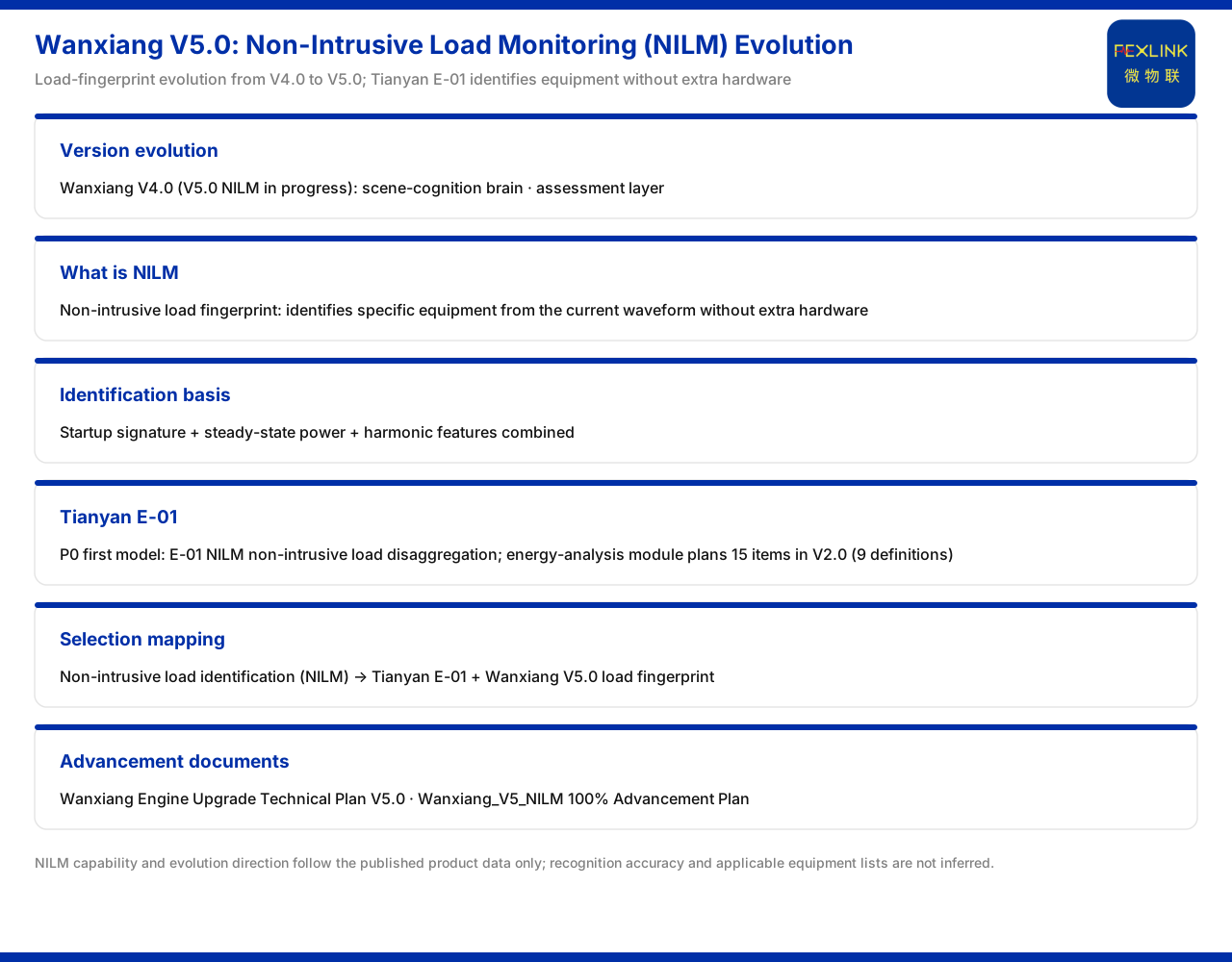
The product documentation states that the evolution direction of the Wanxiang engine is an upgrade to V5.0, with non-intrusive load monitoring (NILM) at its core; the family overview marks its version as V4.0 (V5.0 NILM evolving) and its positioning remains the situation-awareness brain, judgement layer. This wording gives both the current state and the direction.
V4.0 is the currently effective version, and V5.0 NILM evolving shows that the evolution is not yet complete. Viewing the version with the positioning makes clear the nature of this line: Wanxiang's spatial and causal judgement capability is unchanged, and what is added is the capability to identify loads. The product documentation also states that this evolution involves two documents, the Wanxiang Engine Upgrade Technical Solution V5.0 and the Wanxiang_V5_NILM 100% Advancement Plan. The existence of the documents shows that the evolution has a clear technical plan and advancement arrangement. The product documentation gives only the direction and the document names, and this article does not expand the plan content.
2. What non-intrusive load monitoring (NILM) is
Non-intrusive means there is no need to install a collector separately on every device; load monitoring means each type of device has its characteristics in the current waveform. Together, NILM means inferring the device composition from the main-port waveform.
The value of this capability is a light footprint. Traditional sub-metering requires sensors on every branch, with many points and high cost; NILM gathers the collection point to the main circuit port and replaces distributed hardware with an algorithm. The product documentation lists it as the core direction of Wanxiang V5.0, showing that it is regarded as a key step for the judgement layer to extend to the energy-usage side. This article explains only the method idea and does not infer the device types it suits or its identification boundary.
3. Tianyan E-01: identification without extra hardware
The product documentation states that the signature model of the Tianyan engine is non-intrusive load identification (E-01), whose feature is that no extra hardware is needed and that the specific device is identified directly through the current waveform. The Tianyan engine handles prediction, and E-01 puts identification capability into energy analysis.
No extra hardware is the essence of this model: identification relies on existing collected data rather than new sensors. This turns the non-intrusive nature of NILM from a concept into an implementable condition. The model belongs to the Tianyan engine, showing that it shares the same data foundation with other prediction-type models; at the same time, it echoes the Wanxiang V5.0 load-monitoring direction, forming a recognition-and-judgement pairing. The product documentation gives the model name and features, and this article does not infer its identification scope or misjudgement situation.
4. Identification basis: start-up feature, steady-state power, harmonics
The product documentation states that Tianyan E-01 identifies devices through a combination of start-up features, steady-state power, and harmonic features. The three classes of feature each have their meaning.
The start-up feature is the waveform change at the instant a device powers up, which differs among devices; steady-state power is the power level when a device runs steadily, used to distinguish devices with similar consumption but different nature; and the harmonic feature is the harmonic content in the current, reflecting the electrical characteristics of the device. Looking at one class of feature alone easily causes confusion, and only the combination of the three raises discrimination. This explains why NILM is a fingerprint rather than a reading: it compares the combination of waveform forms. The product documentation gives the feature classes, and this article does not expand the specific algorithms and decision thresholds.
5. Position in the selection correspondence
The product-selection and AI-capability correspondence in the product documentation maps non-intrusive load identification (NILM) to Tianyan E-01 plus the Wanxiang V5.0 load monitoring. This correspondence links the capability requirement to specific models.
The reading of the correspondence table is this: if the requirement is non-intrusive load identification, the corresponding capability combination is the identification model of Tianyan and the load-monitoring direction of Wanxiang. One leans toward identification and the other toward judgement, precisely covering the two segments of identifying what it is and judging accordingly. The product documentation gives the correspondence, and this article does not infer the corresponding combination of other capability items.
6. The planning scale of the energy-usage analysis section
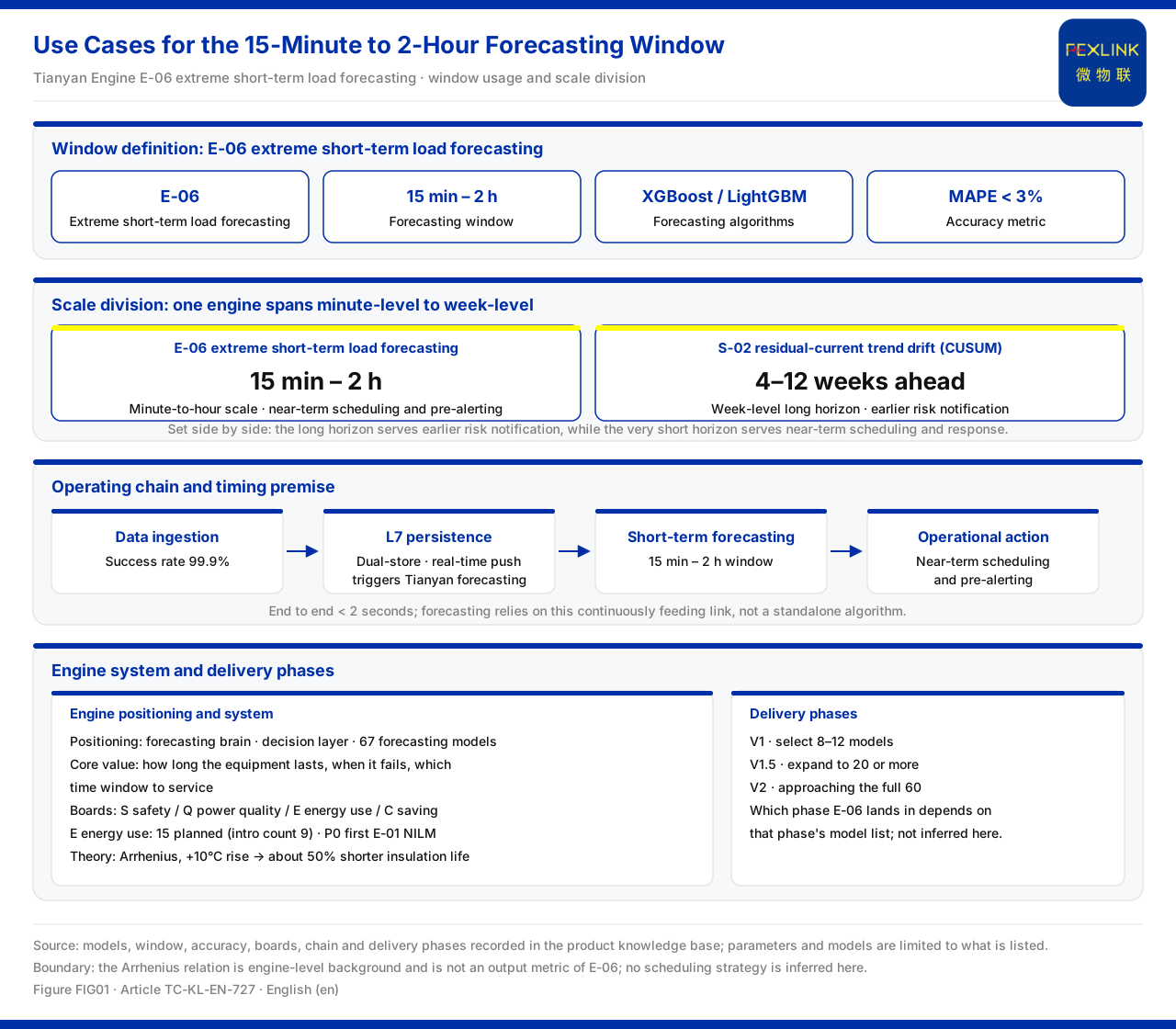
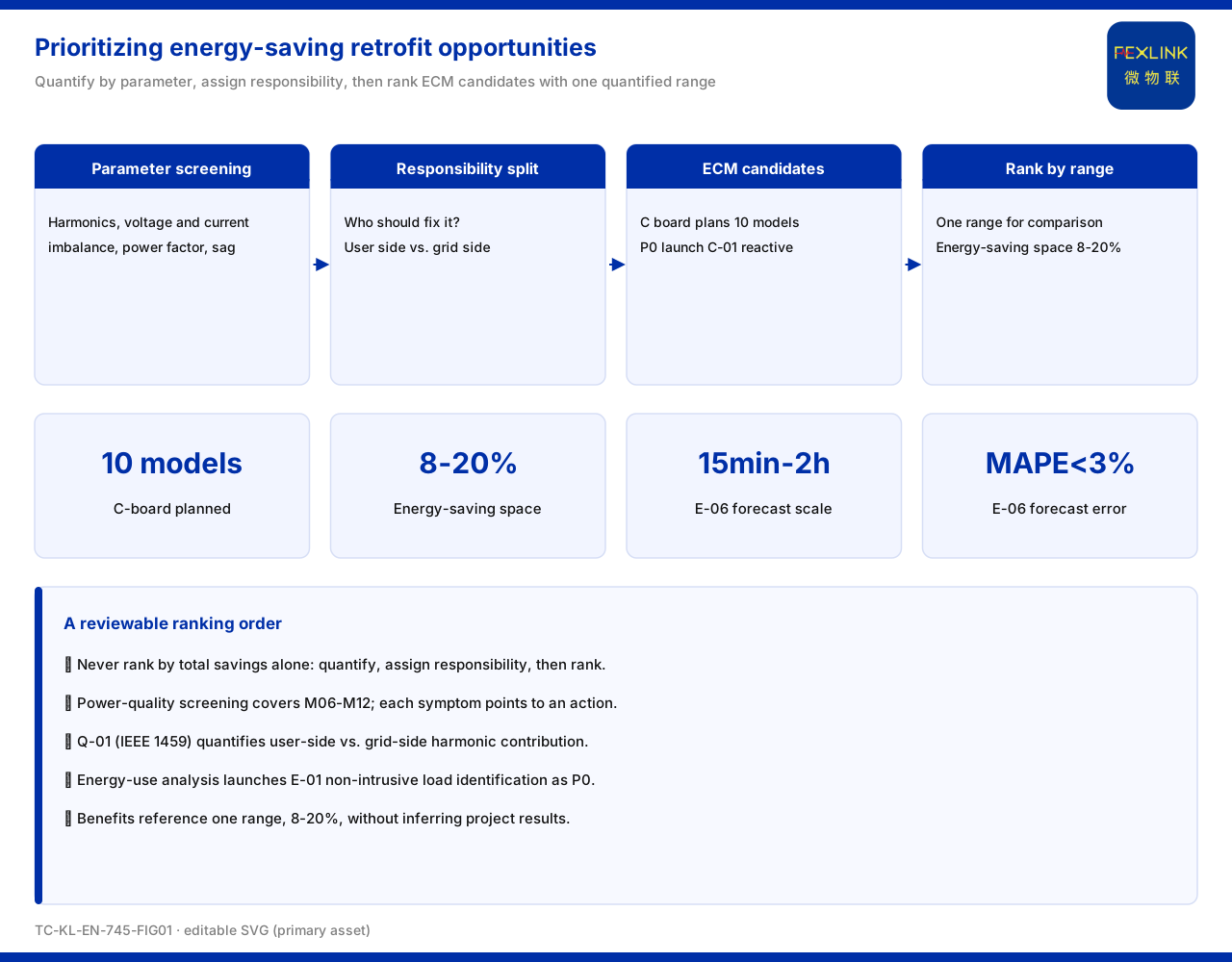
The product documentation states that the energy-usage analysis section of the Tianyan engine plans 15 items in V2.0, of which nine are disclosed, and the first-batch P0 model includes non-intrusive load disaggregation (E-01). This section manages energy-related capabilities centrally.
Planning 15 items shows the full envisaged scale of the section; the nine disclosed are the items within it that can be explained externally; and the first-batch P0 is a batch landed first. E-01 appears both in the first-batch models and in the signature models above, showing that it is both a representative of the section and an object of priority implementation. The product documentation gives the section scale and the first-batch model, and this article does not infer the functions and schedules of the remaining models.
7. Position in the family architecture chain
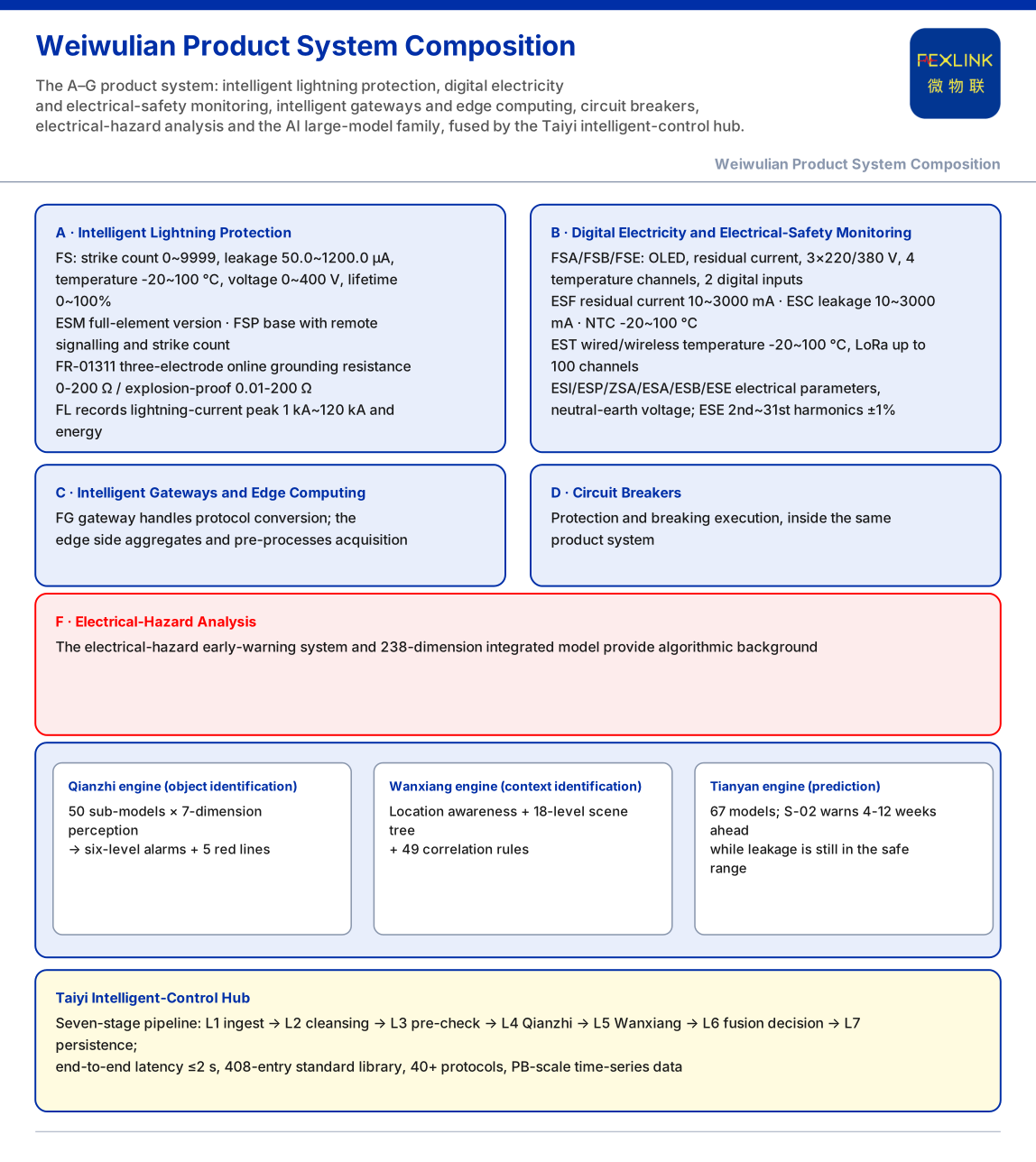
The product documentation states that the data chain of the family architecture is: sensor data, the Taiyi back end (access for more than 40 kinds of protocols, four-level cleaning), the front-end layer (safety red-line pre-check), Qianzhi (recognising things), Wanxiang (situation awareness), Tianyan (prediction), the standards engine (408 national standards), and the decision interface.
Placing NILM in this chain makes its position clear: data is accessed and cleaned through the Taiyi back end, passes the front-end layer pre-check, enters Qianzhi for recognising things, then Wanxiang for situation awareness, and subsequently Tianyan for prediction. E-01 sits in the Tianyan segment, and the Wanxiang V5.0 load monitoring sits in the Wanxiang segment, and the two are adjacent along the chain. Understanding the chain order explains why NILM needs the cooperation of several layers rather than being an isolated model. The product documentation gives the chain composition, and this article does not infer the data formats and calling methods between the layers.
Scope and limitations
First, this article restates only the wording listed in the product documentation, and its factual boundary is limited to: the evolution direction of the Wanxiang engine toward V5.0, with non-intrusive load monitoring (NILM) at its core, involving the two documents Wanxiang Engine Upgrade Technical Solution V5.0 and Wanxiang_V5_NILM 100% Advancement Plan; the family overview marking its version as V4.0 (V5.0 NILM evolving) and its positioning as the situation-awareness brain, judgement layer; the signature model of the Tianyan engine, non-intrusive load identification (E-01), requiring no extra hardware and identifying devices through a combination of start-up features, steady-state power, and harmonic features; the selection correspondence mapping non-intrusive load identification (NILM) to Tianyan E-01 plus the Wanxiang V5.0 load monitoring; the Tianyan energy-usage analysis section planning 15 items in V2.0 (nine disclosed), with the first-batch P0 including non-intrusive load disaggregation (E-01); and the family data chain of sensor data, the Taiyi back end (access for more than 40 kinds of protocols, four-level cleaning), the front-end layer (safety red-line pre-check), Qianzhi (recognising things), Wanxiang (situation awareness), Tianyan (prediction), the standards engine (408 national standards), and the decision interface.
Second, this article does not infer the recognition accuracy, applicable device list, or misjudgement probability of NILM, nor the load composition or energy conclusion of any specific site.
Third, the model names, section scale, and chain composition are product-documentation wording, and field identification effect is affected by data quality and device characteristics.
Fourth, specific selection and configuration should follow the latest product documentation, the relevant standards, and the project scheme.