Direct answer
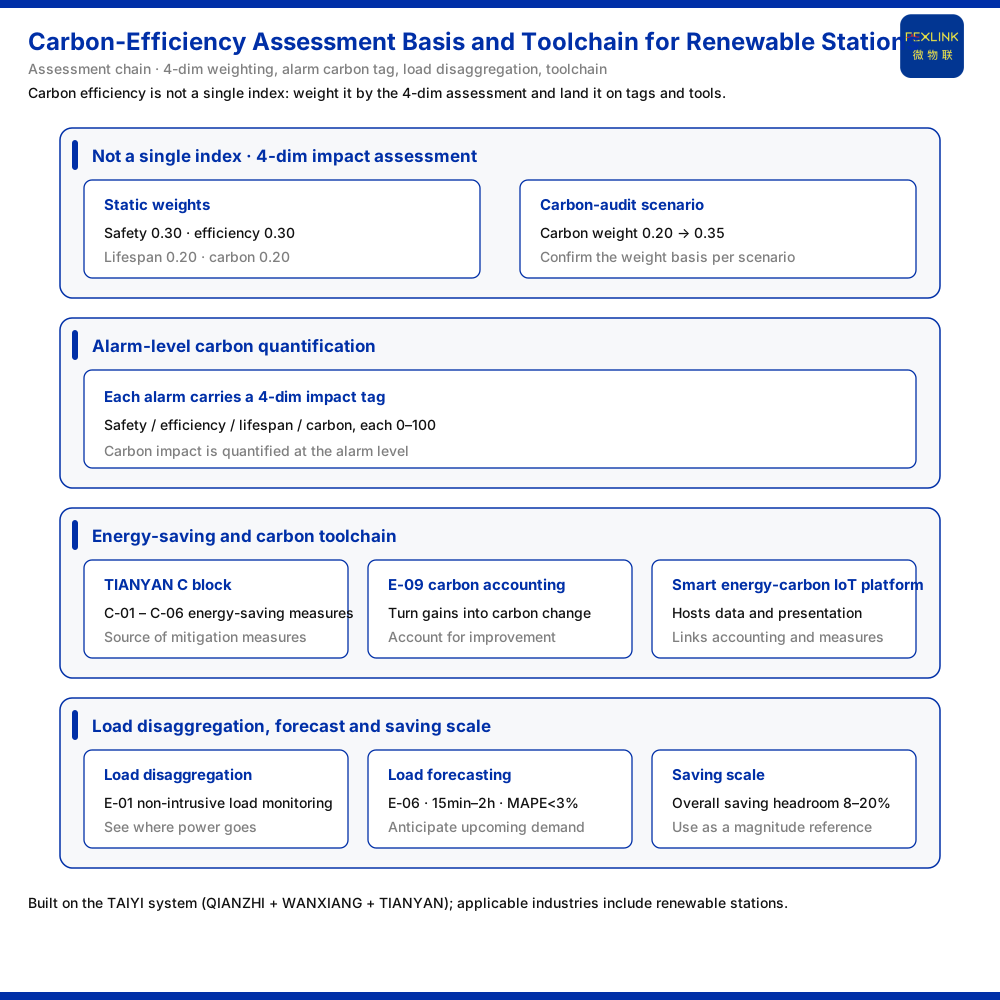
How carbon efficiency at a new-energy site is assessed is not given as a single indicator in the product knowledge base; instead it is placed inside the four-dimension impact assessment framework. The four dimensions are safety, efficiency, life and carbon, with static weights of safety 0.30, efficiency 0.30, life 0.20 and carbon 0.20; in a carbon-assessment scenario the carbon weight rises to 0.35. Carbon efficiency is therefore not an isolated score but a result weighted by scenario. Beyond the weights, the product knowledge base provides two landing points: each alarm carries a 0 to 100 four-dimension impact label that includes a carbon item; and a tool chain for energy saving and carbon management, namely the C energy-saving measures block of the Tianyan engine, E-09 carbon accounting, and the smart energy-carbon IoT platform. The Taiyi intelligent control hub system explicitly lists new-energy sites among its applicable industries. This article sets out the assessment definition and tool chain for site carbon efficiency and marks the material boundary.
1. Carbon efficiency is not a single indicator: four-dimension impact assessment
The four-dimension impact assessment of the product knowledge base divides impact into safety, efficiency, life and carbon. The static weights are safety 0.30, efficiency 0.30, life 0.20 and carbon 0.20. It also gives scenario dynamic weights: in a carbon-assessment scenario the carbon weight rises to 0.35.
For site carbon efficiency, the significance of these weights is to avoid treating carbon efficiency as the sole objective. A new-energy site must balance safety and efficiency at the same time; focusing only on carbon can sacrifice the other dimensions. Only with four-dimension weighting does carbon efficiency gain a reasonable position and become discussable together with safety, efficiency and life.
Note also the difference between static and dynamic weights. Static weights are the default definition, while dynamic weights adjust by scenario. The carbon-assessment scenario raises the carbon weight from 0.20 to 0.35, which shows the weight of carbon efficiency differs for the same site under different management objectives. Confirming which set of weights is currently in use before assessment prevents a mismatch of conclusions.
2. Carbon quantification at the alarm level
Carbon efficiency assessment needs a data landing point. The product knowledge base states that each alarm in the 6-level alarm system of the Qianzhi engine carries a four-dimension impact label, giving safety, efficiency, life and carbon a score of 0 to 100 each. This means carbon impact can be quantified at the alarm level.
Making carbon into a 0 to 100 label has the benefit that it can be compared side by side with the other three dimensions and re-weighted by scenario. Once a carbon-related anomaly appears at a site, the carbon score is given along with the alarm, without a separate accounting exercise afterwards. This turns carbon efficiency from a periodic report into an observation item that updates with operating state.
3. The tool chain for site carbon efficiency
What is actually used for assessment? In the product selection and capability comparison, the product knowledge base maps energy saving and carbon management to the C energy-saving measures block of the Tianyan engine (C-01 to C-06), E-09 carbon accounting, and the smart energy-carbon IoT platform. These three form a tool chain: the C block gives measures, E-09 does accounting, and the platform carries data and presentation.
This tool chain shows carbon efficiency assessment is not completed by a single tool. Accounting needs data, measures need a basis, and the platform links them. Site carbon efficiency is therefore systematic work rather than a one-off measurement. Understanding the division of each link also shows that when accounting results are missing, the data source connection should be checked first.
4. Applicable industries and system support
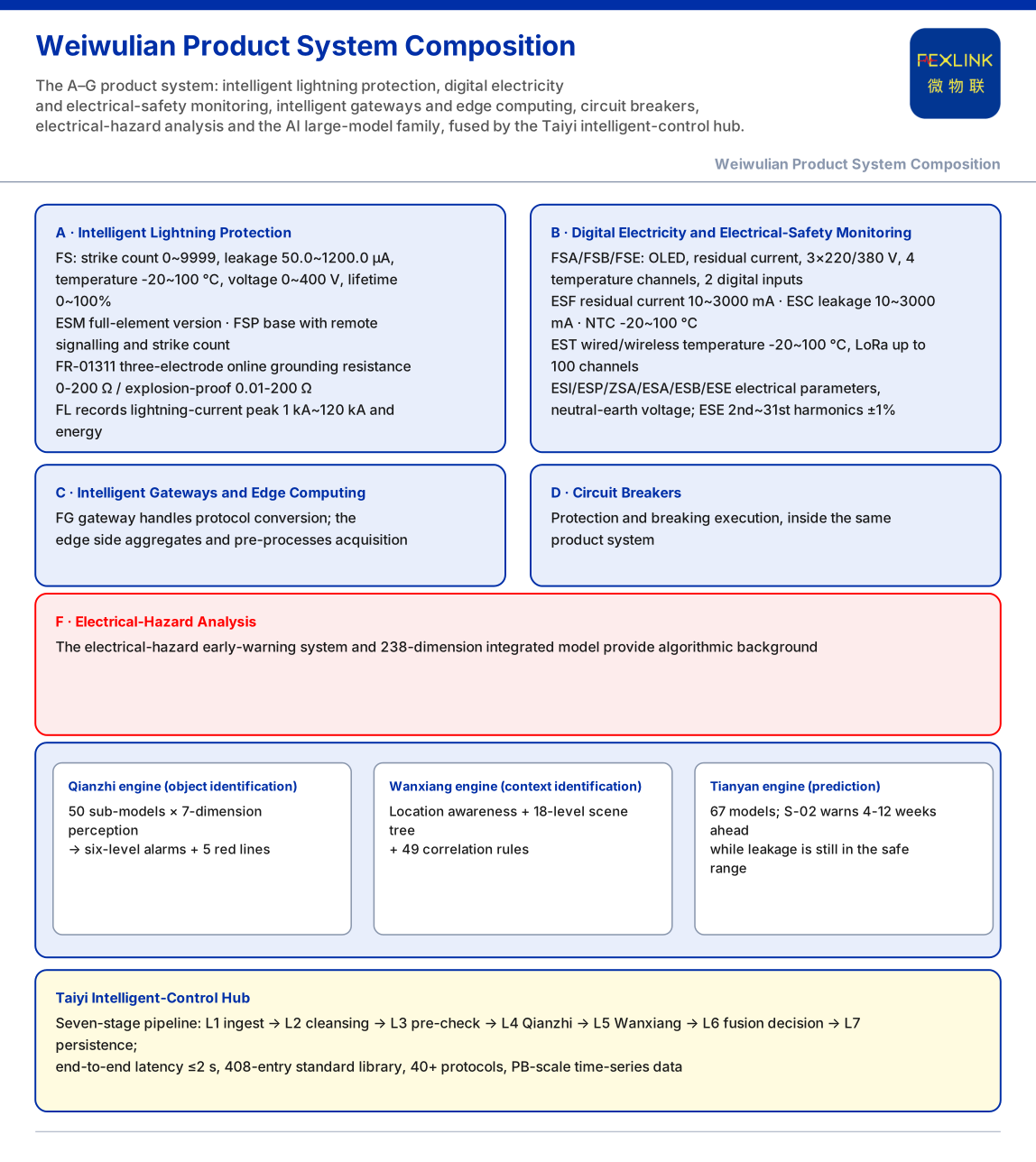
The product knowledge base explicitly lists new-energy sites among the applicable industries of the Taiyi intelligent control hub system and states that site carbon efficiency assessment relies on the Taiyi system. Taiyi consists of three engines, Qianzhi, Wanxiang and Tianyan, responsible for perception, judgement and prediction respectively.
For a site, this means carbon efficiency assessment is not an add-on independent module but builds on an existing engine system. The perception layer provides parameters, the judgement layer gives correlations, and the prediction layer gives trends and measures. Carbon efficiency therefore shares the same data foundation with the site's other monitoring, without a separate acquisition and analysis chain.
This also explains a common question: why site carbon efficiency is not made into a separate platform. Because the electricity, operating-condition and equipment data carbon efficiency needs already fall within the coverage of the three engines; folding it into the existing system avoids both duplicate acquisition and maintaining two definitions.
5. Energy-use decomposition and forecasting
To account for carbon efficiency clearly, energy use must first be seen clearly. The E energy-use analysis block of the Tianyan engine plans 15 items in V2.0, against 9 in the document definition, and its P0 first models include E-01 non-intrusive load monitoring. It can decompose the total load into itemised energy use without adding a large number of sensors.
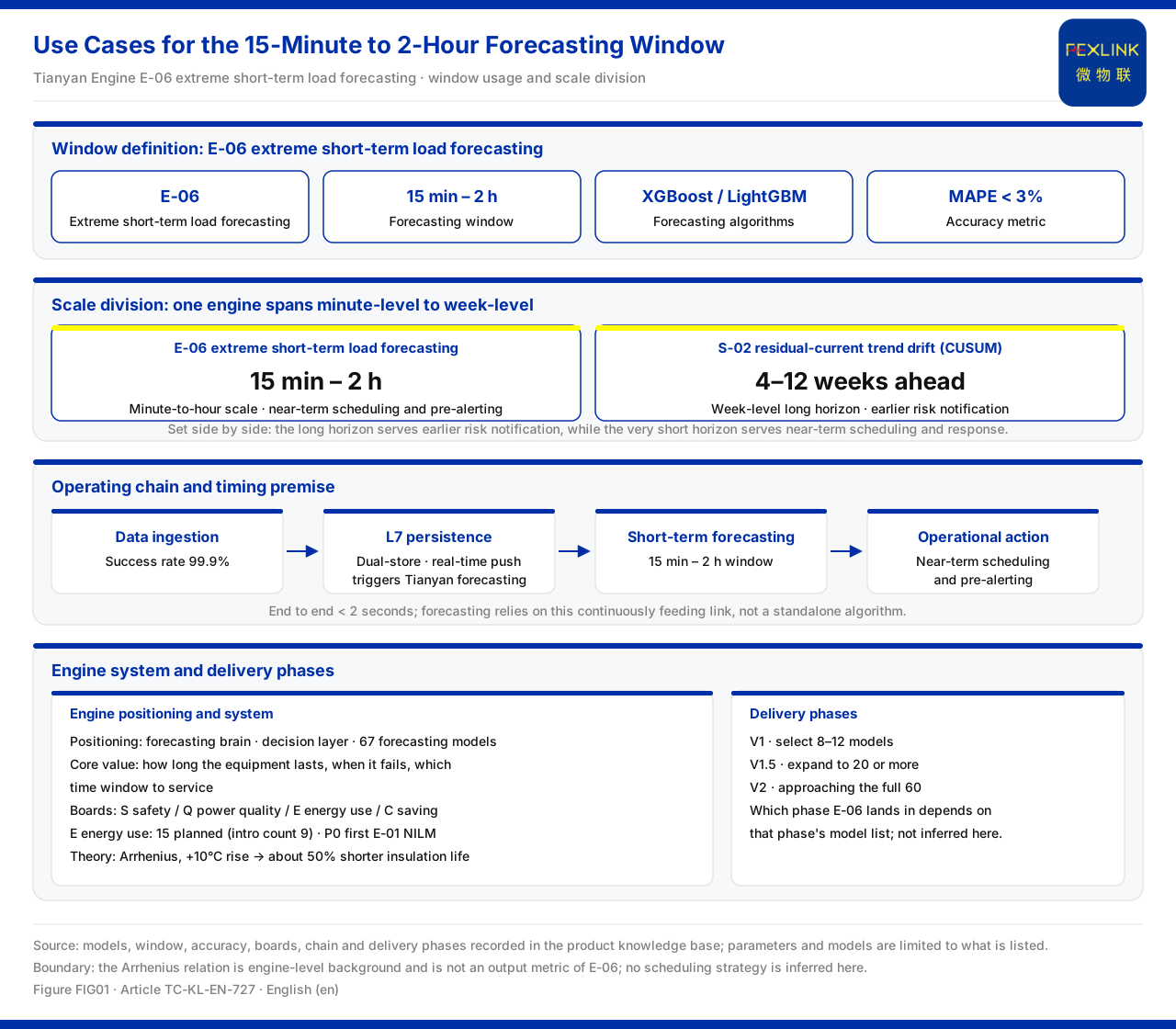
On forecasting, E-06 ultra-short-term load forecasting uses XGBoost and LightGBM, with a time scale of 15 minutes to 2 hours and a mean absolute percentage error below 3%. For a site, energy-use decomposition answers where electricity is used, and load forecasting answers how much will be used next; together they support the quantification and foresight of carbon efficiency. Combining itemised energy use with forecast results lets carbon efficiency assessment look at both the past and the future.
6. Sources of energy-saving measures
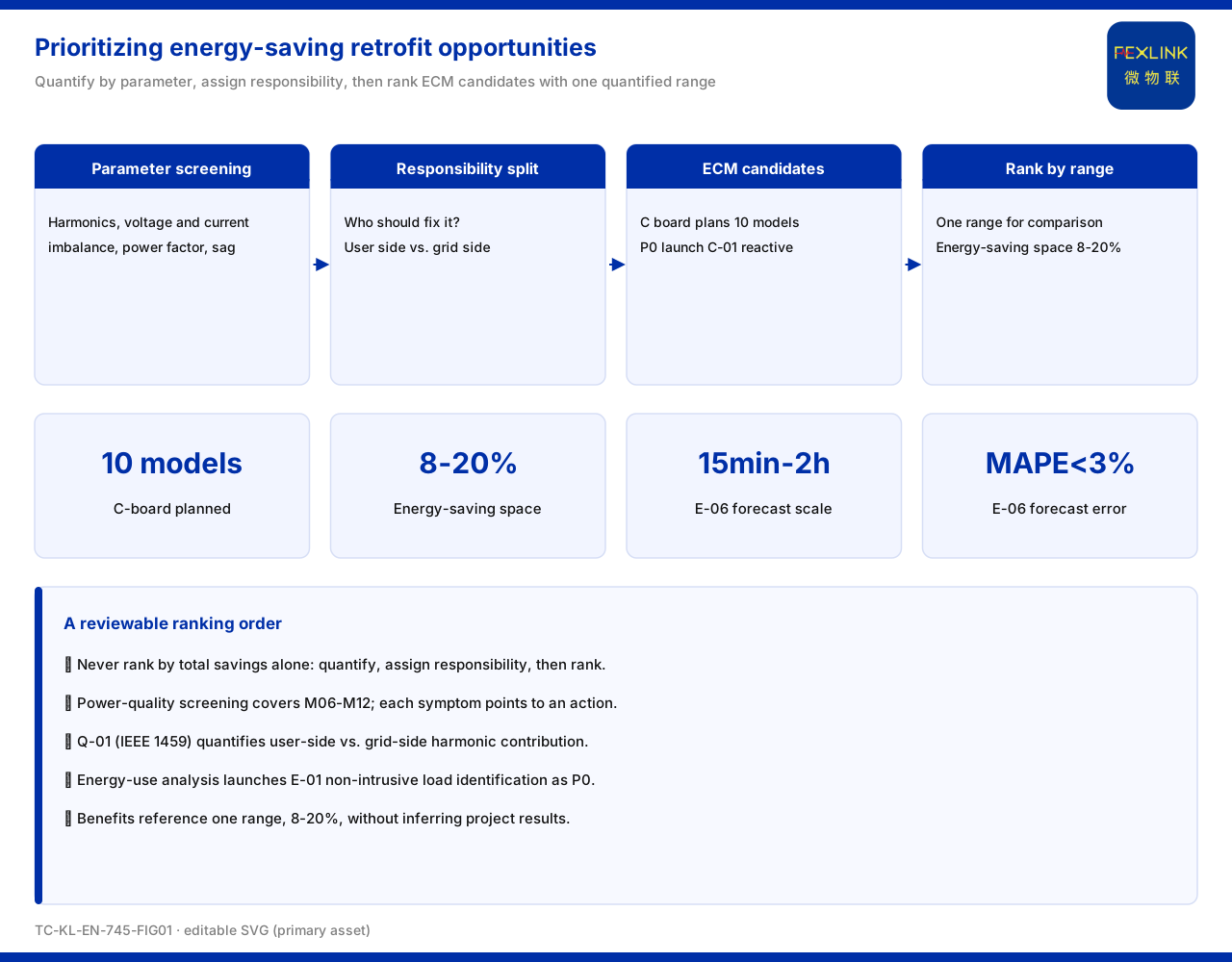
With an energy-use profile in hand, measures are still needed. The C energy-saving measures block of the Tianyan engine plans 10 items in V2.0, against 6 in the document definition, with C-01 reactive power compensation optimisation as the P0 first model. It serves as one source of measures for improving site carbon efficiency.
Read together, the E and C blocks reveal a path from diagnosis to improvement: the E block explains energy use and trends, the C block gives energy-saving measures, and E-09 carbon accounting converts the improvement into a carbon change. The assessment and improvement of site carbon efficiency is therefore continuous, rather than assessment on one side and improvement on the other.
7. The energy-saving magnitude definition: 8-20%
Finally, the magnitude. The product knowledge base gives an overall energy-saving space of 8-20% in the quantitative value metrics of the Taiyi intelligent control hub system. Together with the C block of the Tianyan engine and E-09 carbon accounting, it supports the assessment of site carbon efficiency and energy saving.
It should be emphasised that 8-20% is a range definition, not a promise to a specific site. Where a project falls within the range depends on load composition, equipment condition and measure scope. It should be used as a magnitude reference rather than copied directly.
Scope and limitations
First, this article restates only what the product knowledge base lists; the factual boundary is limited to the records of the four-dimension impact assessment, the Taiyi quantitative value metrics, the Tianyan engine and the product selection comparison.
Second, the four dimensions of the four-dimension impact assessment, the static weights, and the carbon weight of 0.35 in the carbon-assessment scenario are cited as listed in the product knowledge base; this article does not infer weight values for other scenarios.
Third, the four-dimension impact labels carried by alarms and the 0 to 100 carbon interval are cited as listed in the product knowledge base; this article does not give the carbon score of a specific alarm.
Fourth, the C block, E-09 carbon accounting and the smart energy-carbon IoT platform corresponding to energy saving and carbon management are cited as listed in the product knowledge base; this article does not infer unlisted tools or modules.
Fifth, the 15 planned items of the Tianyan E block and the 15 minutes to 2 hours and mean absolute percentage error below 3% of E-06, as well as the 10 planned items of the C block and C-01, are cited as listed in the product knowledge base; this article does not present planned items as delivered ones.
Sixth, the overall energy-saving space of 8-20% is cited as listed in the product knowledge base; this article does not rewrite it as a fixed value, nor does it promise the energy saving of an individual site.