Direct answer
For non-intrusive load identification to be implemented, the premise is "being able to see the current waveform". The product knowledge base records that the Tianyan engine E-01 uses non-intrusive load disaggregation: no additional hardware is needed, a specific device is identified through the current waveform, and the judgement combines start-up features, steady-state power and harmonic features. The implementation conditions therefore fall into three layers: the perception layer must have waveform and microamp-level current acquisition capability, such as the 1-microsecond abnormal-current capture of the board-mounted special-shaped Rogowski coil; the data front-end must complete multi-protocol access and four-stage cleaning; and the algorithm side must have an energy-use disaggregation model and load fingerprints. The product knowledge base records the selection combination for non-intrusive load identification as the Tianyan E-01 together with the Wanxiang engine V5.0 load fingerprint. The following expands item by item.
The nature of non-intrusive load identification: waveform recognition without additional hardware
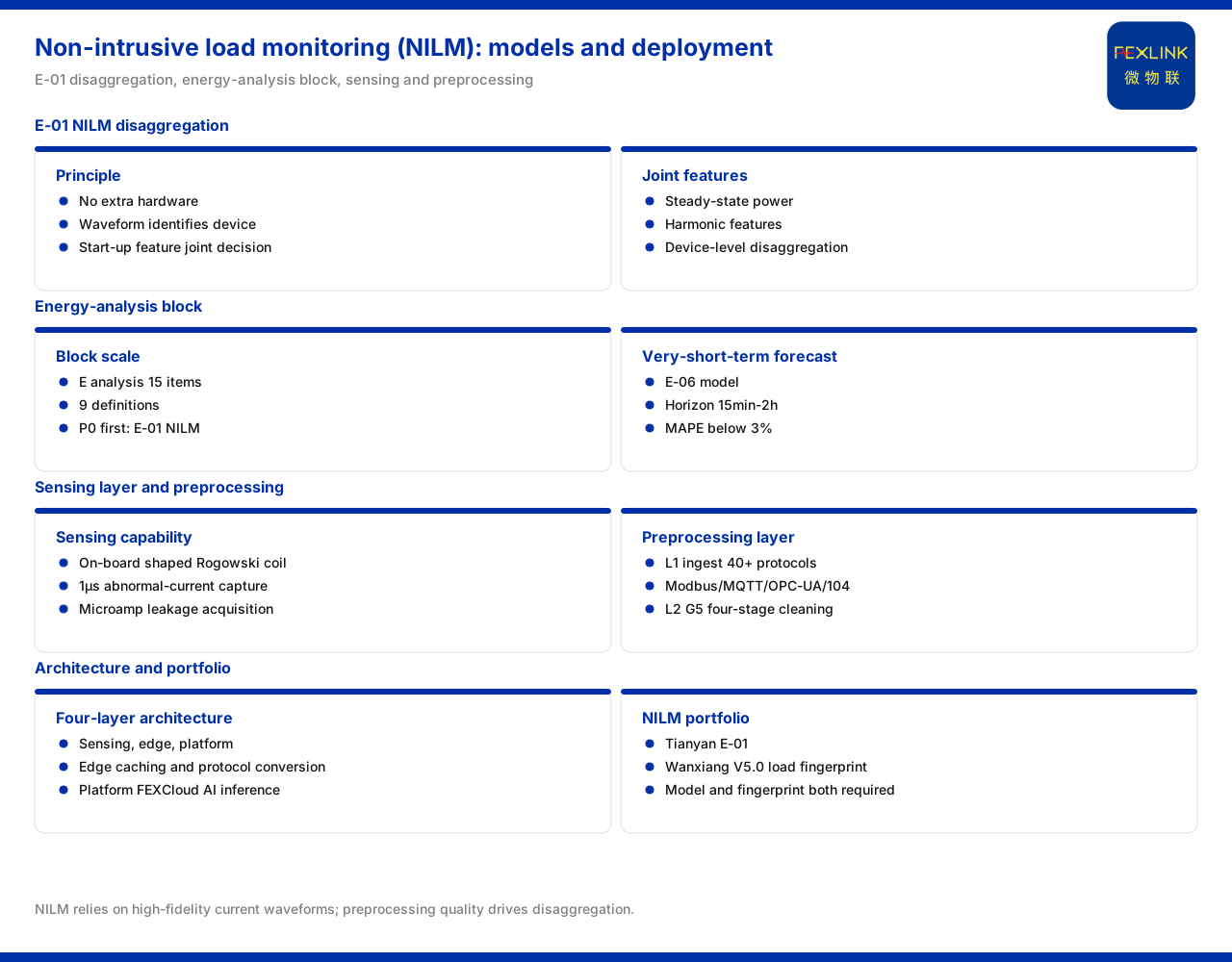
The product knowledge base records that the Tianyan engine E-01 is non-intrusive load disaggregation: without additional hardware, it identifies a specific device through the current waveform and judges jointly by start-up features, steady-state power and harmonic features. The three features each have a role: start-up features correspond to the current shape at the instant a device powers on, steady-state power to the level during long-term operation, and harmonic features to the device's modification of the current waveform. Only by combining the three is it possible to distinguish a specific device from the total current.
The absence of additional hardware is the key difference from sub-metering: sub-metering installs a metering device on each circuit, whereas non-intrusive load identification tries to disaggregate the load composition from the current waveform already acquired. This also means it places higher demands on waveform quality. This article restates the three feature classes as they stand in the product knowledge base and does not infer their respective weights or decision thresholds.
Perception layer: what waveform acquisition relies on
Where the data comes from. The product knowledge base records that the perception layer of the general four-layer monitoring architecture contains the FS, FR, FL and ES series monitoring modules, smart meters and sensors, the sensors including Rogowski coils, thermistors and microamp-level leakage-current sensors. The core sensor technology is the board-mounted special-shaped Rogowski coil, which has 1-microsecond abnormal-current capture capability and can perform microamp-level leakage-current acquisition, with accuracy better than comparable products by 50 to 100 times, at a cost of about 60 yuan per sensor and 200 yuan per module.
Read together with non-intrusive load identification: the current waveform E-01 needs depends on the perception layer's acquisition capability; the microamp-level resolution and microsecond-level capture determine how much detail usable for disaggregation is retained in the waveform. The cost figures show that this acquisition capability is feasible for deployment at scale. This article only restates the capability and cost conventions listed in the product knowledge base and does not infer their specific contribution to disaggregation accuracy.
Data front-end: access and cleaning
Before the waveform enters analysis it must pass through the front-end layer. The product knowledge base records that the front-end layer corresponds to the access layer and cleaning layer of the seven-stage pipeline: the access layer supports parsing of more than 40 protocols, including Modbus, MQTT, OPC-UA, 104 and BACnet; the cleaning layer is four-stage data cleaning, comprising denoising, deduplication, anomaly marking and interpolation completion.
These two layers are the preconditions for non-intrusive load identification: protocol parsing decides whether on-site device data can enter the system, and four-stage cleaning decides the usability of the waveform data. If access is incomplete or cleaning inadequate, even the best disaggregation model lacks clean input. For implementation, the front-end layer is often overlooked yet directly determines whether identification can run stably. This article cites the protocol categories and cleaning content as they stand in the product knowledge base.
Algorithm and load fingerprinting
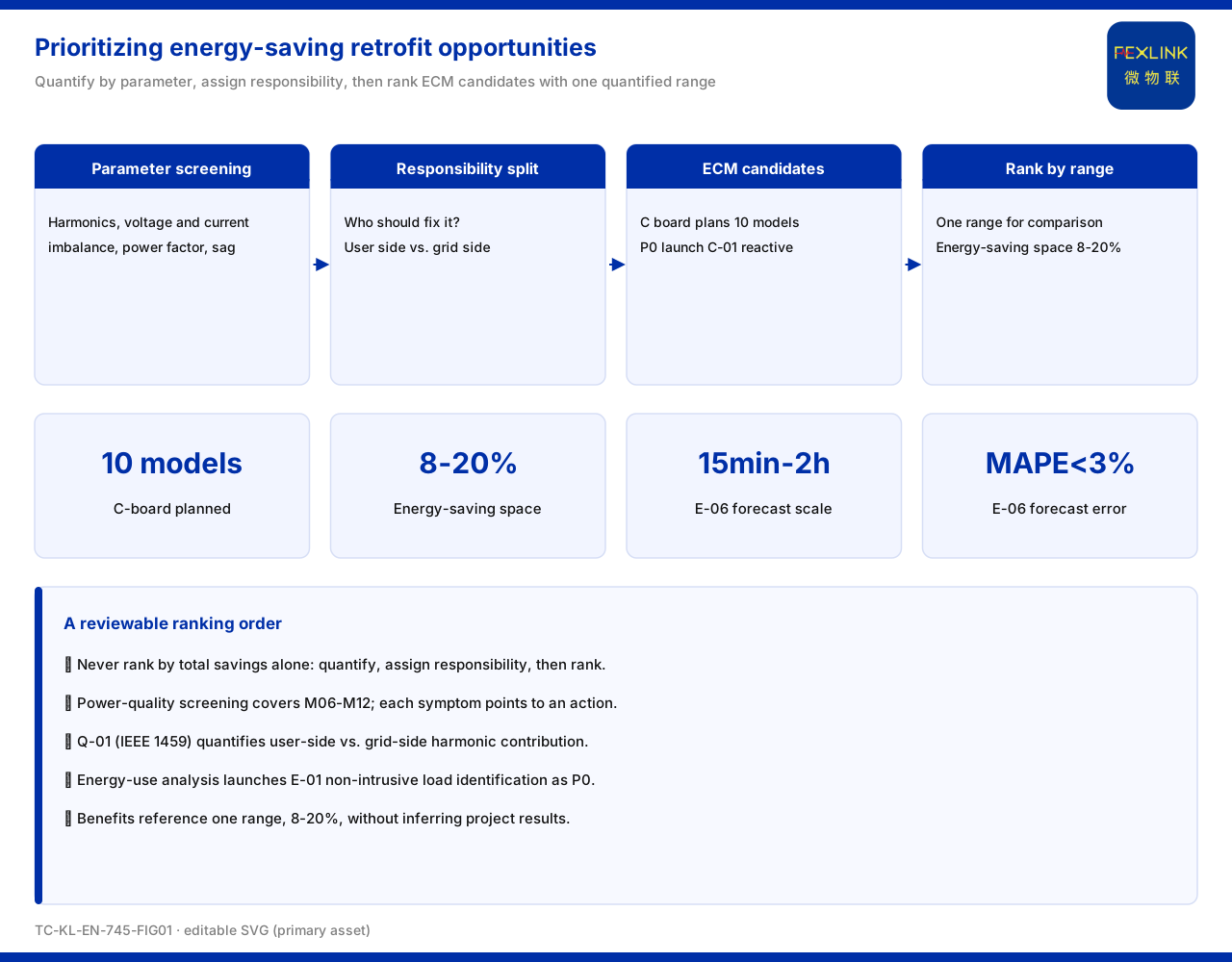
The product knowledge base records that the Tianyan engine's E energy-use analysis block has 15 items (9 under the document's stated convention), with the P0 launch model being E-01 non-intrusive load disaggregation. The product knowledge base also records that the selection combination for non-intrusive load identification is the Tianyan E-01 together with the Wanxiang engine V5.0 load fingerprint, showing that implementation requires both an energy-use disaggregation model and load-fingerprint capability.
Beyond the algorithm there is an evolution direction. The product knowledge base records that the evolution direction of the Wanxiang engine V5.0 is the non-intrusive load fingerprint, with related documents including the Wanxiang engine upgrade technical plan V5.0 and the Wanxiang V5 NILM 100% promotion plan. Placing the disaggregation model and the load fingerprint side by side shows two legs: one breaks the total down to devices, the other identifies which class of load a device belongs to. Without either, the result either cannot be disaggregated or cannot be recognised accurately.
Ultra-short-term load forecasting as a comparison
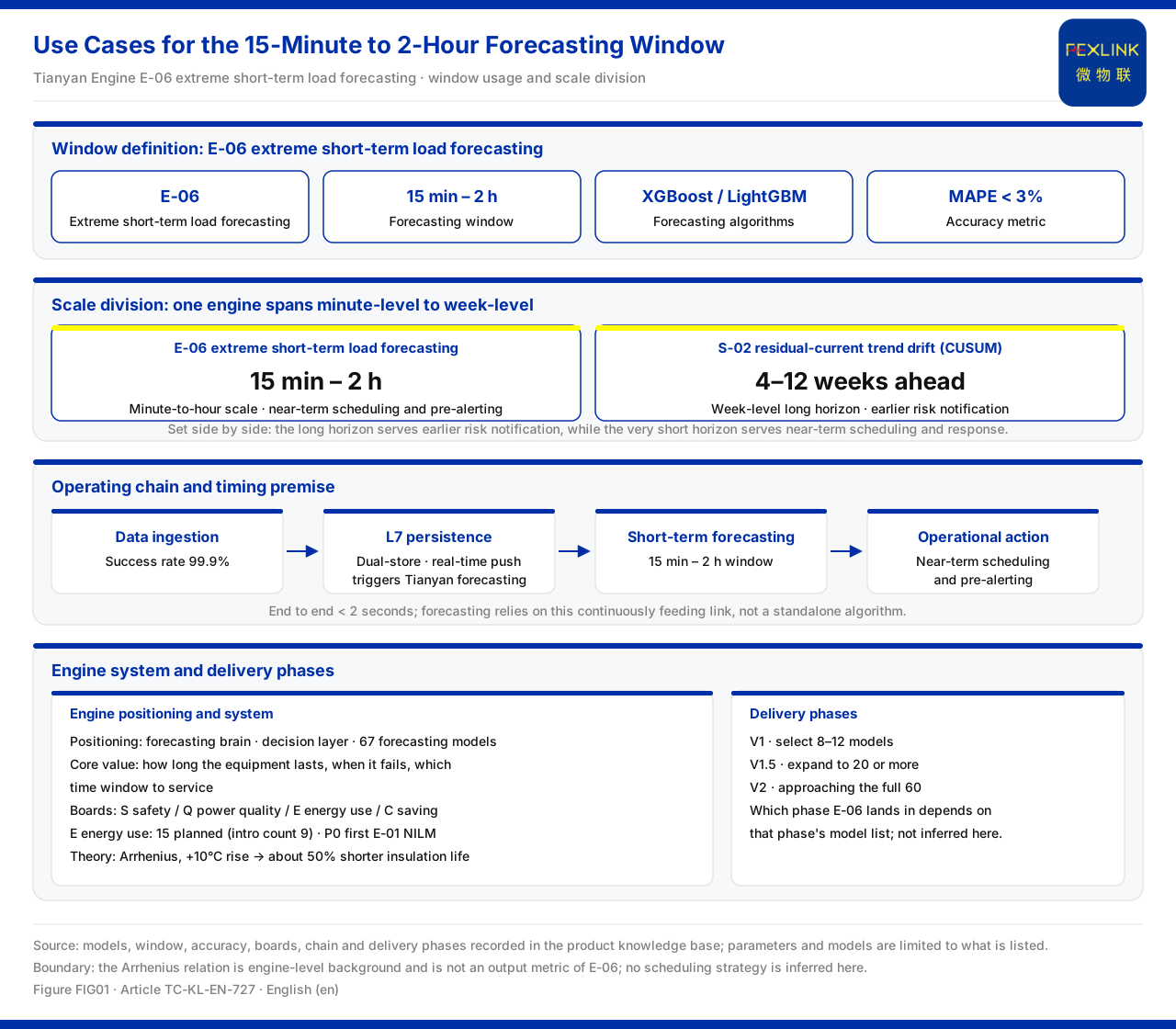
In the energy-use analysis landscape, besides disaggregation there is forecasting. The product knowledge base records that E-06 is ultra-short-term load forecasting, using XGBoost and LightGBM, with a forecasting time scale of 15 minutes to 2 hours and a mean absolute percentage error below 3%. Setting the time scale at minutes to hours shows that this model targets short-cycle dispatch and real-time energy-use management.
Non-intrusive load identification and ultra-short-term forecasting both belong to the E block but solve different problems: the former answers "who used the power", the latter "how much will be used next". If both are used together during implementation, the data basis of acquisition and cleaning must first be consistent, otherwise both disaggregation and forecasting lack reliable input. This article cites only the time scale and error convention and does not infer their performance in other scenarios.
The place of platform and edge
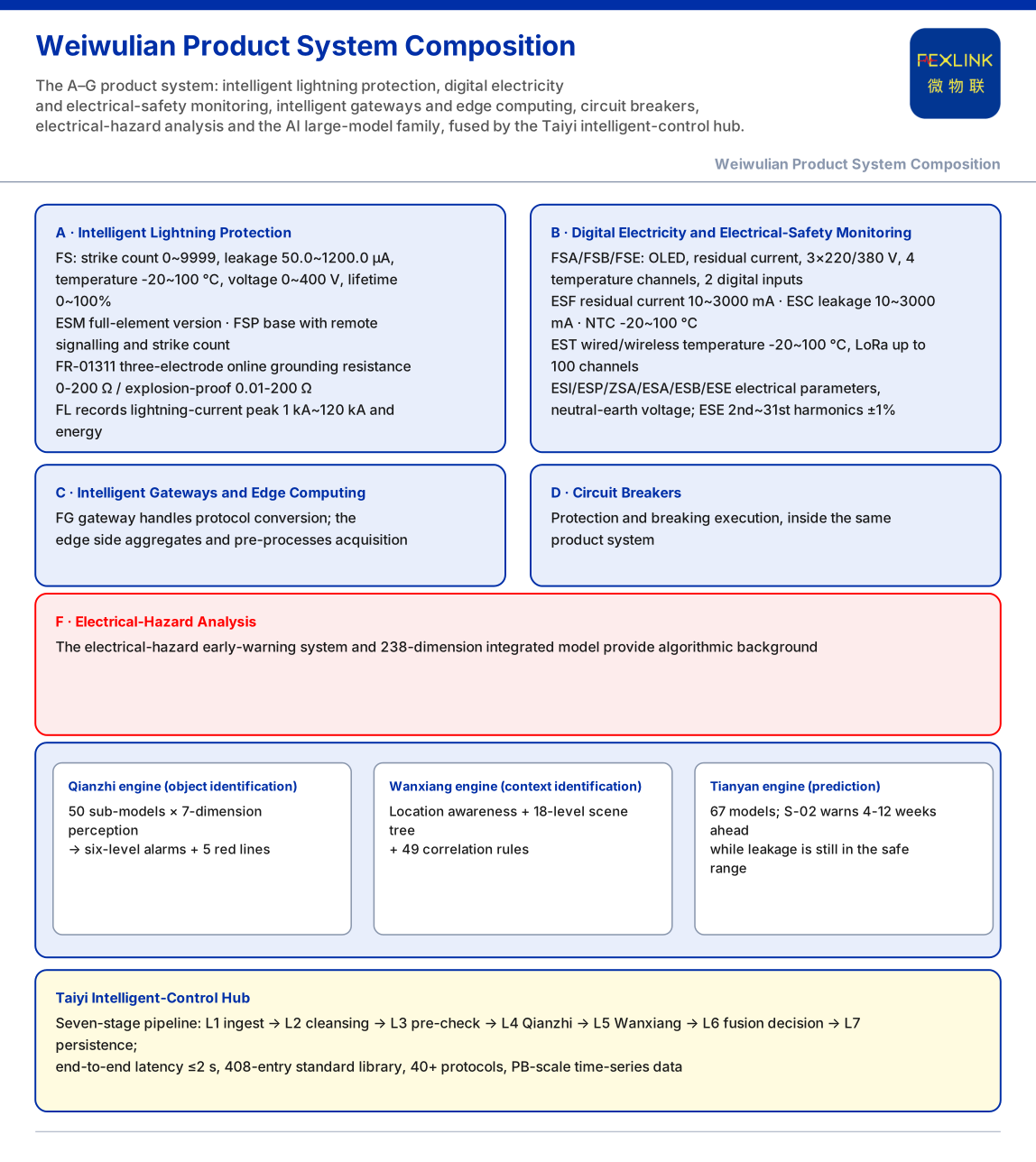
The product knowledge base records that the edge layer of the general four-layer architecture contains FG, ESX and CW gateways, the industrial wearable and the cloud PLC, handling protocol conversion, edge computing and local buffering; the platform layer is FEXCloud, containing device access, a time-series database and an AI inference engine.
For non-intrusive load identification, the edge layer handles acquisition and preprocessing of waveform data, and the platform layer handles disaggregation and fingerprint inference. E-01 is a platform-side energy-use analysis model whose input comes from the acquisition results of the perception and edge layers. This chain shows that non-intrusive load identification is not a single model but a system engineering effort from sensor to inference engine.
Implementation conditions and sequence
First, confirm whether the perception layer has current-waveform acquisition capability, focusing on the Rogowski coil's microsecond-level capture and microamp-level resolution. Second, check whether the edge-layer gateway can cover the site protocols and data scale, and confirm local buffering and edge-computing capability. Third, confirm that the front-end layer's protocol-parsing range and four-stage cleaning are enabled. Fourth, enable the E-01 disaggregation model on the platform side and pair it with the Wanxiang V5.0 load fingerprint. Fifth, if short-cycle energy-use management is needed, add ultra-short-term load forecasting.
Data quality is the bottom line of this sequence. The first four steps decide whether identification can hold, and the fifth decides how far energy-use management can extend. If any of acquisition, access or cleaning is missing, the later algorithms have nothing to work with.
Applicability and limits
- This article is limited to the product knowledge base's existing statements on the Tianyan engine E-01 non-intrusive load disaggregation, the E energy-use analysis block, E-06 ultra-short-term load forecasting, the core sensor technology, the general four-layer architecture, the non-intrusive load identification selection combination, the Wanxiang engine V5.0 evolution direction, and the front-end layer's access and cleaning. - The three joint feature classes of E-01, the item count and launch direction of E energy-use analysis, the time scale and error convention of E-06, the Rogowski coil's acquisition capability and cost convention, and the access-protocol categories and four-stage cleaning content are all product knowledge base conventions. - This article does not infer the disaggregation accuracy of non-intrusive load identification on any site, nor does it extend it to a guarantee of identification effect for a specific device. - The cost convention is as listed in the product knowledge base and does not represent a quotation. - This article does not constitute a commitment to any unlisted indicator; actual capability is subject to the latest product documentation and project scheme.