Direct answer
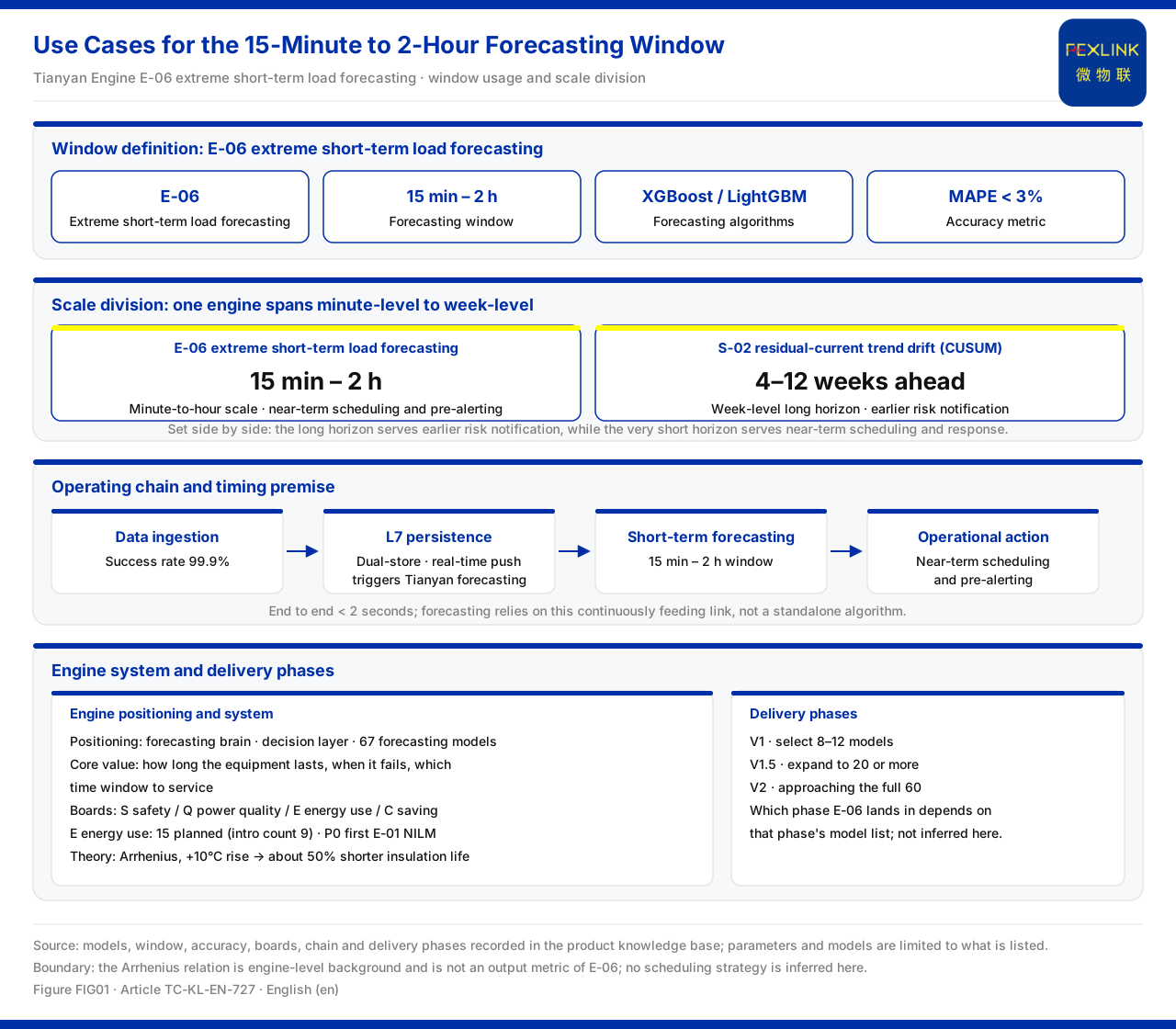
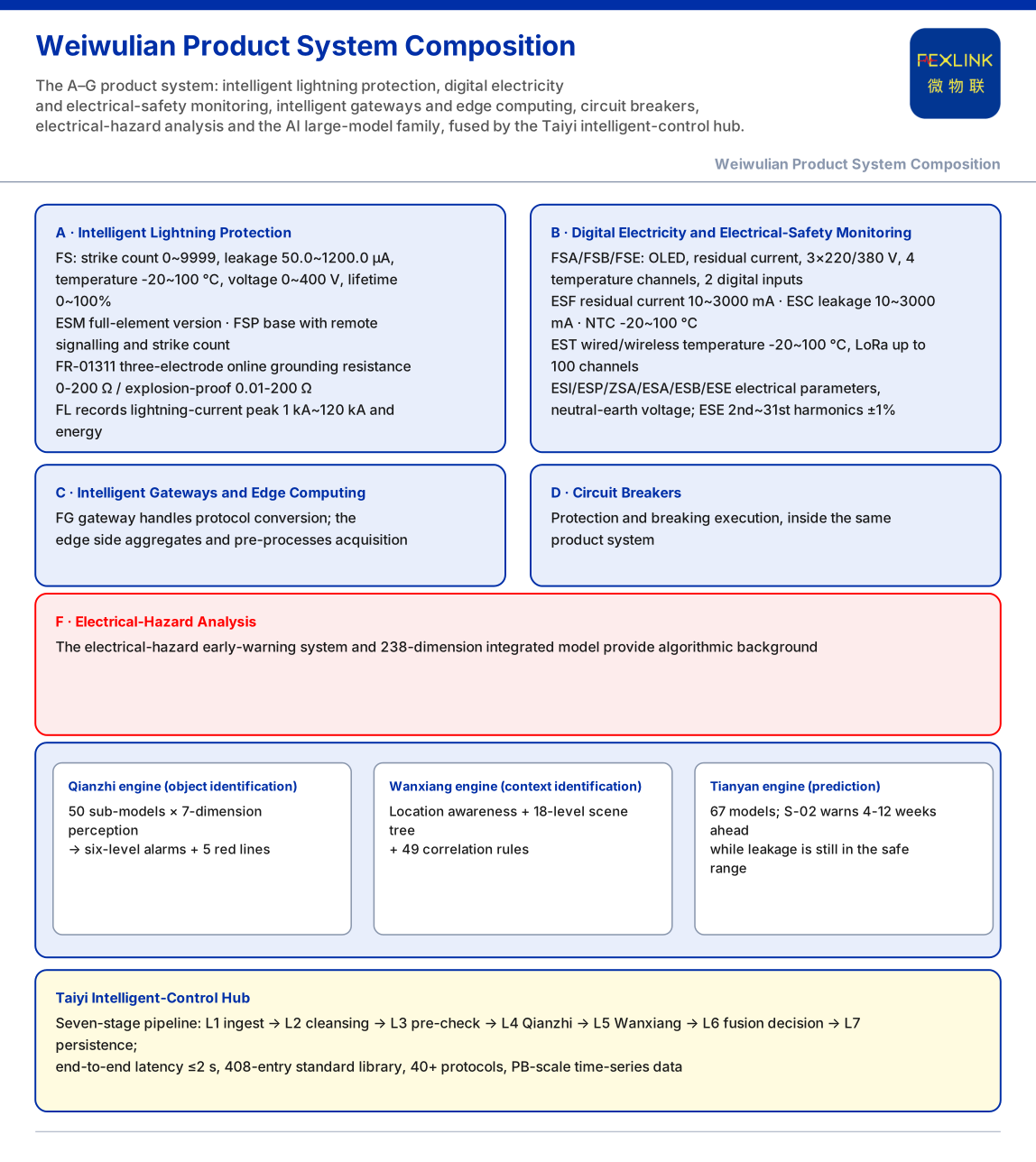
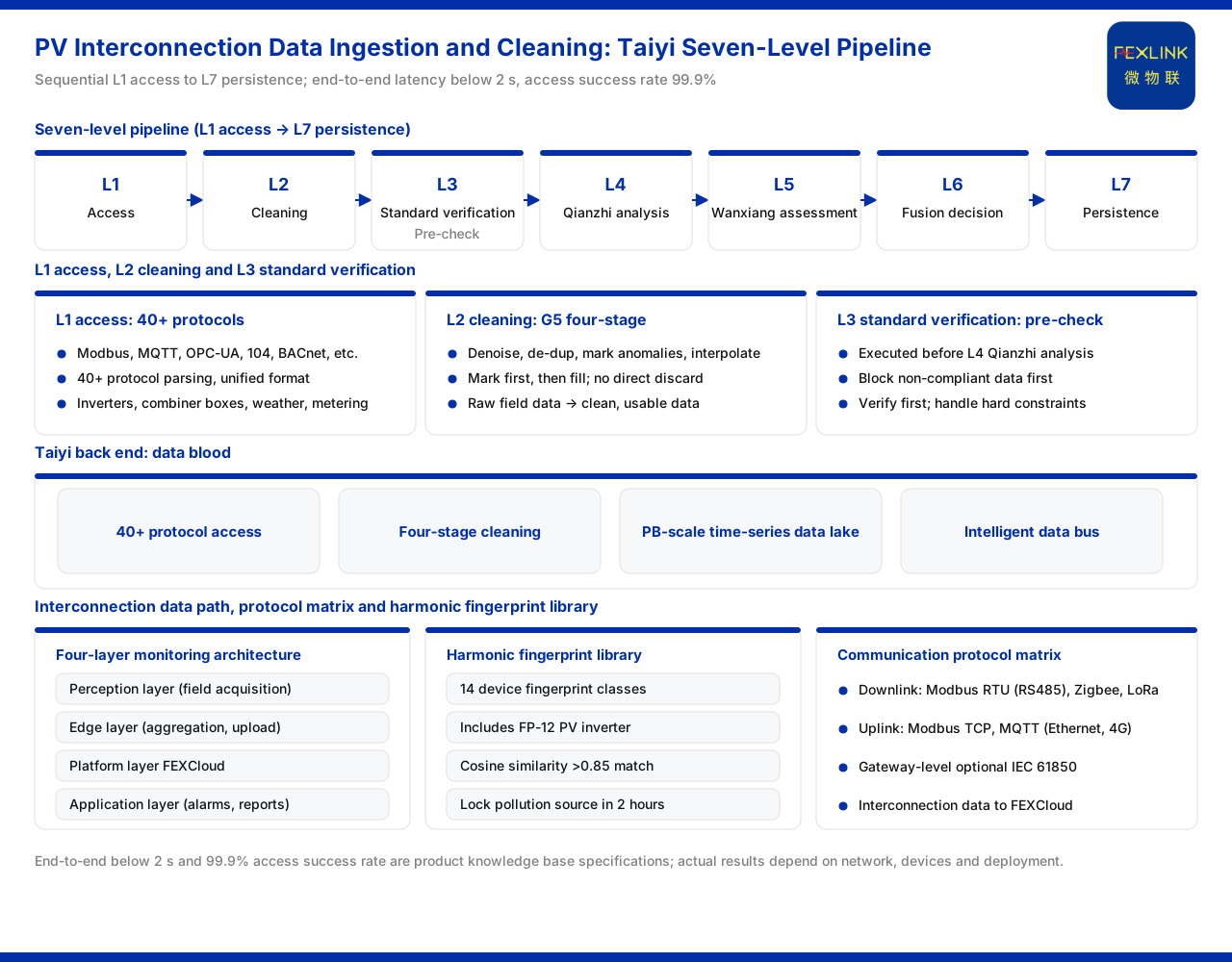
Whether grid interconnection point monitoring data can support later judgement depends first on whether it can be stably accessed and cleaned into usable data. The product knowledge base specifies the data link of the Taiyi intelligent control hub system as a seven-level pipeline: L1 access, L2 cleaning, L3 standard verification (pre-check), L4 Qianzhi analysis, L5 Wanxiang assessment, L6 fusion decision and L7 persistence, with an end-to-end latency below 2 seconds and a data access success rate of 99.9%. The L1 access layer handles parsing for more than 40 protocols, the first step through which this data is accessed from the site; the L2 cleaning layer performs G5 four-level data cleaning, turning raw interconnection point data into clean data usable for analysis. The Taiyi back end is called "data blood," with access for more than 40 protocols, four-level cleaning, a PB-scale time-series data lake and an intelligent data bus. The monitoring system uses a four-layer architecture (perception, edge, platform (FEXCloud IoT platform), application), and the applicable industries include renewable energy stations. This article restates only what the product knowledge base lists and infers no unlisted protocol, cleaning rule or site performance.
1. The access starting point for interconnection point data: more than 40 protocols
Field devices at a grid interconnection point come from different vendors and use different protocols, the reality data access faces first. The product knowledge base records that the front-end layer's L1 access layer handles parsing for more than 40 protocols, including Modbus, MQTT, OPC-UA, 104 and BACnet. Protocol coverage determines how many device kinds the system can directly understand, without a separate interface for each; at an interconnection point, inverter, combiner box, weather and metering data can converge into one channel.
Listing the access layer as its own level shows "getting it in" is an independent capability. Access requires not only parsing messages at the protocol layer but unifying data from different devices into a format later levels can process. The knowledge base also records that the Taiyi back end has access capability for more than 40 protocols, connecting with the front-end layer.
On device connection, the knowledge base records a communication protocol matrix: device downlink uses Modbus RTU (RS485), Zigbee (based on Modbus) and LoRa; device uplink uses Modbus TCP and MQTT (over Ethernet or 4G); the gateway level may optionally use IEC 61850. Describing downlink and uplink separately shows that stable field-wiring connection and platform aggregation are two different needs.
2. L2 cleaning: G5 four-level data cleaning
Once inside the system, grid interconnection point data cannot be used for analysis directly. Field acquisition inevitably produces noise, duplicates, missing values or abnormal points; unhandled, these directly affect later judgement. The knowledge base records that the L2 cleaning layer performs G5 four-level data cleaning: denoising, deduplication, anomaly marking and interpolation completion.
The four actions have distinct targets: denoising handles random interference, deduplication handles repeated records, anomaly marking flags suspicious data without discarding it, and interpolation completion fills missing values. Placing "anomaly marking" and "interpolation completion" side by side reflects marking first, then completing, rather than deleting abnormal data. The knowledge base also records that the Taiyi back end includes four-level cleaning capability, connecting with the front-end layer's G5 four-level cleaning. This article cites only the listed cleaning levels and action names and does not unfold algorithms, thresholds or completion methods.
3. L3 standard verification and pre-check
After cleaning and before analysis, a standard verification is also set. The knowledge base records that L3 standard verification is the pre-check, executed before L4 Qianzhi analysis. Placing verification before analysis means non-compliant or out-of-limit data can be stopped first, without entering later computation, so certain hard constraints are handled before analysis.
Verification items are subject to those listed by the product knowledge base. This article does not excerpt the clause text of the relevant standards and does not infer unlisted verification items or handling rules.
4. The Taiyi back end: data blood
The knowledge base calls the Taiyi back end "data blood," recording capabilities that include access for more than 40 protocols, four-level cleaning, a PB-scale time-series data lake and an intelligent data bus. These correspond to data's whole journey from access to storage to distribution: protocol access solves "getting it in," four-level cleaning solves "being clean," the PB-scale time-series data lake solves "storing it," and the intelligent data bus solves "sending it out."
The time-series data lake faces monitoring data produced in time order, and PB scale describes its capacity; the intelligent data bus carries data transfer and scheduling among levels. Calling the back end "blood" emphasizes that it runs through the whole system and continuously supplies data to each analysis stage. The knowledge base records that the Taiyi intelligent control hub system's seven-level pipeline runs on this back-end capability, and the latency and access success rate also presuppose this architecture.
5. The seven-level pipeline and end-to-end performance
The knowledge base records the seven-level pipeline in full: L1 access, L2 cleaning, L3 standard verification (pre-check), L4 Qianzhi analysis, L5 Wanxiang assessment, L6 fusion decision and L7 persistence. The levels are sequentially connected, each output forming the next input; the complete access-to-usability link for grid interconnection point data corresponds to this order.
On performance, the knowledge base records an end-to-end latency below 2 seconds and a data access success rate of 99.9%. End-to-end below 2 seconds is the overall latency from data entering the access layer to the result completing persistence; the 99.9% access success rate describes the proportion of data successfully accessed. These values are listed by the product knowledge base; this article does not infer any site's actual latency or success rate, which are affected by network, device and deployment conditions.
6. The four-layer monitoring system architecture and the interconnection point data path
From a larger system view, the knowledge base records the monitoring system's general four-layer architecture: perception layer, edge layer, platform layer (FEXCloud IoT platform) and application layer. The perception layer handles field acquisition, the edge layer aggregation and upload, the platform layer is the FEXCloud IoT platform, and the application layer presents alarms and reports. Grid interconnection point monitoring data follows this path from perception through edge into platform, finally to the application layer.
The knowledge base also records that the applicable industries of the Taiyi intelligent control hub system include renewable energy stations, the scenario in which grid interconnection point monitoring data resides. Combined with the protocol matrix and seven-level pipeline above, the overall path, "accessed on site, cleaned and verified, then entering analysis and decision," becomes clear. This article provides no networking configuration or deployment solution for a specific project; actual conditions are subject to the latest product material and project conditions.
7. From interconnection point data to analysis: the harmonic fingerprint library
Only after data is accessed and cleaned can analysis be discussed. The knowledge base records that the harmonic fingerprint library contains 14 classes of device fingerprints, including the FP-12 photovoltaic inverter, with matching based on cosine similarity greater than 0.85, and that the pollution source can be locked within 2 hours. Including photovoltaic inverters means harmonic sources on the photovoltaic interconnection point side can enter the analysis link, distinguishing harmonic characteristics of different device types.
The matching threshold and location time above are product knowledge base specifications. This article restates only what it lists and does not infer the actual recognition effect at any site; performance is affected by data quality, device state and deployment conditions, and the library is not extended to other device types.
Scope and limitations
First, this article restates only what the product knowledge base lists, limited to the front-end L1 access for more than 40 protocols and the protocols named, L2's G5 four-level data cleaning and its actions, L3's standard verification and pre-check position, the Taiyi back end's more than 40-protocol access and four-level cleaning with PB-scale time-series data lake and intelligent data bus, the seven-level pipeline L1 to L7 with end-to-end below 2 seconds and 99.9% access success rate, the monitoring system's four-layer architecture and FEXCloud IoT platform, the protocol matrix's downlink and uplink with gateway-level optional IEC 61850, the applicable industries including renewable energy stations, and the harmonic fingerprint library's 14 classes including the FP-12 photovoltaic inverter with cosine similarity greater than 0.85 and pollution source locked within 2 hours.
Second, this article does not unfold unlisted protocol lists, cleaning-algorithm details, the data lake's specific structure or the intelligent data bus's implementation.
Third, the end-to-end below 2 seconds and 99.9% access success rate are product knowledge base specifications; this article does not extend them to a guarantee for any site, and actual values are affected by network, device and deployment conditions.
Fourth, this article does not excerpt the clause text of the relevant standards; standard content is subject to the officially published text.
Fifth, this article provides no networking configuration, cleaning-rule setting or deployment solution for a specific project; actual conditions are subject to the latest product material and project conditions.