Equipment energy efficiency of a new-energy station
Direct answer
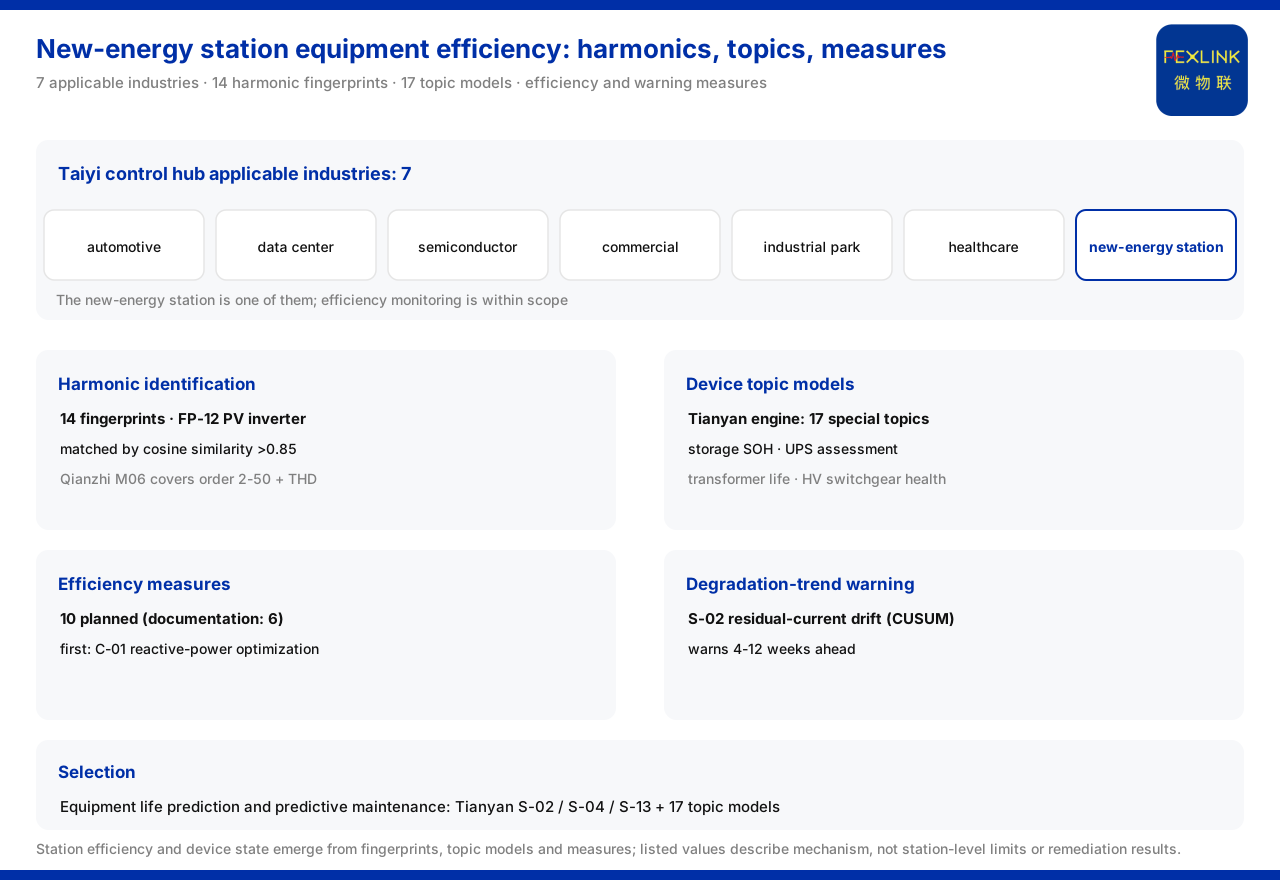
The equipment energy efficiency of a new-energy station cannot be read from the energy consumption of a single device alone; it is related to power-quality state and energy-storage state. In the Taiyi intelligent control hub system of the product knowledge base, the new-energy station is listed as one of the applicable industries, alongside automobile manufacturing, data centres, semiconductors, commercial buildings, industrial parks and medical institutions, 7 industries in all. The station is dominated by converter equipment; the 14 device fingerprint classes held in the harmonic fingerprint library include the PV inverter fingerprint (FP-12), which provides a basis for identifying the source of station harmonics, and the dedicated harmonic sub-model covers harmonics of orders 2 to 50 including total harmonic distortion. Equipment-side energy-efficiency and life assessment is carried by the dedicated topic models of the Tianyan engine / large model, which plans 17 dedicated topics including energy-storage SOH, UPS assessment, transformer life and high-voltage switchgear health; the energy-saving countermeasures section plans 10 items and first promotes reactive-power compensation optimisation; on degradation-trend early warning, the residual-current trend drift model can give early warning 4 to 12 weeks ahead while leakage is still within the safe range. The selection for equipment life prediction and predictive maintenance corresponds to the relevant topic models.
1. Applicability: the new-energy station is an applicable industry
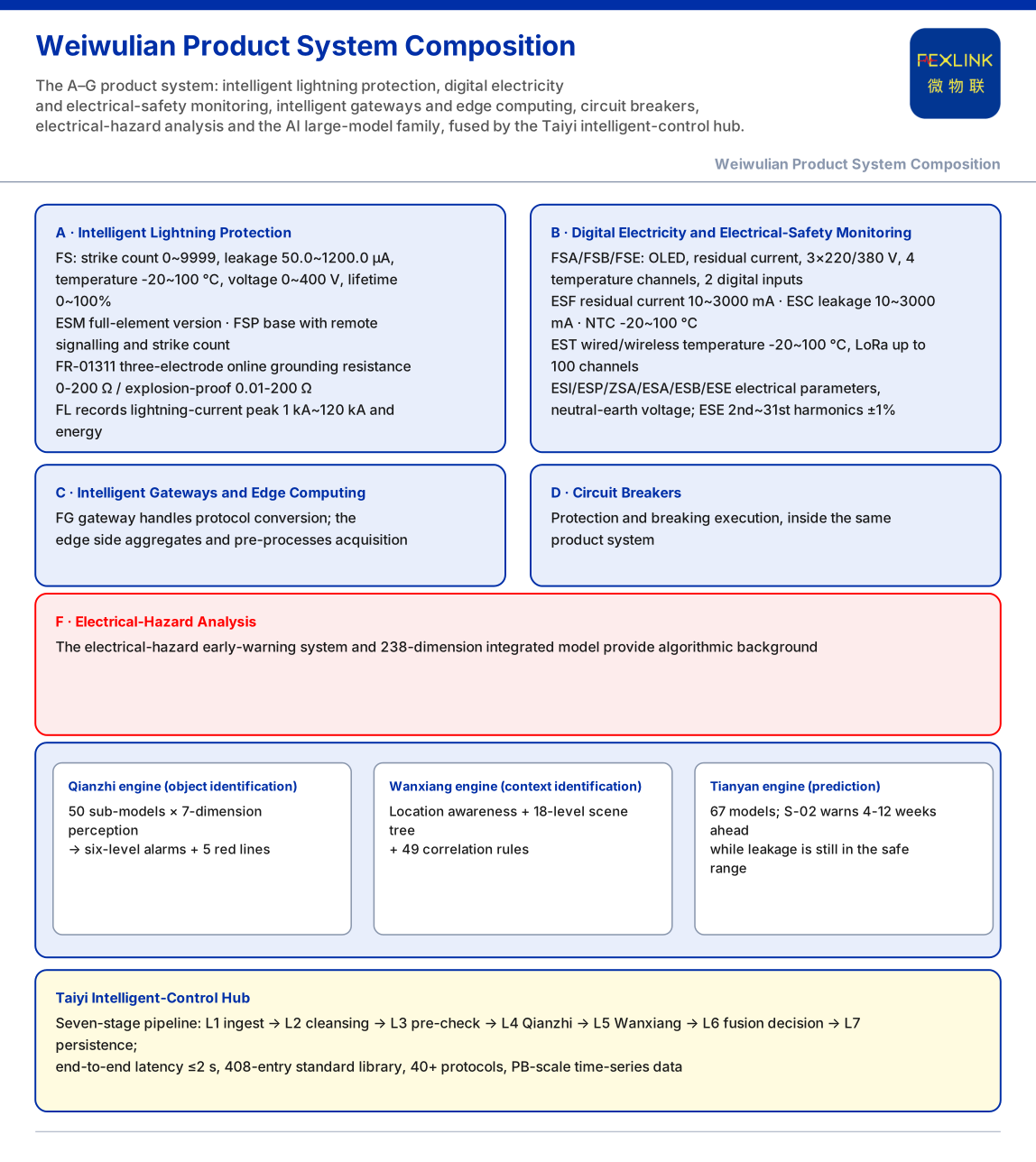
The product knowledge base lists 7 applicable industries of the Taiyi intelligent control hub system: automobile manufacturing, data centres, semiconductors, commercial buildings, industrial parks, medical institutions and new-energy stations. The new-energy station is among them, showing that station equipment energy-efficiency monitoring falls within the industry scope covered by the system. The meaning of this attribution is that station energy efficiency is not an isolated topic but sits in the same framework as the monitoring and analysis capability that the system has accumulated in other industries. It should be noted that the applicable industries are the industry scope listed by the product knowledge base, used to explain the applicability of the system, and do not constitute a commitment regarding the monitoring effect of any specific station.
2. Harmonic identification dominated by converter equipment
A new-energy station is dominated by power-electronic converter equipment, of which the PV inverter is typical. The harmonic fingerprint library of the product knowledge base holds 14 device fingerprint classes, of which FP-12 corresponds to the PV inverter. Fingerprint identification matches with a cosine similarity greater than 0.85. Once the harmonic signature of a converter device is fixed as a fingerprint, the station can separate harmonics of different origins instead of attributing all distortion in general terms. For a station dominated by converters this is especially important: when several inverters are connected to the grid at the same time, the harmonic sources may be distributed across several devices, and fingerprint identification provides a path for mapping the sources one by one. This article only explains fingerprint attribution and the matching mechanism; it does not infer station-level harmonic limits or treatment effects.
3. Harmonic measurement covers orders 2 to 50
Beyond identification, whether the harmonic level is abnormal needs a measurement convention. The product knowledge base records that sub-model M06 of the Qianzhi engine covers harmonics, with a range of orders 2 to 50 and including total harmonic distortion. This convention corresponds to the converter characteristics of the station: the harmonics produced by converters are distributed over many orders, and covering a relatively wide order range helps observe their distortion shape. Placing fingerprint identification and the M06 convention together gives the harmonic link of station energy-efficiency monitoring two levels of basis: one answers which class of device the distortion comes from, and the other answers on which orders and at what overall level the distortion lies.
4. Which equipment the 17 topic models cover
Equipment energy-efficiency and life assessment is carried by the Tianyan engine. The product knowledge base records that the Tianyan engine plans 17 dedicated topics, including energy-storage SOH, UPS assessment, transformer life and high-voltage switchgear health. For a new-energy station, the condition of both the energy-storage link and the transformation link falls within this topic series. Energy-storage SOH corresponds to the state assessment of energy-storage equipment, while transformer life and high-voltage switchgear health correspond to the state assessment of transformation equipment. The names and number of these topics are given as listed by the product knowledge base; this article does not expand the algorithm or threshold of each topic. Equipment energy efficiency and equipment state are two interrelated aspects: energy efficiency reflects operating economics, while state reflects the degree of equipment degradation, and only together do they form a complete view of station equipment.
5. Energy-saving countermeasures section
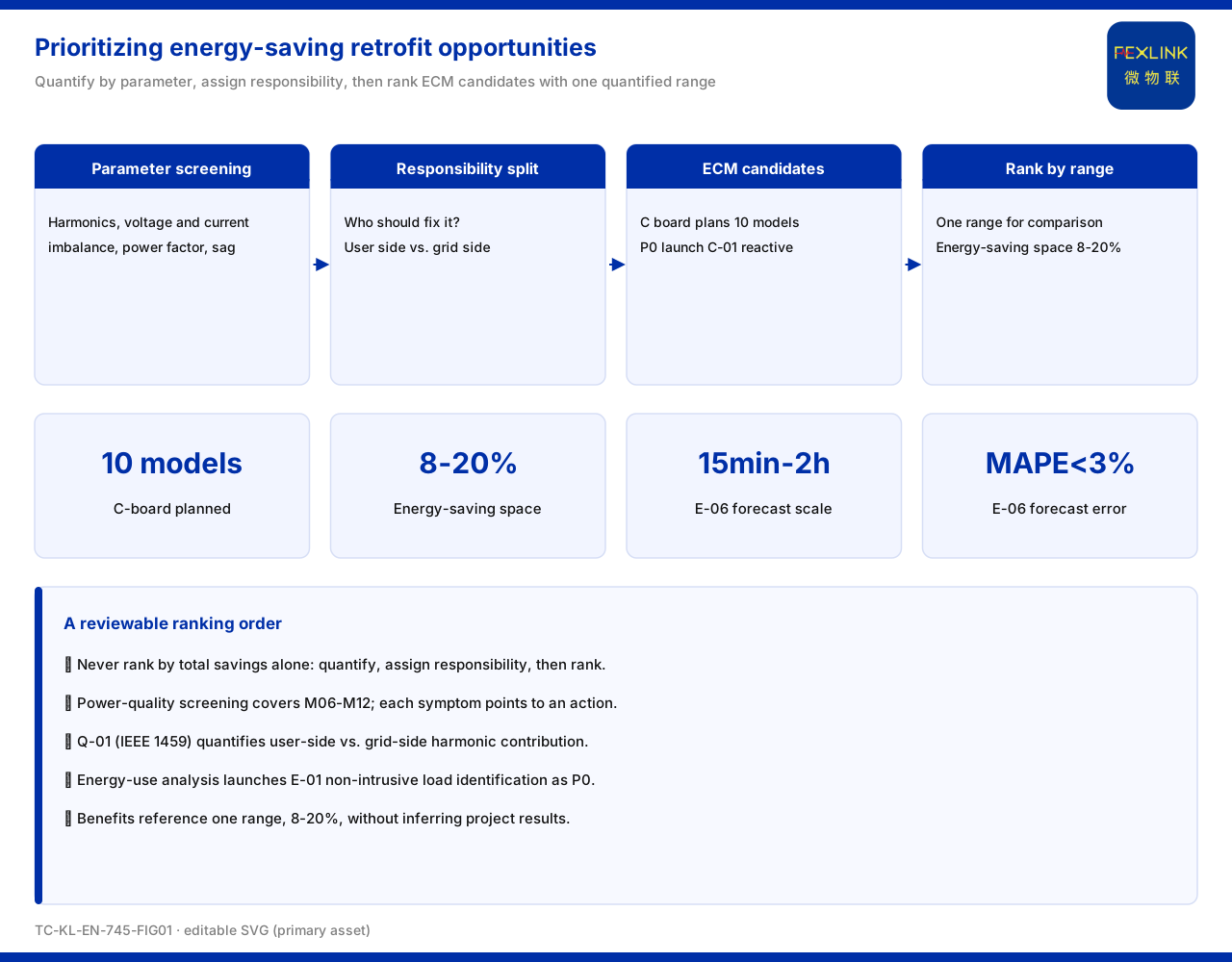
On the energy-efficiency optimisation side, the product knowledge base records that the energy-saving countermeasures section of the Tianyan engine plans 10 items, with a document convention of 6 items, and that the first project promoted is reactive-power compensation optimisation. Reactive-power compensation is directly related to the power quality of the station: converter equipment brings reactive-power demand and harmonic problems in operation, and the optimisation of reactive-power compensation is a common link in energy-efficiency management. Linking the energy-saving countermeasures section with the harmonic identification above reveals a thread from finding a problem to giving a countermeasure: after harmonic and reactive-power-related indicators are identified and measured, the energy-saving countermeasures are responsible for giving an executable direction of optimisation. This article lists only the planned number of the section and the first project; it does not infer the specific content of the remaining countermeasures.
6. Degradation-trend early warning
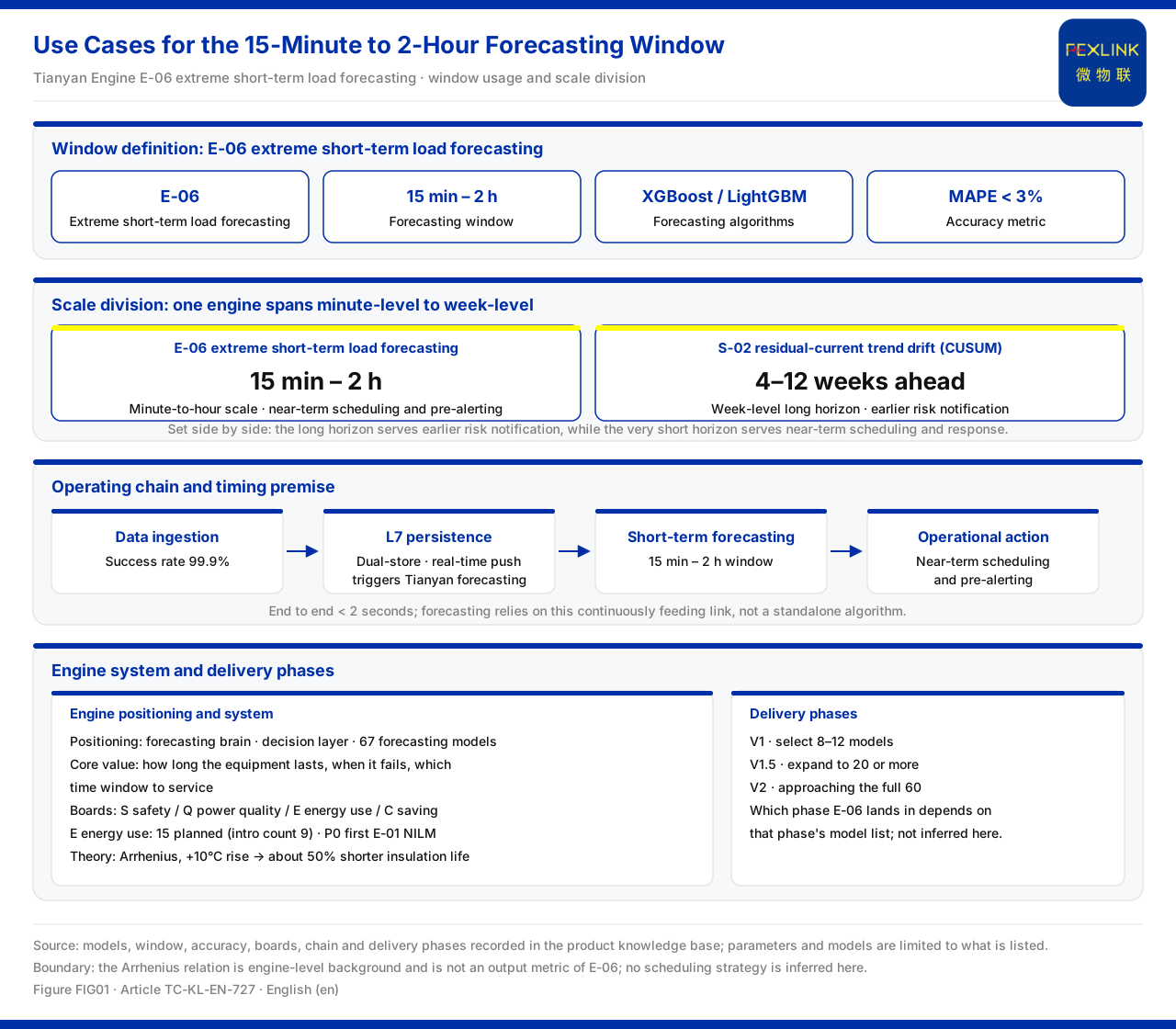
Another side of equipment energy efficiency is degradation trend. The product knowledge base records that the residual-current trend drift model of the Tianyan engine adopts the cumulative sum (CUSUM) method and can give early warning 4 to 12 weeks ahead while leakage is still within the safe range. The meaning of this capability for station equipment management is that it moves the time point of warning forward, shifting maintenance from after-the-fact handling to intervention when a trend appears. The 4 to 12 weeks is the early-warning lead-time convention given by the product knowledge base, used to explain the mechanism of trend monitoring, and does not constitute a commitment regarding the warning effect for any device or any site.
7. Selection landing point
In the selection comparison for equipment life prediction and predictive maintenance, the combination given by the product knowledge base is the relevant topic models of the Tianyan engine, corresponding to 17 dedicated topics. That is, the energy-efficiency and maintenance needs of station equipment should be matched within the scope of the topic models rather than selected by a single instrument parameter. During selection one should first clarify whether what is to be assessed is energy efficiency, state or degradation trend, and then map it to the corresponding topic; this article provides no specific configuration scheme or effect conclusion.
Scope and limitations
- This article is limited to what the product knowledge base lists: the Taiyi intelligent control hub system's applicable industries including new-energy stations, the 14 fingerprint classes and the PV inverter fingerprint FP-12 in the harmonic fingerprint library, and the coverage of sub-model M06 over harmonics of orders 2 to 50 and total harmonic distortion. - The 17 dedicated topics of the Tianyan engine, the energy-saving countermeasures section planning 10 items (6 under the document convention) with reactive-power compensation optimisation first, and the residual-current trend drift model giving early warning 4 to 12 weeks ahead are restated as listed by the product knowledge base. - This article does not infer station capacity, grid-connection limits, energy-storage SOH thresholds or any unlisted parameter, nor does it commit to the degree of energy-efficiency improvement of any specific station. - The selection is limited to the topic models listed in the selection comparison of the product knowledge base; actual application must be confirmed item by item in conjunction with the on-site equipment composition and operating conditions.