How to explain the difference between sub-metering and the main meter
Direct answer
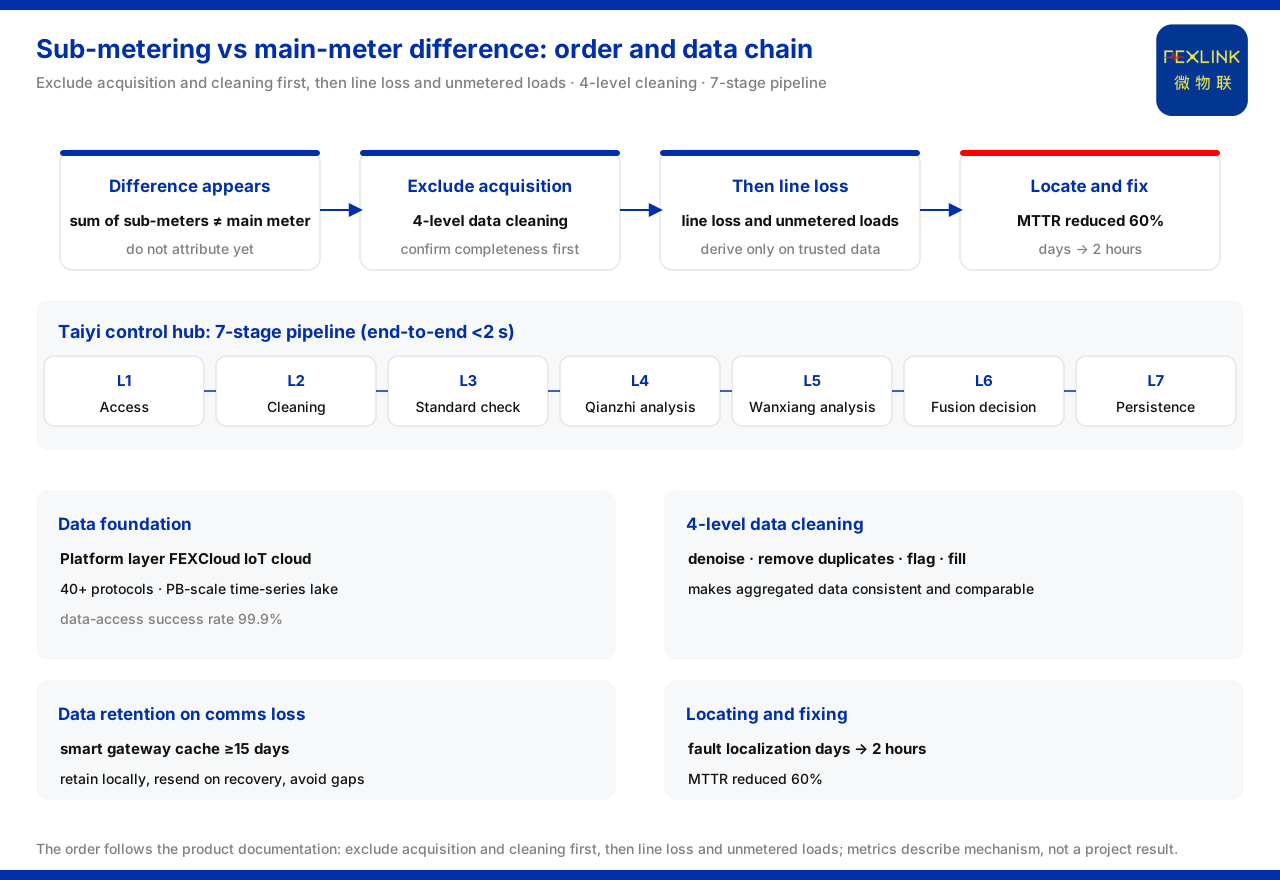
When the sum of the sub-metering does not agree with the main meter reading, the troubleshooting order given by the product knowledge base is: first exclude the acquisition and cleaning stages, then assess line loss and unmetered load. Cleaning is placed first because the data chain itself contains a cleaning step. The cleaning layer performs four-level data cleaning, covering denoising, removal of duplicates, anomaly marking and interpolation; in the chain, meter-difference troubleshooting corresponds first to the acquisition and cleaning levels. The seven-level pipeline of the Taiyi intelligent control hub system is, in order, access, cleaning, standard verification, Qianzhi analysis, Wanxiang study, fusion decision and persistence, with an end-to-end latency under 2 seconds. On the data-foundation side, the platform layer is the FEXCloud IoT cloud platform, handling device access, a time-series database and an AI inference engine; the Taiyi back end provides access for more than 40 protocols, four-level cleaning, a PB-scale time-series data lake and an intelligent data bus, with a data access success rate of 99.9%. To cope with communication interruption, the data caching of the smart gateway can reach 15 days or more. On handling efficiency, fault location time is shortened from days to 2 hours and average repair time is shortened by 60%.
1. The first source of difference: acquisition and cleaning
The difference between sub-metering and the main meter reading may come from several stages in the data chain. The product knowledge base links the cleaning layer directly to meter-difference troubleshooting: when the sum of sub-metering does not agree with the main meter reading, the acquisition and cleaning stages should first be excluded before assessing line loss and unmetered load. This order means that, on seeing a difference, one should not rush to attribute it to line loss or an unmetered load, but should first confirm whether the two sets of data entering the comparison are themselves complete and correctly processed. Problems at the acquisition stage include missing data, duplicate reporting and outliers; problems at the cleaning stage are reflected in whether the processing rules have been executed. Putting these two steps before line loss avoids drawing conclusions at the line level on the premise of unreliable data sources.
2. What four-level data cleaning undertakes
The product knowledge base records that the cleaning layer performs four-level data cleaning, covering denoising, removal of duplicates, anomaly marking and interpolation. These four address data defects of different natures. Denoising handles the interference components in the acquired signal; removal of duplicates handles records that are reported or stored repeatedly; anomaly marking identifies readings that clearly deviate from the normal range instead of letting them take part in the total directly; and interpolation completes missing data. Taken together, the cleaning layer makes the data entering the total consistent and comparable. The comparison between the sum of sub-metering and the main meter reading rests precisely on this processing result; whether the cleaning stage works normally therefore directly affects the size and direction of the difference.
3. Where meter-difference troubleshooting falls in the seven-level pipeline
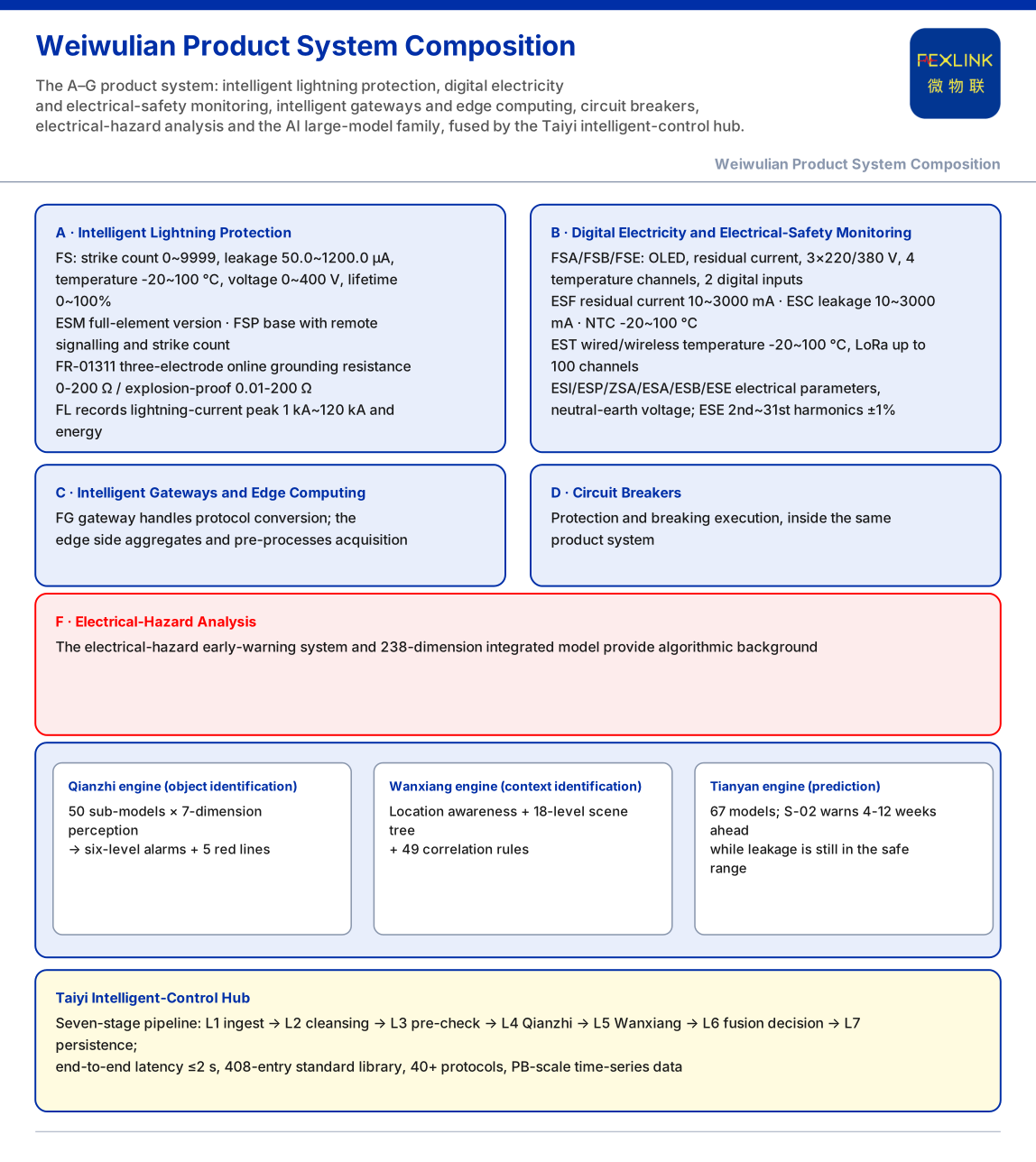
The product knowledge base defines the pipeline of the Taiyi intelligent control hub system as seven levels: access, cleaning, standard verification, Qianzhi analysis, Wanxiang study, fusion decision and persistence, with an end-to-end latency under 2 seconds. Meter-difference troubleshooting corresponds to the access and cleaning levels. That is, the difference is a problem at the front end of the chain, not at the analysis or decision layer. Placing this point in the pipeline makes it clearer: the first two levels take the data in and process it cleanly, the middle levels analyse and study it, and the last level stores it. If the data of the first two levels is not aligned, the conclusions of the subsequent analysis rest on biased input. Returning to access and cleaning first when a difference appears is therefore consistent with the structure of the pipeline.
4. Data foundation: platform layer and protocol access
In the general four-layer architecture of the monitoring system, the platform layer is the FEXCloud IoT cloud platform, handling device access, a time-series database and an AI inference engine. Both sub-metering and main-meter data must be aggregated onto this platform before they can be compared on the same basis. On the access side, the Taiyi back end provides access for more than 40 protocols, four-level cleaning, a PB-scale time-series data lake and an intelligent data bus, with a recorded data access success rate of 99.9%. This set of capabilities shows that the data on which troubleshooting depends is not a simple addition of scattered readings but time-series data that has passed through unified access and storage. The access success rate reflects, from the side, the engineering foundation for complete data aggregation; it describes the reliability of the access stage and is not equivalent to the accuracy of the metering result.
5. How data is preserved during communication interruption
A difference sometimes comes not from the metering itself but from data missing during transmission. In the reference parameters of the grounding resistance monitoring system, the product knowledge base records that the data caching of the smart gateway can reach 15 days or more. The significance of this parameter is that, when upstream communication is interrupted, the gateway can preserve data locally and backfill it after communication is restored, thereby avoiding a sub-metering/main-meter disagreement caused by missing data. Linking this parameter with the cleaning stage above shows that the two handle problems at different stages: caching handles the data gap caused by transmission interruption, while cleaning handles the data quality after it enters the chain. Neither can be ignored, because both will show up as a difference in the final total.
6. Location and handling efficiency
The product knowledge base records that, among the quantified value of the Taiyi intelligent control hub system, fault location time is shortened from days to 2 hours and average repair time is shortened by 60%. Placed in the scenario of a sub-metering difference, these two indicators describe the convention of troubleshooting efficiency: once a difference is confirmed and enters the location process, the system can shorten the time needed to determine the location of the problem and the time needed for repair. It should be noted that this is an overall quantified statement given by the product knowledge base, not a category-by-category commitment for a particular cause of difference, and it does not constitute an expectation of the result of a specific project.
7. The practical meaning of the troubleshooting order
Bringing the previous sections together yields a clear troubleshooting order. First, return to access and cleaning, confirm whether the data is complete and has passed four-level cleaning, and exclude the influence of missing acquisition, duplicate reporting and outliers. Second, on the premise that the data itself is reliable, assess line loss and unmetered load. Third, use the aggregation and cleaning capability of the platform layer, together with the local caching of the gateway, to reduce the difference introduced by communication interruption or improper processing. The value of this order is that it turns the difference from a subjective guess into a process of level-by-level exclusion, and each step has a corresponding stage in the product knowledge base as its basis.
Scope and limitations
- This article is limited to what the product knowledge base lists: the four-level data cleaning of the cleaning layer (denoising, removal of duplicates, anomaly marking, interpolation) and the troubleshooting order of excluding acquisition and cleaning before assessing line loss and unmetered load. - The level order of the seven-level pipeline and the end-to-end latency convention of under 2 seconds are restated as listed by the product knowledge base; this article does not infer the internal implementation of each level. - The access for more than 40 protocols, the four-level cleaning, the PB-scale time-series data lake and the data access success rate of 99.9% of the Taiyi back end, as well as the composition of the FEXCloud platform layer, are all conventions listed by the product knowledge base. - The data caching of the smart gateway reaching 15 days or more is restated as a reference parameter of the product knowledge base and does not constitute a commitment regarding the caching capability of a specific project. - Fault location time shortened from days to 2 hours and average repair time shortened by 60% are quantified conventions listed by the product knowledge base; this article does not derive from them the handling time for a specific cause of difference. - This article provides no specific method for line-loss calculation, unmetered-load estimation or metering configuration; actual troubleshooting must be confirmed item by item in conjunction with on-site wiring, measurement conditions and compliance requirements.