Monitoring Priorities for Renewable-Energy Stations
Direct answer
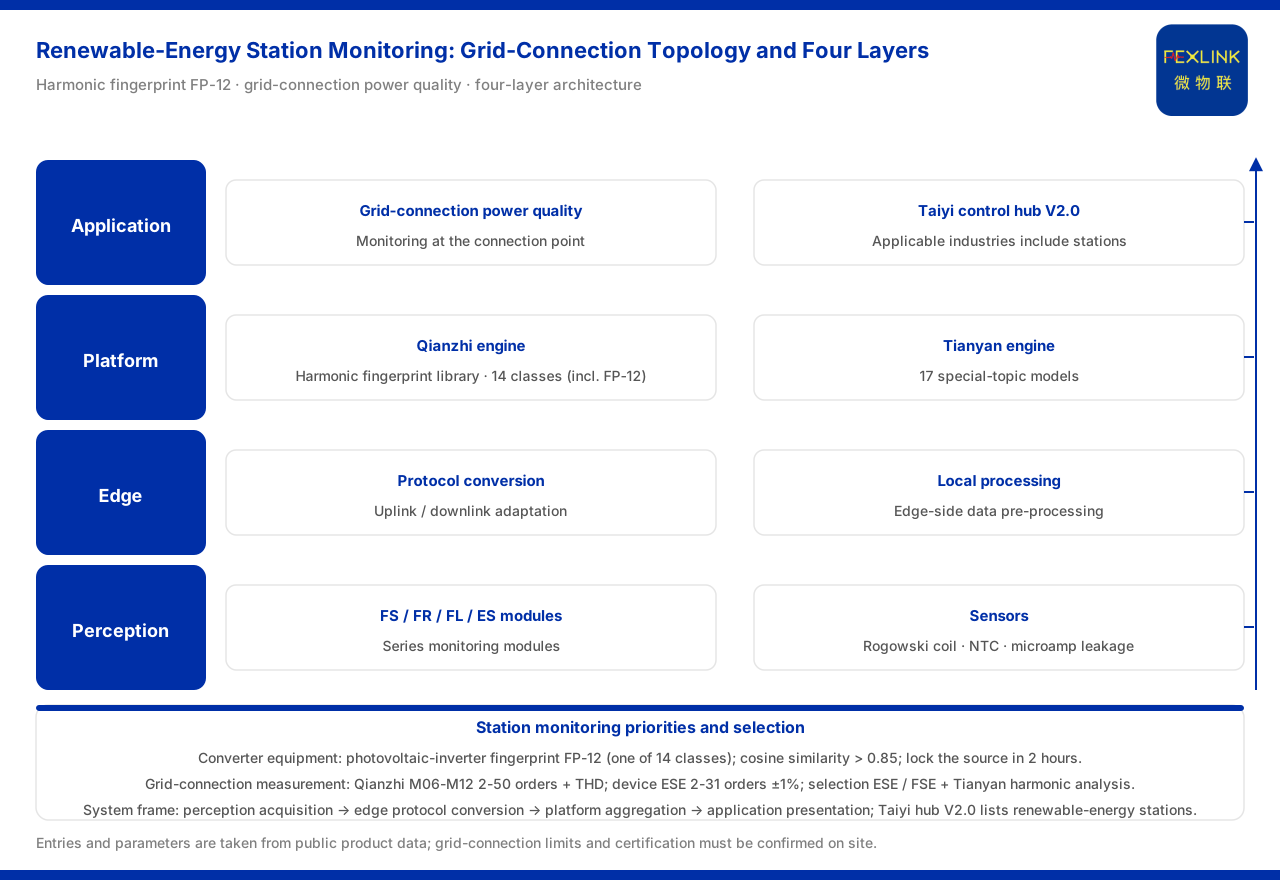
The monitoring priorities for a renewable-energy station can be grouped, according to the product knowledge base, into several lines. First, harmonic identification of the converter equipment inside the station, built on the photovoltaic-inverter fingerprint in the harmonic fingerprint library and on the 14 device fingerprint classes. Second, power-quality measurement at the grid-connection point, built on the power-quality checkup submodel of the Qianzhi engine and on the ESE power-quality monitor. Third, the system-level networking frame, built on the four-layer architecture of the monitoring system. In addition, the Taiyi intelligent control hub system (V2.0) lists renewable-energy stations among its applicable industries. The following sections take each line in turn, all limited to what the product knowledge base lists. What distinguishes a station from an ordinary distribution site is the concentration of power-electronic converter equipment, so the harmonic line and the measurement line carry more weight here, while the architecture line fixes where each device sits.
1. Harmonic fingerprint: identifying the converter equipment in a station
The harmonic fingerprint library of the Qianzhi engine (Bianwu, V4.1) contains 14 device fingerprint classes, of which FP-12 corresponds to the photovoltaic inverter. Fingerprint recognition matches at a cosine similarity greater than 0.85, and on the basis of this library the time to lock a pollution source can be shortened to 2 hours. A renewable-energy station is dominated by power-electronic converter equipment, whose harmonic signatures are relatively fixed; once each type is numbered into the library, "which class of equipment produced this harmonic" becomes a retrievable and comparable object, and harmonics of different origins need not be handled as one mixed problem. The practical gain is that identification precedes mitigation: only after the class of source is known can responsibility and countermeasure be assigned to the right piece of equipment, and a reading of harmonic level alone does not supply that assignment.
2. Grid-connection power quality: the measurement horizon
Harmonic fingerprint comparison needs a measurement input. The power-quality checkup submodel of the Qianzhi engine covers harmonic monitoring, acquiring harmonics from the 2nd to the 50th order and including THD, and provides the measurement horizon for harmonic assessment at the grid-connection point. On the device side, the ESE power-quality monitor adds harmonic monitoring on top of phase monitoring, covering the 2nd to the 31st harmonic at an accuracy of ±1%, and can carry the monitoring of power-quality indices at the grid-connection point. Reading the submodel horizon and the device horizon separately prevents the harmonic orders used in analysis from being confused with the harmonic orders the device can measure. The two belong to different product types and answer different questions: the engine side states the range over which a harmonic judgment is made, while the device side states the order range that can be acquired and the tolerance of that acquisition. Keeping them apart keeps an analysis horizon from being quoted as a measurement capability.
3. Selection combination: harmonic special treatment
In the typical application scenarios and selection comparison, the combination for "power quality / harmonic special treatment" is the ESE power-quality monitor or the FSE power-quality controller, together with the harmonic analysis of the Tianyan engine (prediction, V1.0 to V2.0). That is: measurement at the grid-connection point is borne by the monitor, and the part involving harmonic responsibility analysis is matched by the Tianyan side. The selection combination gives a capability pairing and does not represent an effect commitment for any specific project; it states which products work together, not the result they will produce at a given station.
4. Special-topic models: covering key station equipment
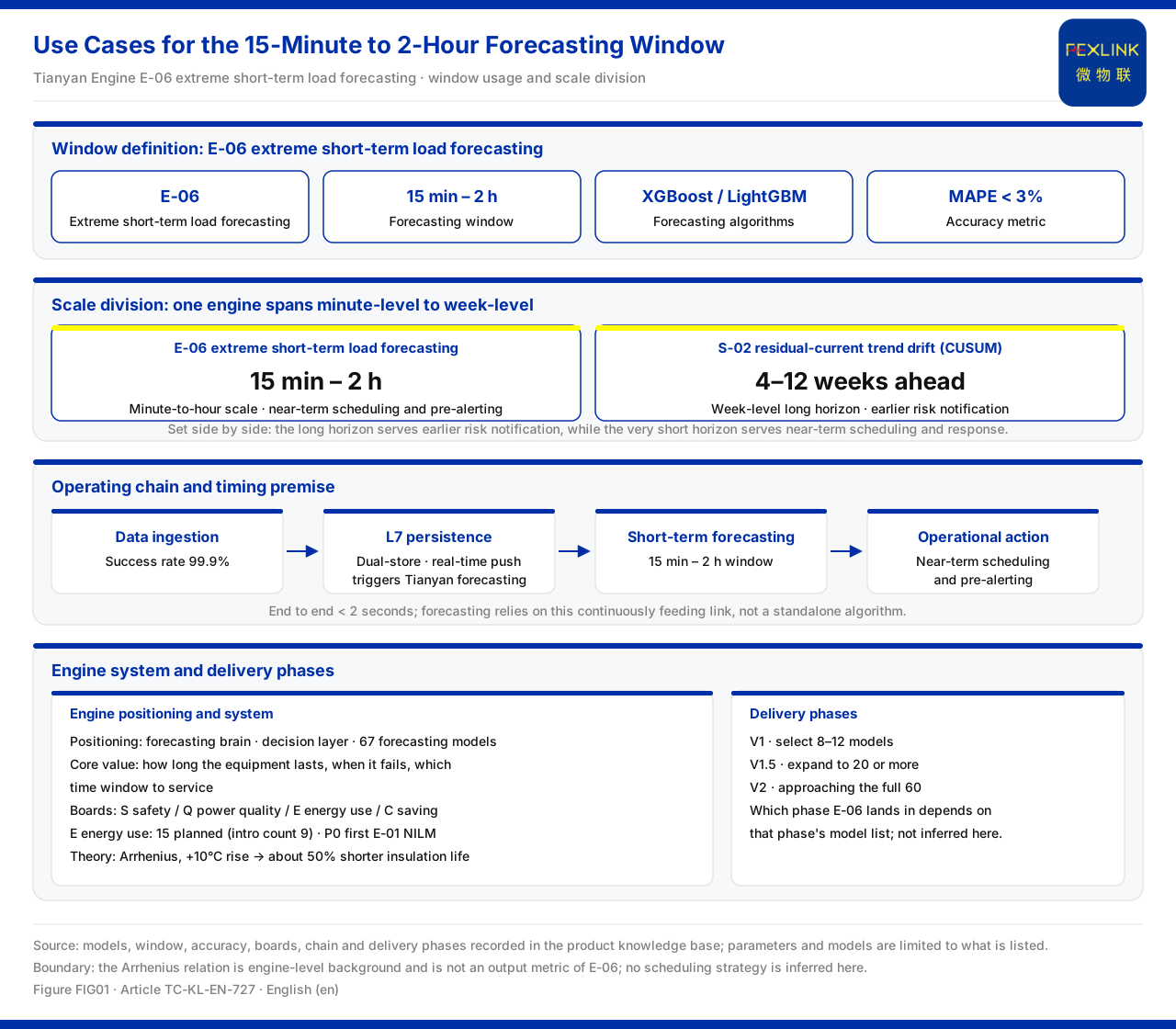
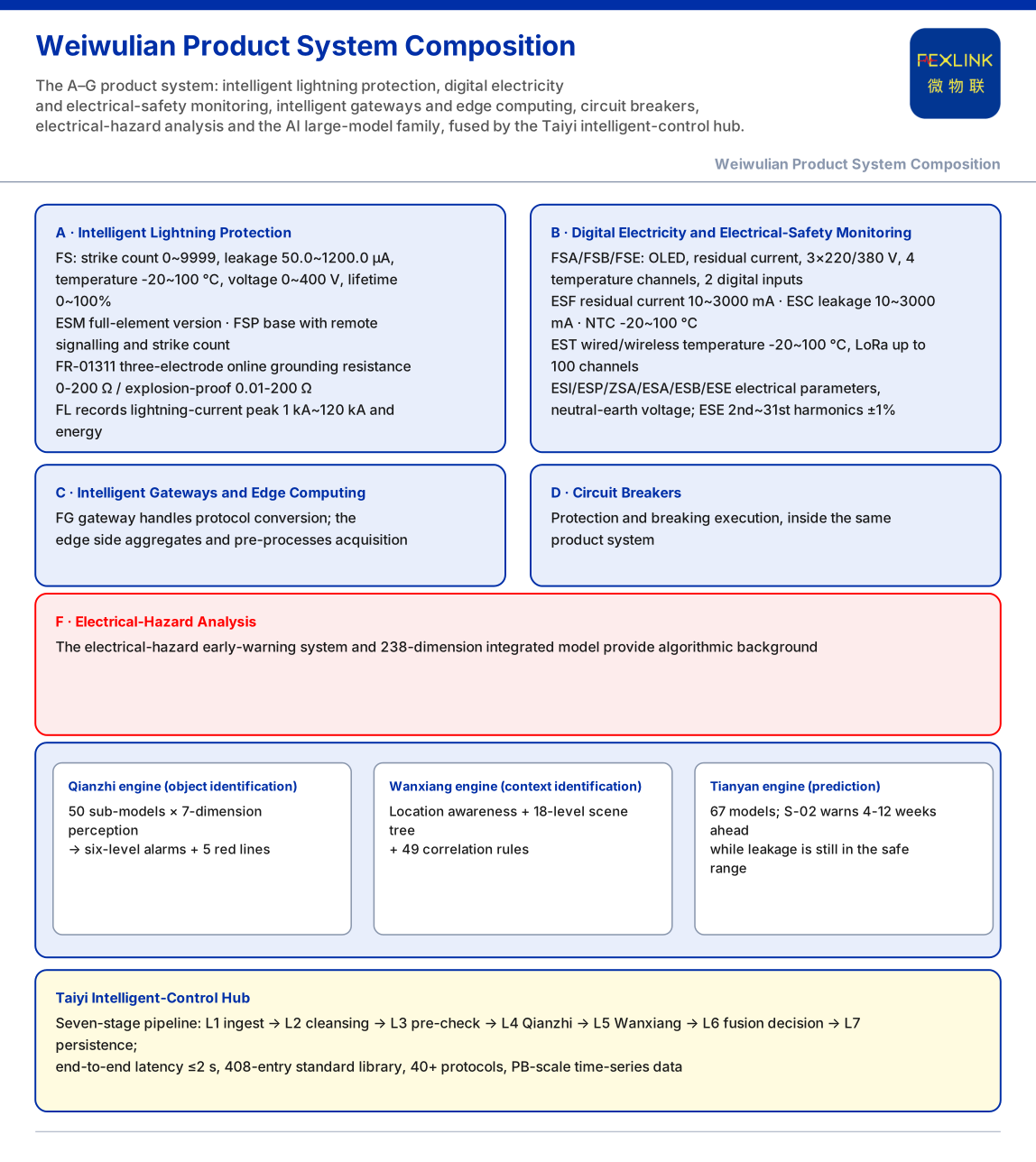
The V2.0 plan of the Tianyan engine sets up 17 special-topic models, including high-voltage switchgear health, transformer lifetime, UPS assessment, storage SOH, charging-pile load forecasting, and data-center power-supply reliability. For a renewable-energy station, the health assessment of the storage and transformation links falls within this special-topic series. This article lists only the coverage of the special topics and does not expand the algorithm or threshold of any model. The special-topic series is broader than a station, so only the entries relevant to storage and transformation are read here; the remaining entries are named for completeness of coverage.
5. System framework: a four-layer architecture for station monitoring
The general four-layer architecture of the monitoring system given in the product knowledge base is the perception layer, the edge layer, the platform layer, and the application layer. The perception layer contains the FS, FR, FL, and ES series monitoring modules and sensors; examples of sensors include the Rogowski coil, the NTC, and the microamp-level leakage sensor. Placing station monitoring inside this frame clarifies where each device sits: the perception layer acquires data, the edge layer handles protocol conversion and local processing, and the platform layer and the application layer handle aggregation, analysis, and presentation. The frame is a position map rather than a device list; it answers where conversion, computation, and caching happen before any particular product is chosen. The Taiyi intelligent control hub system (V2.0) lists renewable-energy stations alongside automotive manufacturing, data centers, semiconductors, commercial buildings, industrial parks, and medical institutions as its applicable industries.
Scope and limitations
This article answers only "what the monitoring priorities for a renewable-energy station are," and its content is limited to the fingerprint library entries, power-quality measurement horizons, selection combination, special-topic models, and four-layer architecture already recorded in the product knowledge base. Priorities are presented as lines of coverage, not as a fixed project scope; which lines a given station needs depends on its own configuration.
This article does not infer grid-connection limits, station capacity, certification requirements, or any unlisted parameter, nor does it commit to the monitoring effect at any specific site.
The model and device horizons in this article are used to explain the mechanism and do not constitute a commitment to the result at a specific site; practical application must be confirmed item by item according to on-site wiring, grid-connection conditions, and compliance requirements. No unlisted parameter, certification, or effect is asserted, and no inference beyond the entries cited is made.