How to choose among the three tiers of the multi-parameter electrical intelligent controller
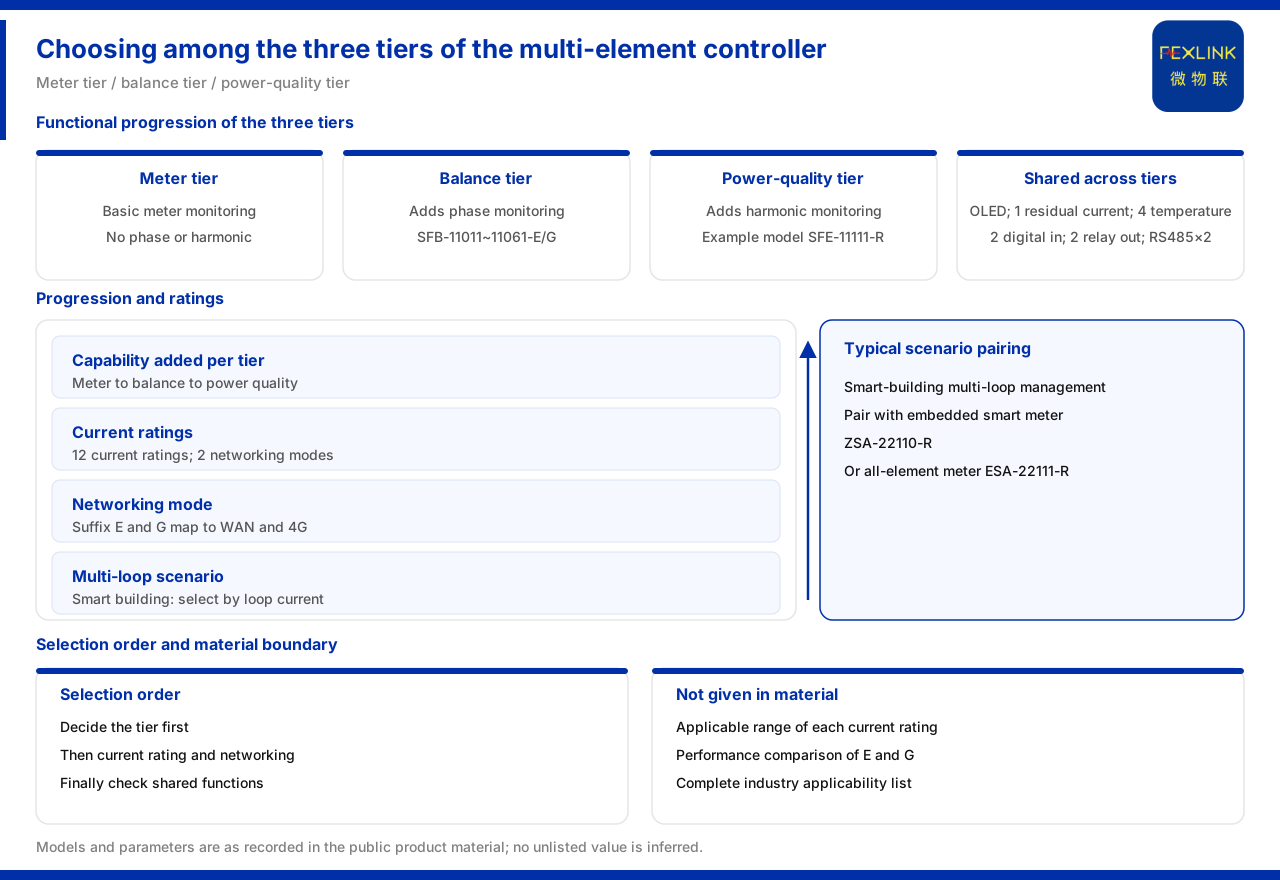
Direct answer: the multi-parameter electrical intelligent controller is divided into three tiers by progressive function — the meter type, the three-phase balance type and the power-quality type. The meter type (models with the SFA prefix) provides basic meter monitoring, without phase monitoring or harmonic monitoring; the three-phase balance type (for example SFB-11011-E) adds phase monitoring on the basis of the meter type; and the power-quality type (for example SFE-11111-R) adds harmonic monitoring further on the basis of phase monitoring. The three tiers share one set of common functions and specification foundations, so the core question in selection is only one: does the site need phase information, and does it need harmonic information. Judging by the two steps "phase, harmonics", a choice can be made among the three tiers.
A boundary must be stated first. What the material can confirm is the progressive function of the three tiers, the common functions, the current specifications and networking methods, and a recommendation for one typical application scenario; what the material does not give is the applicability conclusion of each tier in specific industries and the complete per-model parameters.
The progressive relationship among the three tiers
The material defines this series explicitly as three tiers, in which the three-phase balance type is marked as the "three-phase balance type" and is positioned as adding phase monitoring to the meter type. That is, the meter type is the functional baseline, providing basic meter monitoring but explicitly without phase monitoring or harmonic monitoring. The three-phase balance type starts from the meter type and adds the item of phase monitoring; the power-quality type then starts from the three-phase balance type and adds harmonic monitoring.
This structure of "adding capability tier by tier" gives selection a clear anchor. Engineers need not compare dozens of parameters item by item among the three devices; they only need to judge whether, beyond basic meter monitoring, the site also needs phase information and whether it also needs harmonic information. If neither is needed, the meter type is already sufficient; if only phase is needed, choose the three-phase balance type; if both phase and harmonics are needed, choose the power-quality type. The progressive relationship of the functions is itself the selection logic.
Common functions of the whole series
The common functions shared by the three tiers include an OLED display, 1 residual-current monitoring path, a 3 × 220/380 V voltage specification, 4 temperature-monitoring paths, 2 digital inputs, 2 relay outputs, and two RS485 channels (Modbus). This set of common functions outlines the basic capability of the series: it can not only measure electrical quantities but also has residual current, temperature, digital inputs and relay outputs, able to take on certain field monitoring and linkage tasks.
The two RS485 channels use the Modbus protocol, showing that the series was designed with connection to a host system in mind. For a site with clear wiring and communication protocol, this can reduce integration difficulty. Note that common functions are the part shared by the three tiers; the functional differences among the tiers are concentrated in the two items of phase and harmonics, so the difference part should be checked separately and not replaced by the common functions.
Current specifications and networking methods
The material points out that the three models together provide 12 current specifications and have 2 networking methods. The model segment of the three-phase balance type is SFB-11011 to SFB-11061-E/G, in which the suffixes E and G correspond to the two networking methods respectively (WAN and 4G). This shows that the networking method is not a separately purchased accessory but is reflected in the model suffix, and must be determined at the model level during selection.
The current specification and the networking method are two independent dimensions: first choose the specification according to the current level of the field circuit, then choose the networking method according to the field network conditions; only after the two are combined can a specific model be reached. For the three-phase balance type, for example, the combination of 12 current specifications and 2 networking methods means a relatively wide range of selectable models. Engineers should first clarify "which circuit, how large the current, how to network" and then map to the model segment, rather than reverse-engineering requirements from the model table.
The model-prefix formulation needs to be noted
The material specifically notes a prefix-formulation difference: the selection handbook uses the SFA/SFB/SFE prefixes, while the names of this series correspond to the meter type, the three-phase balance type and the power-quality type, and existing models such as SFE-11111-R use the SFE prefix. That is, the same product may be written with different prefixes in the selection handbook and the name system.
For engineering and procurement staff, the practical reminder is: where the model must be clear, unify the prefix formulation and note the source of the basis in the scheme or list, avoiding misunderstanding caused by inconsistent prefixes. This kind of formulation difference does not change the product function but affects the accuracy of communication and ordering.
The smart-building multi-circuit power-management scenario
In the smart-building multi-circuit power-management scenario, the material recommends the multi-parameter electrical intelligent controller (selected by circuit current) together with the embedded multi-function smart meter (for example ZSA-22110-R) or the all-parameter smart meter (for example ESA-22111-R). This recommendation shows the role of the series in the smart-building scenario: facing multiple circuits, selected by the current level of each circuit, forming distributed circuit-level monitoring.
"Selection by circuit current" is the most operational part of this recommendation. A typical multi-circuit scenario has large differences in current among circuits, so one specification cannot cover all circuits; instead, the current level of each circuit should be checked one by one and mapped to the appropriate tier among the 12 current specifications. At the same time, the pairing of the controller with a meter shows that a multi-circuit scenario often needs both circuit-level control and overview-level metering, used together rather than substituting for each other.
A clear selection judgement order
First, judge whether phase monitoring is needed. If not, choose the meter type. Second, on the premise that phase monitoring is needed, judge whether harmonic monitoring is needed. If only phase, choose the three-phase balance type; if both phase and harmonics, choose the power-quality type. Third, choose the corresponding specification among the 12 current specifications according to the field circuit current level. Fourth, determine the model suffix among the 2 networking methods according to the field network conditions. Fifth, check whether the common functions satisfy the requirement, including 1 residual-current path, 4 temperature paths, 2 digital inputs, 2 relay outputs and two RS485 channels (Modbus). Sixth, in a smart-building multi-circuit scenario, execute the above steps circuit by circuit and consider pairing with the embedded multi-function smart meter or the all-parameter smart meter.
This order puts the function judgement before the specification judgement, because phase and harmonics decide which tier to choose, while current and networking only decide the specific model within the tier.
Parts the material does not give
First, the material gives no description of the applicable range of each of the 12 current specifications; selection must be checked against the actual field current. Second, the material gives no performance comparison of the E and G networking methods; the choice must follow the field network conditions. Third, the material gives no complete applicability list of this series in each industry, only the recommendation for the typical smart-building multi-circuit scenario. Fourth, the material gives no quantity relationship when pairing with the embedded multi-function smart meter or the all-parameter smart meter. Treating these as established conclusions goes beyond the material boundary.
Summary
The multi-parameter electrical intelligent controller can be selected in two steps of "phase, harmonics": the meter type is basic meter monitoring, with no phase or harmonics; the three-phase balance type adds phase monitoring; and the power-quality type adds harmonic monitoring further, with representative models using the SFE prefix. The three tiers share an OLED display, 1 residual-current path, a 3 × 220/380 V voltage specification, 4 temperature paths, 2 digital inputs, 2 relay outputs and two RS485 channels (Modbus); there are 12 current specifications and 2 networking methods in total, and the model segment of the three-phase balance type is SFB-11011 to SFB-11061-E/G. The smart-building multi-circuit power-management scenario recommends selection by circuit current, paired with the embedded multi-function smart meter or the all-parameter smart meter.
For selection staff, the prudent approach is to fix the function tier first, then the current specification and networking method, and finally check the common functions; for review and delivery, it should be checked whether the scheme treats an applicability list or pairing quantity not given by the material as an established conclusion. Advancing "functional progression" and "specification selection" separately is what prevents the three tiers of this series from being mismatched.