How to distinguish a three-phase imbalance monitor, an all-parameter smart meter and a power-quality monitor
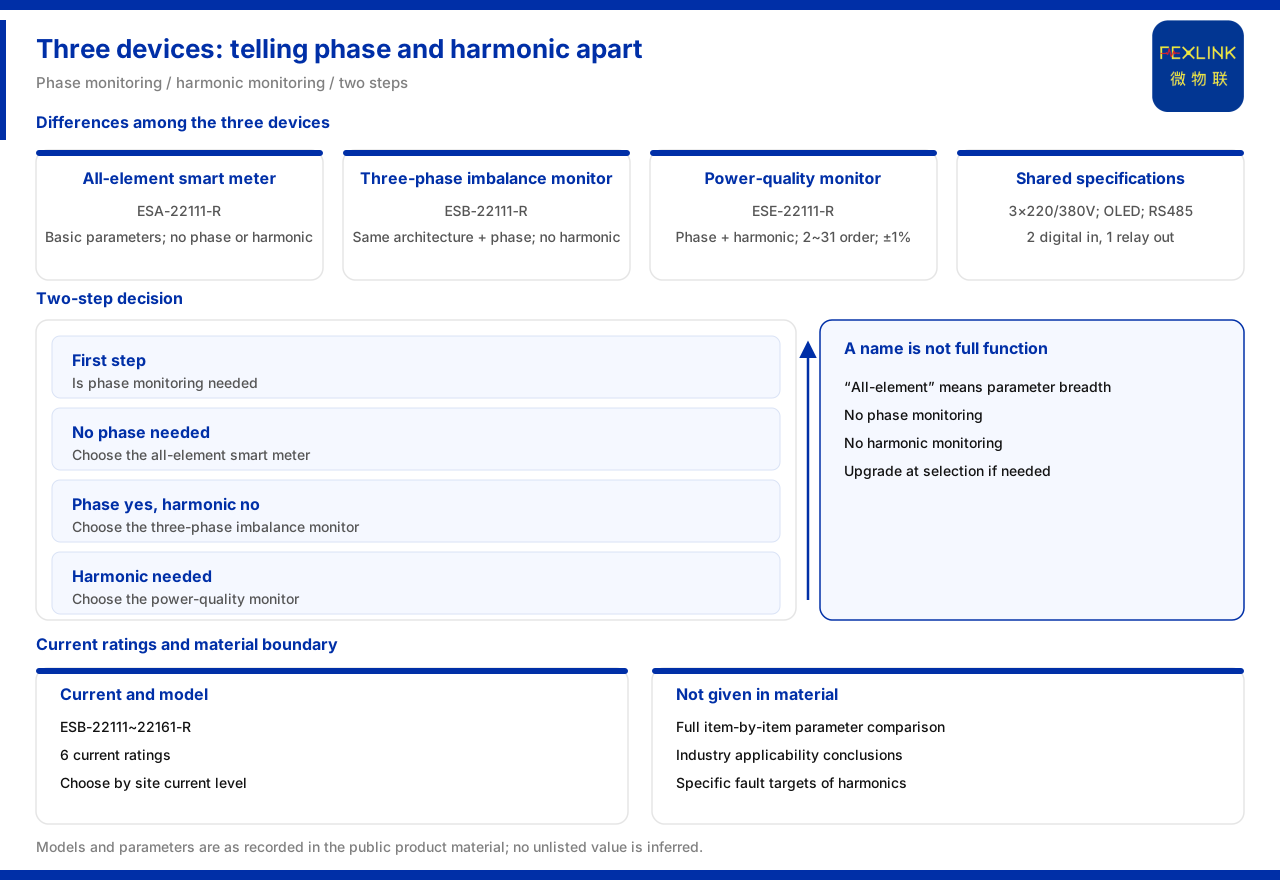
Direct answer: the distinguishing points of these three devices are concentrated in the two capabilities of "phase monitoring" and "harmonic monitoring". The all-parameter smart meter (for example ESA-22111-R) provides basic all-parameter electrical-quantity monitoring but does not include phase monitoring or harmonic monitoring; the three-phase imbalance monitor (for example ESB-22111-R) shares the architecture of the all-parameter smart meter and adds phase monitoring on that basis, still without harmonic monitoring; and the power-quality monitor (for example ESE-22111-R) adds harmonic monitoring further on the basis of phase monitoring, able to measure the 2nd to 31st harmonics with an accuracy of ±1%. In addition, the three-phase imbalance monitor provides 6 current specifications, with the model segment ESB-22111 to ESB-22161-R. Judging by the two steps "whether phase is needed, whether harmonics are needed" distinguishes the three clearly.
A boundary must be stated first. What the material can confirm is the commonality and differences of the three devices, and part of the specifications and interface capability; what the material does not give is the complete parameter table of each model and the applicability conclusions under different operating conditions. The following therefore only organises the differences and does not select for a specific project.
The shared architecture and specifications of the three devices
The material explicitly states that the three-phase imbalance monitor and the all-parameter smart meter share the same architecture. The same architecture means they share one design foundation in basic electrical-quantity monitoring, display and communication, and the difference appears only in the presence or absence of specific functions. The material also points out that both devices use a 3 × 220/380 V voltage specification, have an OLED display, and use RS485 communication. That is, in the three aspects of voltage system, display method and communication interface, the two are consistent.
The value of the same architecture is that it lowers replacement and compatibility costs: when a project upgrades from one function tier to another, the wiring, display habits and communication method remain continuous. For engineers, this means selection can focus on "functional differences" without re-checking every basic capability. Note that "same architecture" is a positioning given by the material and does not mean that every parameter of the three devices is identical item by item; for a specific project, the parameters of the corresponding model should still govern.
The boundary of the all-parameter smart meter: no phase and no harmonics
Although named "all-parameter", the material gives its clear boundary: it does not include phase monitoring, nor harmonic monitoring. "All-parameter" here refers to the breadth of electrical-quantity coverage, not to the inclusion of every specialised analysis function. This is important, because the name easily suggests that it already covers phase and harmonics.
In an actual project, if the analysis goal is only continuous monitoring of conventional electrical quantities, the boundary of the all-parameter smart meter is not a problem; but if phase-dimension analysis of three-phase imbalance is later needed, or the harmonic condition must be assessed, its capability is not sufficient, and a higher function tier should be considered at the selection stage. Equating "all-parameter" with "all-function" is the most common misreading in this product line.
The three-phase imbalance monitor: adds phase, still no harmonics
The three-phase imbalance monitor adds phase-monitoring functionality on the same architecture as the all-parameter smart meter, which is its core difference from the latter. Phase monitoring is an important input for three-phase imbalance analysis: it lets the device describe the three-phase relationship from the phase angle rather than only giving three-phase values. The material also points out that the device still does not include harmonic monitoring.
The positioning of the three-phase imbalance monitor can therefore be summarised as "specialised in imbalance, not in harmonics". It suits scenarios where phase information is critical to the analysis and harmonics are not the focus. The material gives its 6 current specifications, with the model segment ESB-22111 to ESB-22161-R, showing that it covers different current levels. In selection, after confirming that phase monitoring is needed, choose among the 6 specifications according to the field current level.
The power-quality monitor: adds harmonics
The power-quality monitor continues from the three-phase imbalance monitor by adding harmonic monitoring, able to measure the 2nd to 31st harmonics with an accuracy of ±1%. It combines the two capabilities of "phase monitoring" and "harmonic monitoring" in one, and is therefore the widest in function coverage among the three. When a project needs both phase information and assessment of the harmonic condition, it is where the difference boundary given by the material lies.
It should be emphasised that "2nd to 31st" and "±1%" are both definite formulations given by the material. The harmonic order range determines which frequency components can be observed; the accuracy is a measurement formulation given by the material, and actual performance is still related to field conditions. When writing harmonic capability into a scheme, these two values should be stated strictly, and the order range should not be expanded or the accuracy inflated.
Commonality of the input and output interfaces
The material points out that the three-phase imbalance monitor and the all-parameter smart meter both have 2 digital inputs and 1 relay output. Digital inputs can connect external status signals, and the relay output can drive indication or linkage. This interface configuration shows that both devices have a certain field-linkage capability and are not merely passive monitors.
For a project, the significance of interface capability is that it determines whether the device can take a linkage role. If a scheme includes the need to "trigger a local action after an abnormality is monitored", the selection must confirm whether the output interface satisfies it. What the material gives is the common interface; whether individual models differ in interface count or type should be based on the corresponding model parameters.
A clear selection judgement order
First, ask "is phase monitoring needed". If not, the all-parameter smart meter satisfies conventional electrical-quantity monitoring; if so, go to the next step. Second, ask "is harmonic monitoring needed". If only imbalance and not harmonics, choose the three-phase imbalance monitor; if harmonics are needed, choose the power-quality monitor. Third, determine the current specification. For the three-phase imbalance monitor, for example, choose among the 6 specifications of ESB-22111 to ESB-22161-R according to the field current level. Fourth, check interfaces and installation, confirming whether 2 digital inputs and 1 relay output satisfy the linkage requirement, and whether the OLED display and RS485 communication are consistent with the site.
This order puts "phase" before "harmonics" because phase is the basic capability of three-phase imbalance analysis, while harmonics are a further specialised capability. Advancing in this order avoids choosing a model with insufficient or excessive function.
Parts the material does not give
First, the material gives no complete item-by-item parameter comparison table for the three devices, so a parameter cannot be filled in by inference. Second, the material gives no applicability conclusion for each model in different industry scenarios; this needs to be judged together with field requirements. Third, the material gives no specific fault direction of harmonic analysis; which problems the 2nd to 31st harmonics correspond to belongs to the analysis level. Fourth, the material gives no description of the applicable level of each of the 6 current specifications; selection must be checked against the actual field current. Treating these as established conclusions in a scheme goes beyond the material boundary.
Summary
The differences among the three devices can be summarised in two steps: the all-parameter smart meter provides basic electrical-quantity monitoring, with no phase or harmonics; the three-phase imbalance monitor shares its architecture and adds phase monitoring, still without harmonics, and provides 6 current specifications with the model segment ESB-22111 to ESB-22161-R; and the power-quality monitor adds harmonic monitoring on the basis of phase monitoring, able to measure the 2nd to 31st harmonics with an accuracy of ±1%. All three use 3 × 220/380 V, an OLED display and RS485 communication, and the three-phase imbalance monitor and the all-parameter smart meter both have 2 digital inputs and 1 relay output.
For selection staff, the prudent approach is to judge whether phase is needed first, then whether harmonics are needed, and finally determine the model by current level and interface requirement; for review and delivery, it should be checked whether the scheme treats a complete parameter table or scenario applicability not given by the material as an established conclusion. Keeping functional differences and basic commonality separate in the wording is what prevents these three devices from being mixed up.