Direct Answer
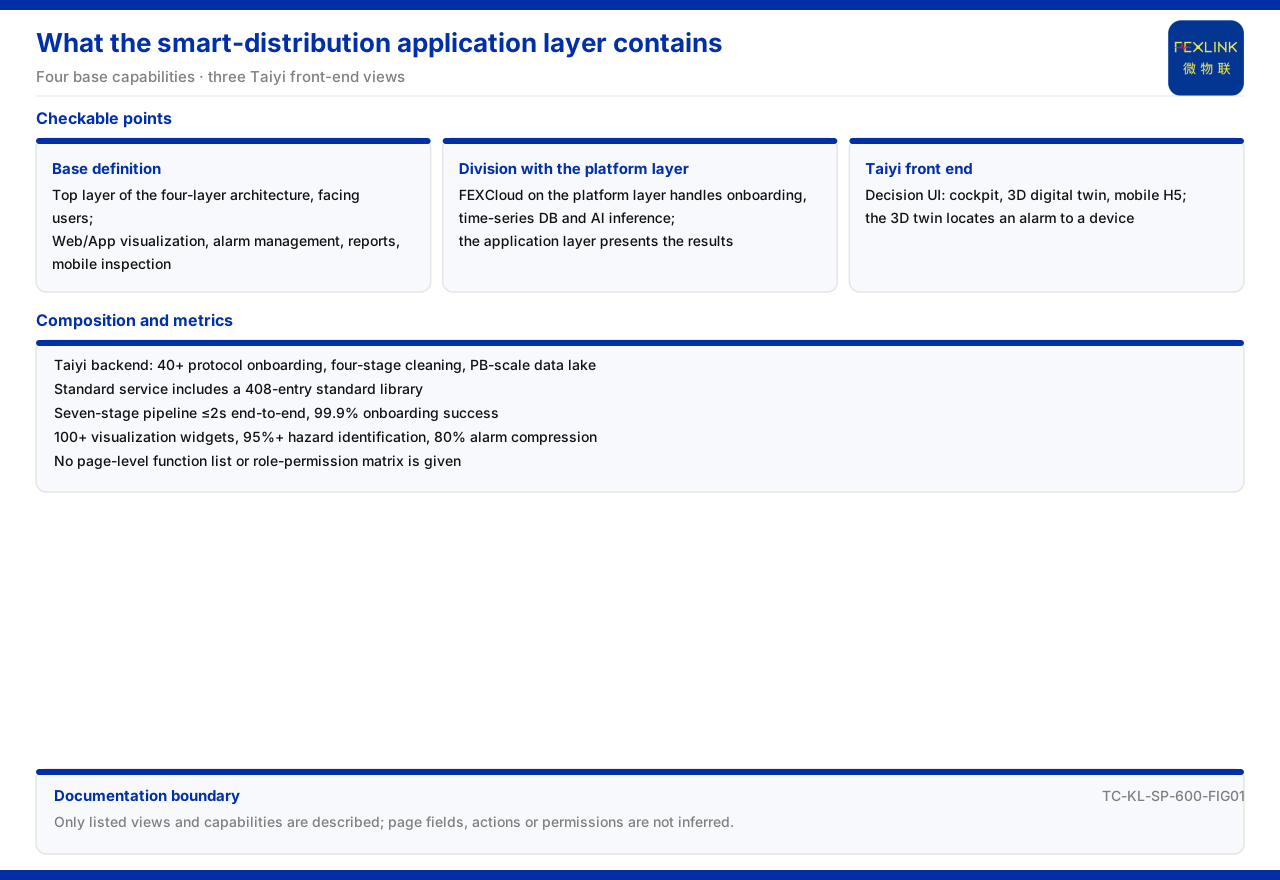
The application layer of intelligent power distribution is defined in the product documentation as the interface and function layer facing users, at the top of the four-layer architecture of perception layer, edge layer, platform layer, and application layer. Its basic definition is Web and App visualization, alarm management, analysis reports, and mobile inspection. Under the entry for the Taiyi intelligent control hub system (V2.0), the application layer is further expanded into the Taiyi front end (decision interface), containing the integrated cockpit, 3D digital twin, and mobile H5, where the 3D digital twin can locate an alarm to a device. It should be noted that the documentation lists only these interface forms and gives no page-level function list or user-role permission matrix.
Reading the basic application layer together with the Taiyi front end shows two granularities of the application layer: the general Web and App capability, and the specific interface forms given by the Taiyi system. This article explains the listed application-layer capability, its relationship with the platform layer, and the documentation boundary on that basis.
1. The Basic Definition of the Application Layer
The general four-layer architecture of the documentation runs from bottom to top as perception layer, edge layer, platform layer, and application layer, with the application layer at the top, defined as Web and App visualization, alarm management, analysis reports, and mobile inspection. These four capabilities correspond to viewing, alarming, analyzing, and inspecting: visualization presents, alarm management handles events, analysis reports summarize, and mobile inspection supports field work.
Placing the application layer at the top means it faces users rather than devices or data. Its input comes from the platform layer below, and its output is an interface for people to see and a process for people to use.
2. The Division Between Platform Layer and Application Layer
The documentation defines the platform layer as the FEXCloud IoT cloud platform, carrying device access, the time-series database, and the AI inference engine. The application layer is built on top of the platform layer: the platform connects, stores, and reasons over device data, and the application layer presents those results as visualization and alarms.
Distinguishing the two layers helps show that the application layer is not the starting point of data processing but the exit of data value. The quality of the application's presentation depends on the platform layer's data and inference, while the application layer itself concerns interaction and expression.
3. The Three Interfaces of the Taiyi Front End
The documentation calls the front end of the Taiyi intelligent control hub system the decision interface, containing the integrated cockpit, 3D digital twin, and mobile H5. The integrated cockpit faces the overall situation, the 3D digital twin can locate an alarm to a device, and mobile H5 faces mobile work scenarios.
The three interfaces correspond to different postures of use: the cockpit views the whole, the digital twin views a specific device position, and the mobile end views accessibility at any time. Together they show that the application layer is not a single interface but one differentiated by use scenario.
4. The Composition of the Taiyi System
The documentation lists the Taiyi intelligent control hub system as three parts: the Taiyi back end, carrying access for more than 40 protocols, four-level cleaning, and a PB-scale time-series data lake; the standard service, containing a 408-item standard library; and the Taiyi front end, namely the decision interface above. The division is clear: the back end manages data inflow and governance, the standard service manages the standard basis, and the front end manages decision presentation.
The application layer is concerned with the front end, but the front end's presentation depends on the back end and the standard service. Seeing the composition whole explains why the application layer can offer interfaces such as the cockpit and digital twin rather than simple data tables.
5. The Relation Between the Taiyi Pipeline and the Application Layer
The documentation describes the Taiyi processing chain as a seven-stage pipeline: access, cleaning, standard verification, Qianzhi analysis, Wanxiang assessment, fusion decision, and persistence, with an end-to-end time of no more than 2 seconds and a data-access success rate of 99.9%. This pipeline determines the speed and reliability with which data moves from entry to decision result and is the precondition for real-time presentation at the application layer.
For the application layer, the meaning of the pipeline is latency and success rate: the real-time behavior in the interface comes from this chain. This article cites these quantitative indicators but does not infer the algorithm implementation. The standard-verification stage is placed before analysis, showing that the standard basis is used in advance rather than checked afterward. For the application layer this means the conclusions presented in the interface have already passed standard verification before reaching the user.
6. Quantified Value and the Application Layer
Under the Taiyi entry the documentation lists quantified value indicators, including more than 100 visualization components, as well as an electrical-hazard recognition rate of more than 95%, an alarm compression ratio of 80%, and a threefold improvement in alarm accuracy. The number of visualization components corresponds directly to the presentation capability of the application layer, while the other indicators reflect the analysis side.
When reading these indicators, place them within the division between the application layer and the platform layer: visualization components belong to the presentation layer, while recognition rate and compression ratio belong to analysis results. Together they describe the information density the application layer can carry.
7. The Two Granularities of the Application Layer
Reading the definition of the application layer alongside the Taiyi front end reveals two granularities. The application layer given by the general four-layer architecture is a capability list: visualization, alarming, reports, and inspection, and it answers what the application layer can do. The Taiyi front end gives interface forms: integrated cockpit, 3D digital twin, and mobile H5, and it answers what these capabilities look like in the Taiyi system.
The two granularities suit different purposes. To judge whether a system has complete application-layer capability, compare against the four basic capabilities; to understand the operation entries of the Taiyi system, compare against the three front-end interfaces. The two do not replace each other, and the interface names should not be treated as the whole capability list.
8. The Documentation Boundary
The documentation lists only the interface forms of the application layer and the Taiyi front end and gives no specific page-level function list or user-role permission matrix for the intelligent power distribution application layer. This article can therefore explain which interfaces and capabilities exist but not the fields, operations, or permission allocation of each page.
If pages and permissions must be defined, system design documents should be used separately rather than inferred from interface names. This article's boundary stops at the forms and indicators listed in the documentation.
Scope and Limitations
First, this article restates only what the product documentation lists. The definition of the application layer in the four-layer architecture, the FEXCloud responsibilities of the platform layer, the Taiyi front end and system composition, the seven-stage pipeline, and the quantified value indicators are cited as written.
Second, this article does not infer the algorithm implementation, deployment method, or concurrency capacity of the Taiyi system, and does not derive page functions from interface names.
Third, this article gives no user-role permission matrix or page-level function list, because that content is outside the factual boundary of the product documentation.
Fourth, the quantitative indicators are cited as listed; this article does not conclude any on-site effect not appearing in the documentation.