Direct Answer
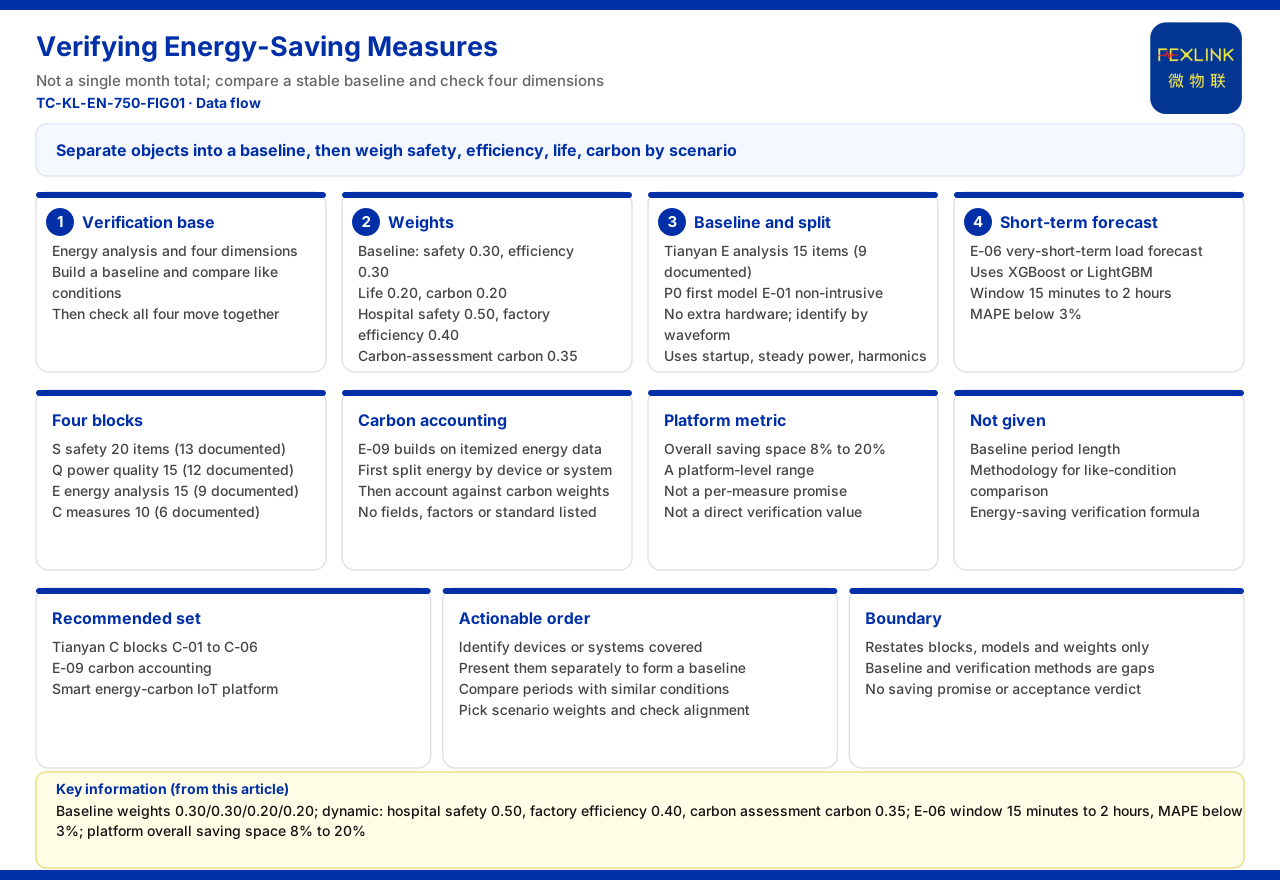
After an energy-saving measure is implemented, effect verification cannot rely only on comparing one month's total electricity before and after the retrofit. The total is affected by season, output, weather, and equipment start-stop, so a month-on-month comparison easily mixes "saved" with "was already low." The verification basis provided by the product documentation is energy-use analysis and the four-dimension efficiency dimensions: first compare against a stable baseline and equivalent operating conditions, then see whether the four dimensions of safety, efficiency, lifetime, and carbon emission improve in the same direction. The selection combination given for the "energy saving and carbon management" scenario is the Tianyan C block (C-01 to C-06) plus E-09 carbon accounting, plus the smart energy-carbon IoT platform. It should be said that the documentation gives no baseline-period length, no methodology for comparing equivalent operating conditions, and no energy-saving verification formula, so this article explains only which capabilities verification should rest on and does not give a specific verification period or verified quantity.
Why Verification Cannot Look Only at One Month's Total
Whether an energy-saving measure works depends on the conditions under which it operates and which part of the energy it reduces. If only the main meter reading is used, load-structure changes, output fluctuations, or climate differences are merged into the result. The reason the four-dimension impact assessment of the documentation lists efficiency as a separate dimension is that it corresponds to "energy per unit of output or service," not absolute consumption. Only by separating absolute consumption from efficiency indicators can it be judged whether the saving comes from the measure itself or from external conditions. The documentation gives no formula for efficiency, and this article does not supplement one.
Where the Baseline Comes From
The baseline is the reference for verification. Building a baseline requires a comparable period of energy-use data and a clear statement of whether the production or service volume during the comparison period is similar. In the Tianyan engine, the E energy-use analysis block plans 15 models (9 in the documented definition), of which the P0 first-release model is E-01 non-intrusive load monitoring. The significance of this model is that without additional hardware it identifies specific devices through the current waveform, based jointly on start-up signature, steady-state power, and harmonic signature. Device-level identification lets the baseline be refined to the device level rather than only the whole-building total. The documentation gives no baseline period length and no allowed range of operating-condition deviation.
What the Energy-Use Analysis Block Provides
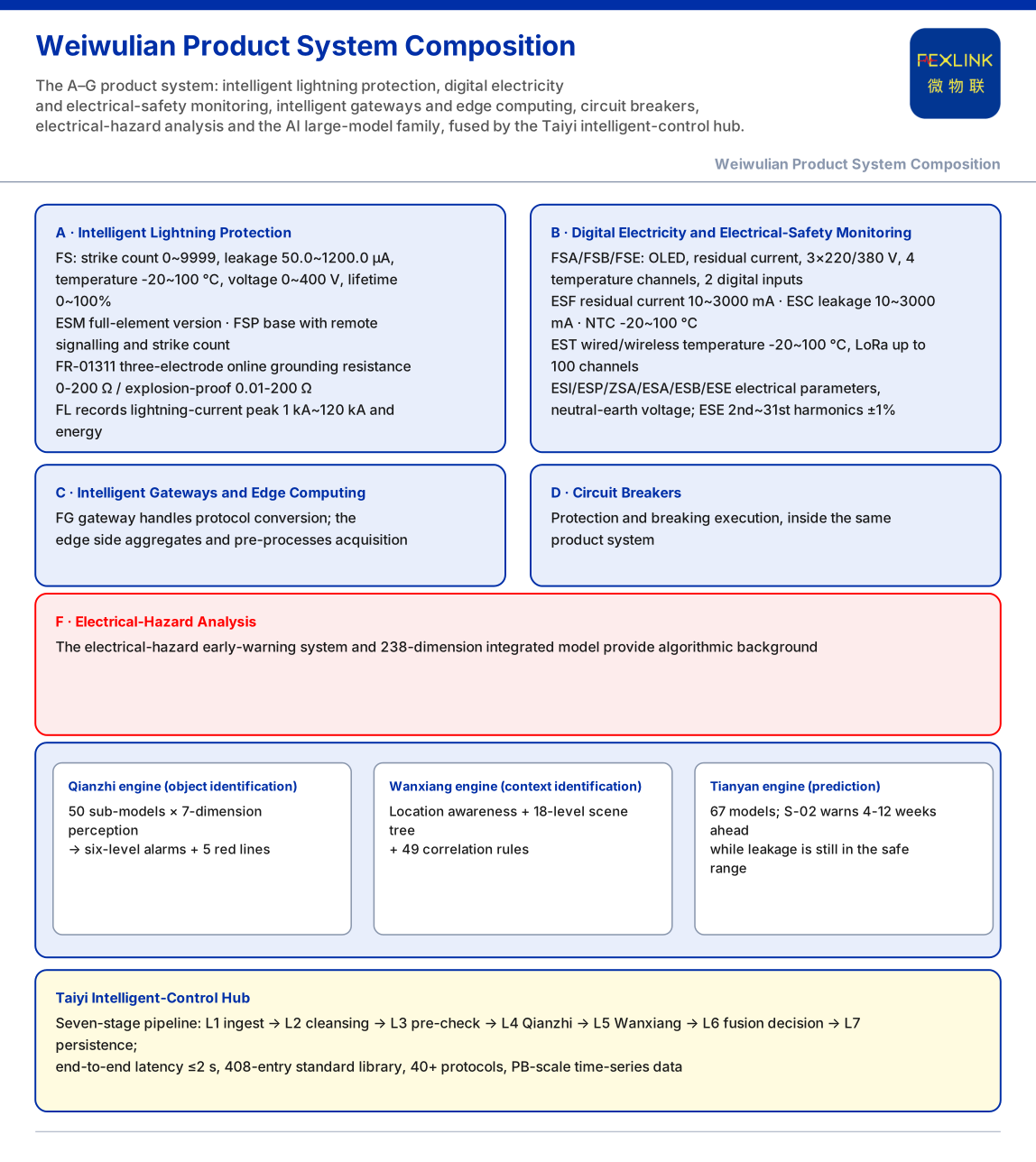
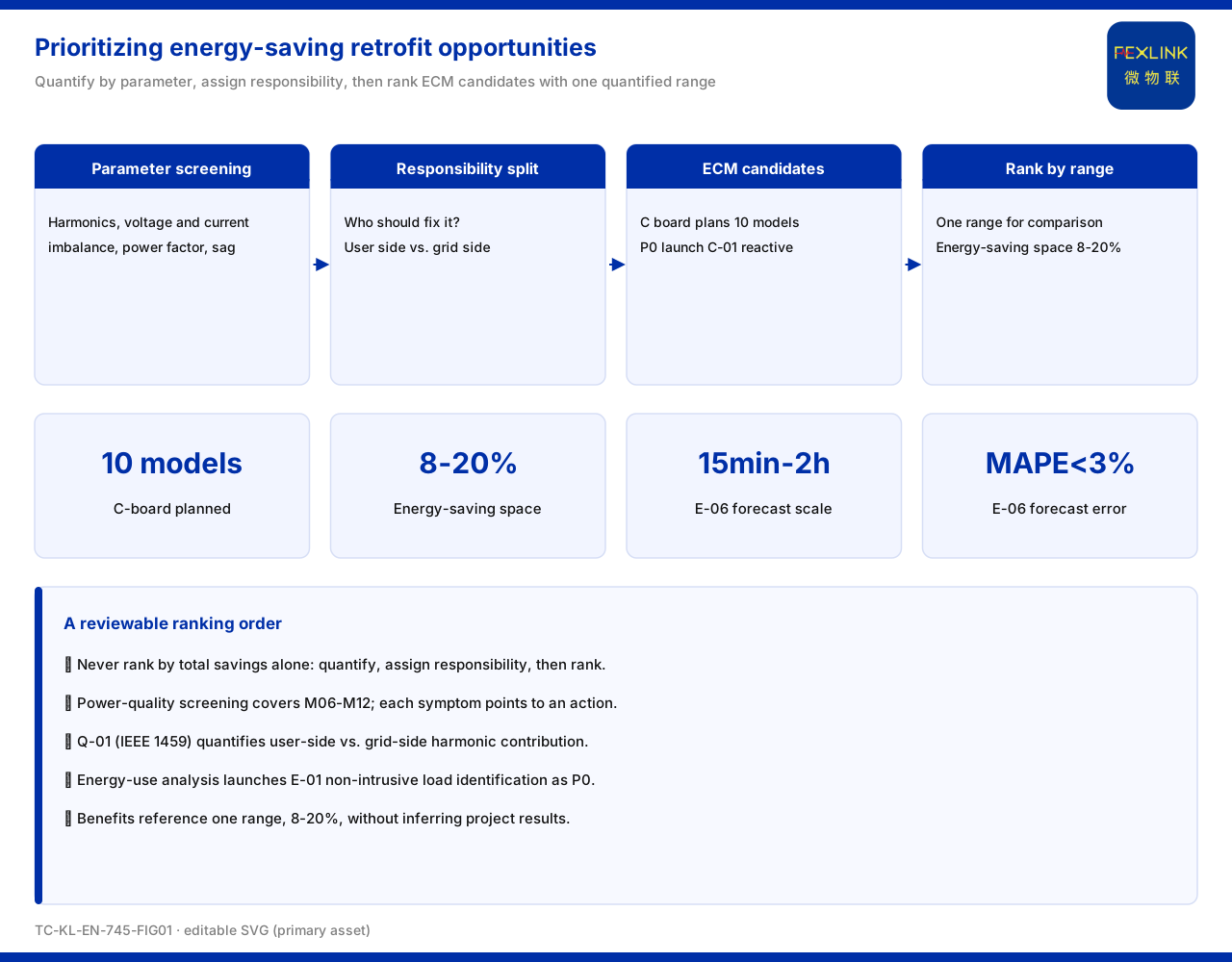
The E energy-use analysis block is one of four blocks of the Tianyan engine. The four blocks are: S safety analysis 20 items (13 in the documented definition), Q power quality 15 items (12 in the definition), E energy-use analysis 15 items (9 in the definition), and C energy-saving countermeasures 10 items (6 in the definition). The E block carries the step of "see clearly before talking about saving," presenting load and device energy use separately. The C block carries countermeasures, and its P0 first-release model is C-01 reactive-power compensation optimization. In verification, the E block provides the measurement and decomposition basis and the C block the source of the measure, and both are needed to explain "where the saving is."
How the Four-Dimension Impact Weights Acceptance
The baseline weights of the four-dimension impact assessment are: safety 0.30, efficiency 0.30, lifetime 0.20, and carbon emission 0.20. The documentation also gives dynamic weights: safety weight 0.50 for hospital scenarios, efficiency weight 0.40 for factory scenarios, and carbon-emission weight 0.35 for carbon-assessment scenarios. This means the same saving result has a different order of importance in different scenarios. Acceptance should first clarify which scenario the project belongs to and then fix the relative weight of the four dimensions. The documentation gives no switching rule or superposition method for the dynamic weights, so a conclusion such as "safety and efficiency weights rise together" cannot be inferred.
The Role of Very-Short-Term Forecasting in Verification
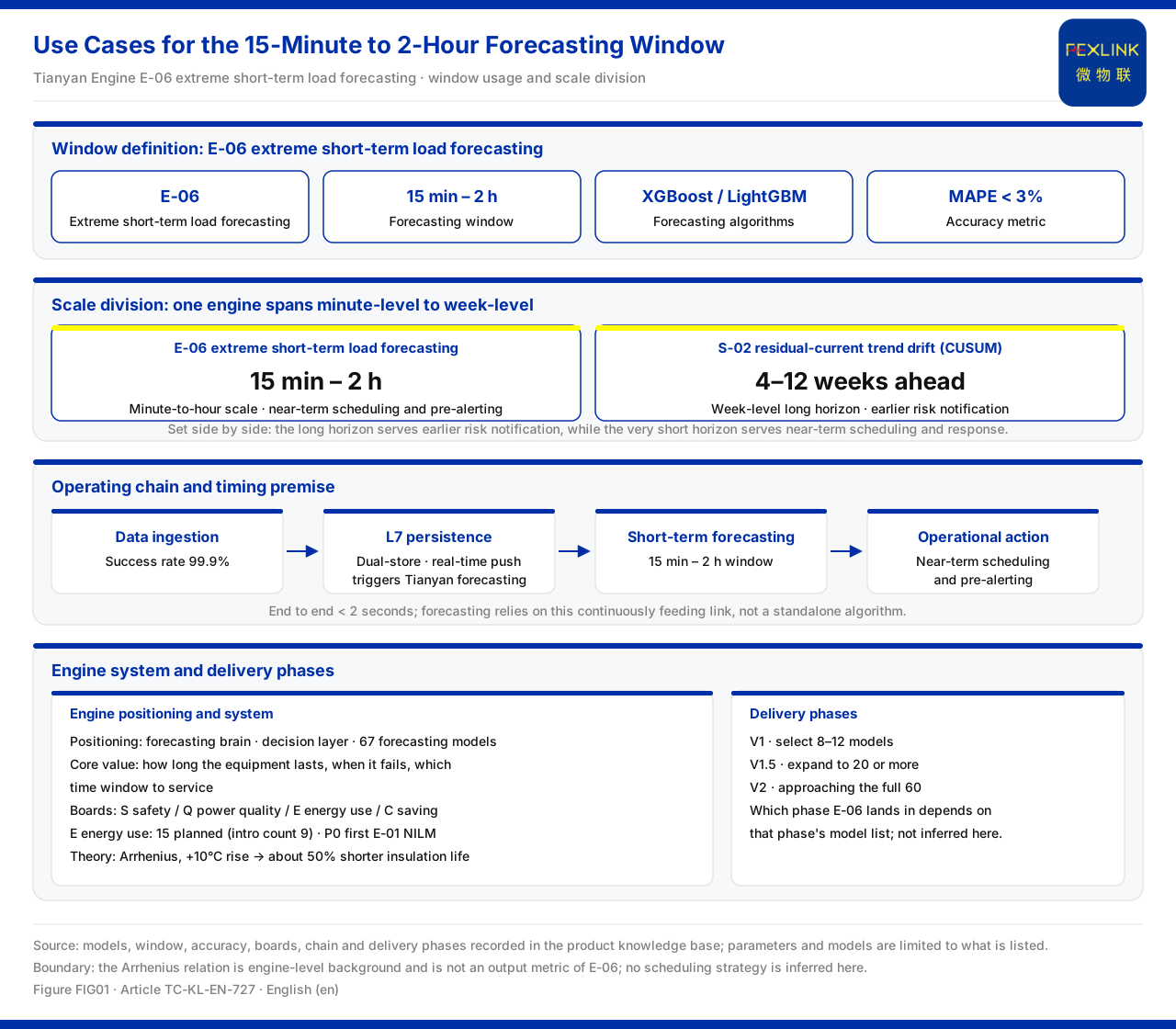
E-06 very-short-term load forecasting of the Tianyan engine uses XGBoost or LightGBM, with a forecast window of 15 minutes to 2 hours and a MAPE below 3%. The role of such forecasting is to estimate the load trend of "what would happen if the measure were not implemented," providing a reference for counterfactual comparison. It moves verification from a simple historical comparison to a prediction-based control. It should be noted that the MAPE below 3% is an indicator of the forecast model, not a guaranteed energy-saving value, and the two should not be mixed. The documentation does not state how forecast results convert into energy savings, and this article does not infer it.
The Position of Carbon Accounting in the Combination
E-09 carbon accounting in the selection combination is listed as a component of the energy-saving and carbon-management combination. It is built on itemized energy-use data: only after energy use is separated by device or system can the corresponding carbon-emission weight be assigned for accounting. The documentation does not list the specific data fields, carbon-factor sources, or accounting standards required by E-09, so this article can explain only its logical position of depending on itemized energy-use data and gives no input list.
The Quantified Definition at the Platform Level
The documentation gives one quantified value of the Taiyi intelligent control hub system as a composite energy-saving space of 8% to 20%. This is an interval indicator at the platform level, not an effect promise of a single measure. When used in verification, it should be understood as the potential space range corresponding to platform capability, not the acceptance pass line. The documentation gives no calculation basis or applicable conditions for this interval, so it cannot be used directly as a verified energy-saving value.
Verification Parameters the Documentation Does Not Give
The documentation gives no baseline-period length for energy-saving measure effect verification, no methodology for comparing equivalent operating conditions, and no energy-saving verification formula. These three are exactly the core content of acceptance documents. Their absence means any statement such as "take a three-month baseline," "convert by year-on-year," or "what saving rate counts as passing" lacks documentation support. The acceptance definition should be agreed by the project parties in the contract or plan with reference to applicable standards and cannot be derived from this article.
Common Misunderstandings
The first misunderstanding is to replace baseline comparison with a month-on-month total, ignoring operating-condition differences. The second is to treat the four-dimension weights as fixed, ignoring the dynamic weights given in the documentation. The third is to treat the forecast model's MAPE as an energy-saving guarantee, mixing two kinds of indicators. The fourth is to take the platform-level energy-saving space interval directly as the project pass line. Separating these four makes the verification conclusion reliable.
An Operable Verification Sequence
Stringing the known capabilities together, verification can proceed in this order: first clarify which devices or systems the measure covers, then use energy-use analysis to present their energy use separately and form a baseline; next select a period with operating conditions similar to the verification period for comparison, using very-short-term load forecasting where needed to supply the "not-implemented" reference; finally choose the four-dimension weights by project scenario and check whether safety, efficiency, lifetime, and carbon emission improve in the same direction rather than looking only at one dimension's numeric change. This order uses only documented capabilities and introduces no verified quantity or period not given by the documentation, so it can serve as a framework for organizing acceptance material.
Boundary Statement
First, this article restates only the block composition and model definitions of the Tianyan engine, the four-dimension impact weights, the functional descriptions of E-01 and E-06, the selection combination, and the platform quantified interval, and does not extend to unlisted parameters. Second, the methodology related to baseline, comparison, and verification is a documentation gap that must be fixed by the project contract and applicable standards, and this article does not infer it. Third, this article does not constitute an energy-saving effect promise or acceptance judgment.