Direct Answer
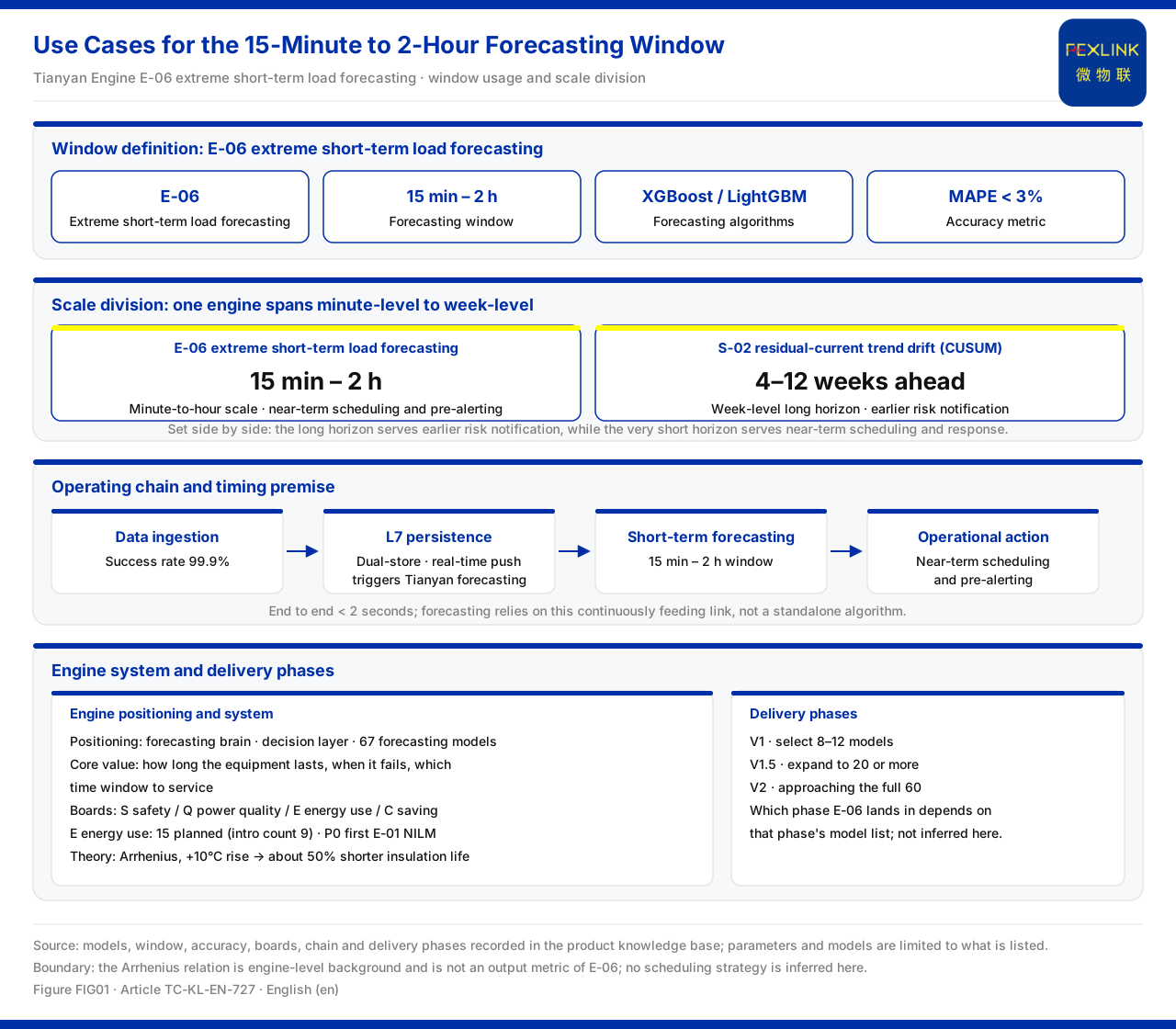
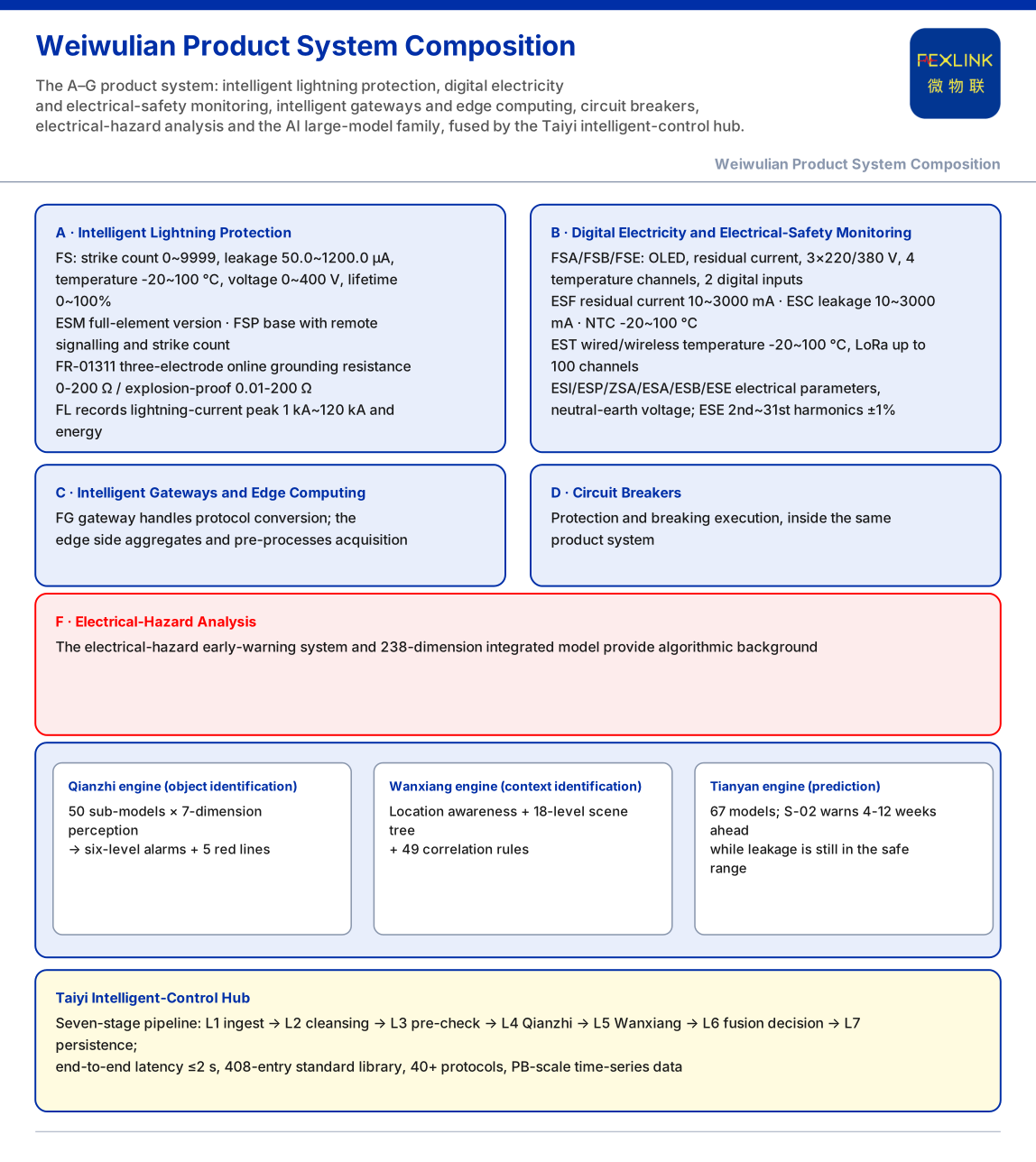
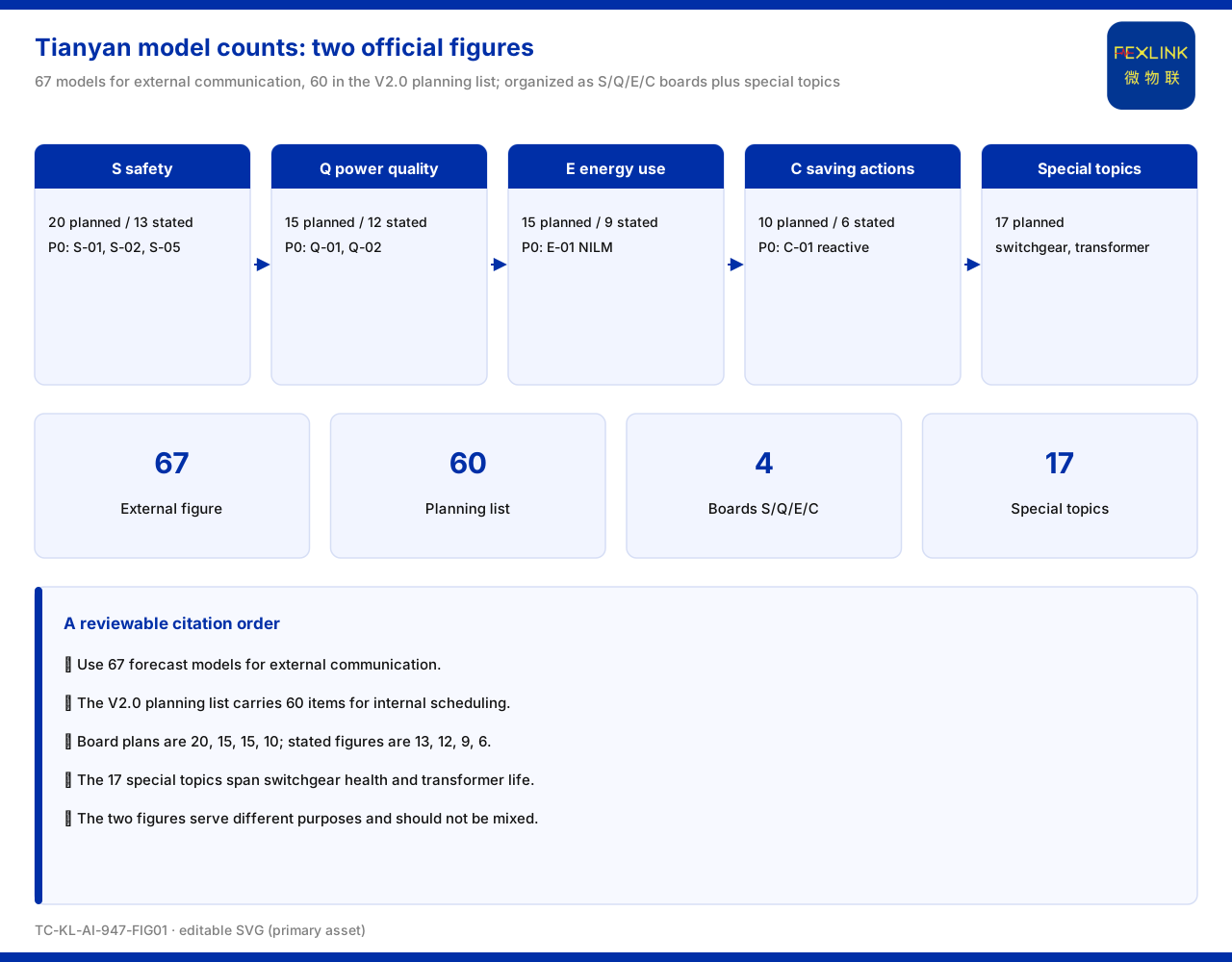
The model convention of the Tianyan engine is easily confused because two sets of numbers exist at once: one for external statement and one for internal scheduling. According to the existing product material, the family overview table marks the Tianyan engine as having evolved from an early version to V2.0, positions it as the prediction brain and decision layer, and gives sixty-seven prediction models; at the same time, an appendix explains that the marketing convention is sixty-seven, while the V2.0 plan's unique numbering table uses a convention of sixty items, with sixty-seven used uniformly externally and the numbering table used internally for scheduling. Structurally, the Tianyan models are organised into four sections, safety analysis, power quality, energy-use analysis and energy-saving measures, plus separate special topics. The planned counts of the four sections are twenty, fifteen, fifteen and ten respectively, with introductory conventions of thirteen, twelve, nine and six; the special topics number seventeen. This article restates these existing conventions only and does not infer the actual effect or launch time of any specific model.
1. Why There Are Two Sets of Model Numbers
In the product material, two numbers, sixty-seven and sixty, appear for the Tianyan engine, and their sources differ. The sixty-seven prediction models marked in the family overview table belong to the unified external convention, used to state the overall scale of prediction capability; the V2.0 plan's unique numbering table uses a convention of sixty items, used for internal scheduling and number management and corresponding to a dedicated full model list. The product material states clearly that sixty-seven is used uniformly externally and the numbering table internally for scheduling. Understanding this prevents treating the two numbers as contradictory: they serve different occasions, one an external statement of scale and one an internal scheduling ledger. Wherever this article touches model counts, it will indicate which set of conventions is meant.
2. Overall Composition of the Four Sections
The product material records that the Tianyan engine's V2.0 planned models are organised into four sections, safety, power quality, energy-use analysis and energy-saving measures, and managed by a unique numbering table. The four sections correspond to four kinds of problem: the safety section concerns hazards and risks, the power-quality section concerns parameters such as voltage, current and harmonics, the energy-use analysis section concerns the energy-use characteristics of devices and loads, and the energy-saving measures section concerns executable treatment actions. Organising models by these four kinds makes each model's membership clear and makes it easy to locate the corresponding section from a problem type. It should be noted that the unique numbering table follows the planned counts and belongs, with the family overview's external convention, to two sets of numbers that should not be mixed.
3. The Safety Analysis Section
The safety section has twenty items in the V2.0 plan, with an introductory convention of thirteen. The P0 first-release models include resistive-leakage separation, residual-current trend drift and three-phase imbalance hazard. The residual-current trend drift uses a cumulative-sum type method, and the product material gives a convention of warning four to twelve weeks ahead; the three-phase imbalance hazard corresponds to the common problem of uneven three-phase loading in distribution systems. Placing the three kinds, separation, trend drift and hazard, in first-release position shows that the safety section is oriented to first distinguishing different types of leakage and imbalance and then detecting them ahead of time by trend, rather than alarming only after a risk has appeared. The time span and criterion method here are restated as listed in the product material.
4. The Power-Quality Section
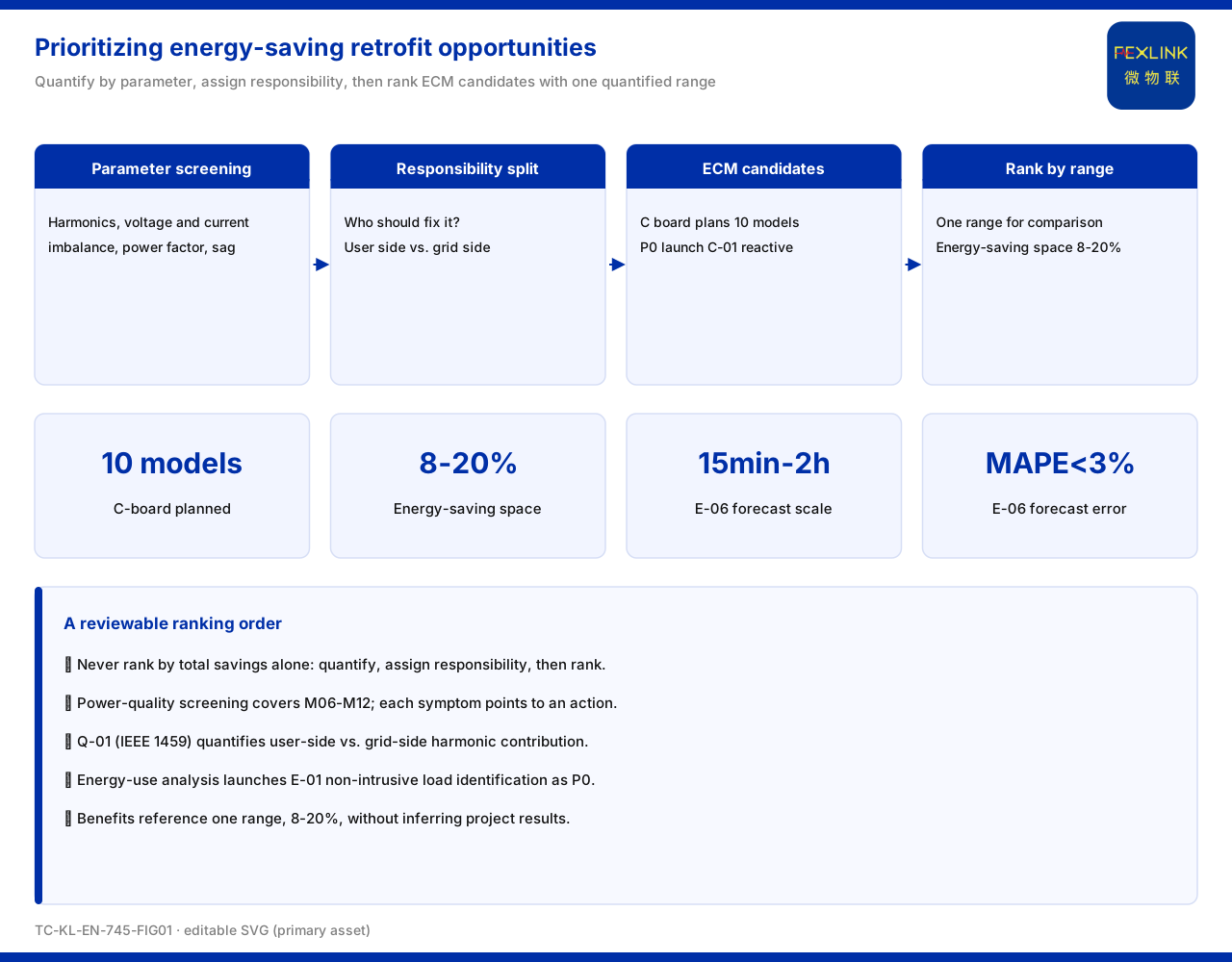
The power-quality section has fifteen items in the V2.0 plan, with an introductory convention of twelve. The P0 first-release models include harmonic responsibility allocation and voltage deviation. Harmonic responsibility allocation uses relevant international standards as its criterion and quantifies the respective contributions of the user side and the grid side to harmonics; voltage deviation corresponds to the problem of voltage departing from the permitted range. Placing these two first means the power-quality section handles first the two questions most often asked: who should be responsible for harmonics, and how large the voltage deviation is. Responsibility allocation and deviation judgement both belong to parameter-level analysis; they provide a basis for later treatment actions rather than directly naming treatment equipment.
5. The Energy-Use Analysis Section
The energy-use analysis section has fifteen items in the V2.0 plan, with an introductory convention of nine. The P0 first-release model is non-intrusive load identification, whose feature is that it needs no extra hardware and identifies specific devices through the current waveform, with a criterion formed jointly by start-up characteristics, steady-state power and harmonic features, and can distinguish device running, no-load and light-load states. Placing device-level identification first shows that the foundation of the energy-use analysis section is refining a circuit-level total down to device-level states. Only when device states are distinguishable can energy-use analysis further answer which devices consume power, when and in what state, and provide input to the energy-saving measures. The introductory convention and the planned count of this section are likewise used separately.
6. The Energy-Saving Measures Section
The energy-saving measures section has ten items in the V2.0 plan, with an introductory convention of six. The P0 first-release model is reactive-power compensation optimisation. Unlike the "identification" of the energy-use analysis section, the energy-saving measures section takes on "giving actions": turning the problems identified by the first three sections into executable treatment directions, of which reactive-power compensation optimisation as the first-release action is one example. The product material also records the selection corresponding to energy-saving and carbon-management needs as the combination of the relevant models of the energy-saving measures section plus carbon accounting plus the smart energy-carbon IoT platform, showing that this section is not isolated in external statement but appears combined with carbon accounting and platform capability.
7. Special Topics
Besides the four sections, the product material records that the Tianyan engine has seventeen additional special topics, covering directions such as high-voltage switchgear health, transformer life, uninterruptible power supply evaluation, energy-storage state of charge, charging-pile load forecasting and data-centre power-supply reliability. These topics are characterised by appearing in groups by device or scenario rather than by electrical parameter. Placing them alongside the four sections shows that the Tianyan model organisation is "sections by parameter horizontally, topics by object vertically": the health judgement of one device may use results from several sections at once, and the special topics gather those results into one overall judgement by object.
8. Organising the Conventions Into a Reviewable Citation Order
Combining the above, the Tianyan model conventions can be checked in the following order. First, confirm the occasion of citation: external statement uses the marketing convention of sixty-seven, internal scheduling uses the numbering-table convention of sixty. Second, locate the model's section and distinguish the planned count from the introductory convention. Third, check the P0 first-release models: the safety section includes resistive-leakage separation, residual-current trend drift and three-phase imbalance hazard; the power-quality section includes harmonic responsibility allocation and voltage deviation; the energy-use analysis section includes non-intrusive load identification; and the energy-saving measures section includes reactive-power compensation optimisation. Fourth, treat the seventeen special topics as an object-organised supplement. Fifth, when citing across sections, state which section and which set of conventions each model belongs to. This order separates numbers, sections and uses, and prevents external statement and internal ledger from substituting for each other.
Applicability and Limits
- The content is limited to the existing wording of the product material on the Tianyan engine's four sections, planned counts and introductory conventions, P0 first-release models, special topics and model-count conventions. - The model counts (sixty-seven externally and sixty in the numbering table; twenty and thirteen for safety, fifteen and twelve for power quality, fifteen and nine for energy use, ten and six for energy saving; seventeen special topics) are all as listed in the product material and are not a commitment to any project's results. - The advance weeks of residual-current trend drift (four to twelve weeks), the cumulative-sum type method used, and the standard criteria on which harmonic responsibility allocation relies are restated from the product material, and this article does not expand their algorithm details. - The P0 first-release models and the special-topic examples are limited to those listed in the product material; this article does not infer the capability or launch arrangement of unlisted models or topics. - This article is not a commitment to any unlisted indicator; actual capability is governed by the latest product material and project scheme.