Direct answer
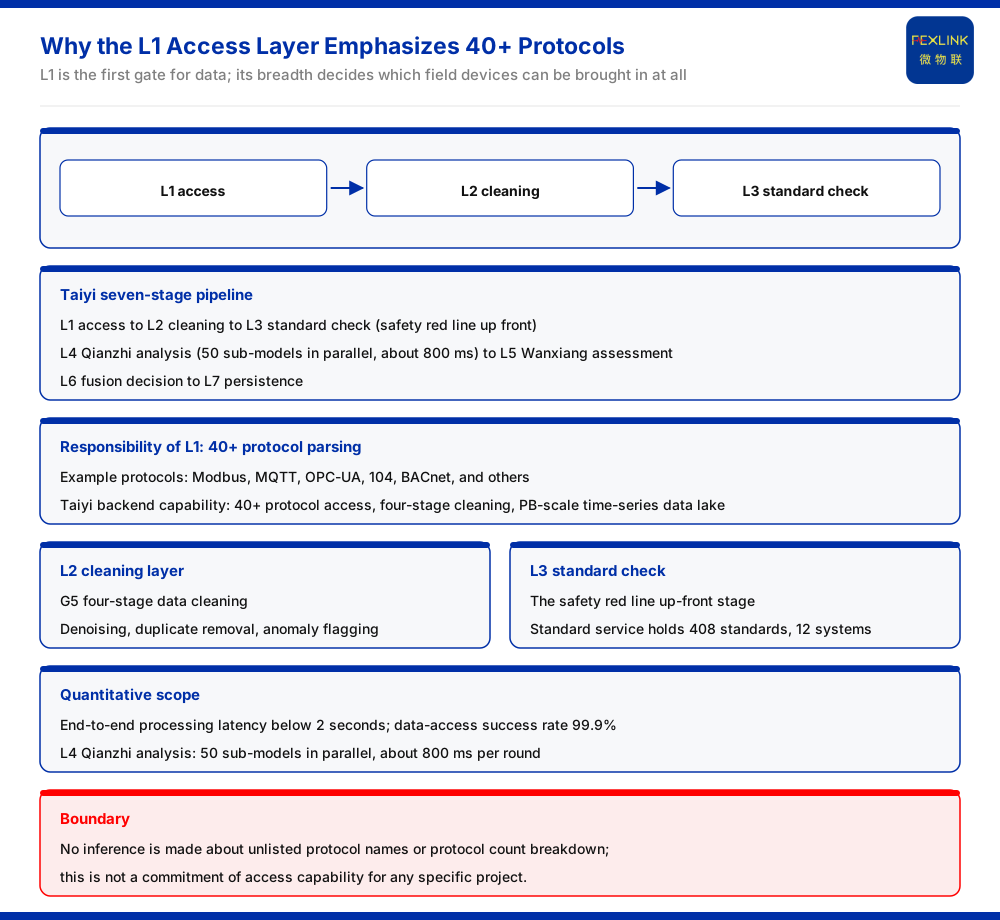
L1, the access layer, emphasises 40+ protocols because it sits at the first gate through which data enter the system: only after field-device protocols have been read in can the later cleaning, analysis, and decision stages have data to work with. The knowledge base defines L1 as the access layer, with a responsibility of 40+ protocol parsing, and gives Modbus, MQTT, OPC-UA, 104, BACnet, and others as examples; it also records that the capability of the Taiyi backend is 40+ protocol access, four-stage cleaning, a PB-scale time-series data lake, and an intelligent data bus. The breadth of protocols directly determines which field devices can be brought in at all, and that is why L1 is emphasised on its own.
Where L1 sits in the pipeline
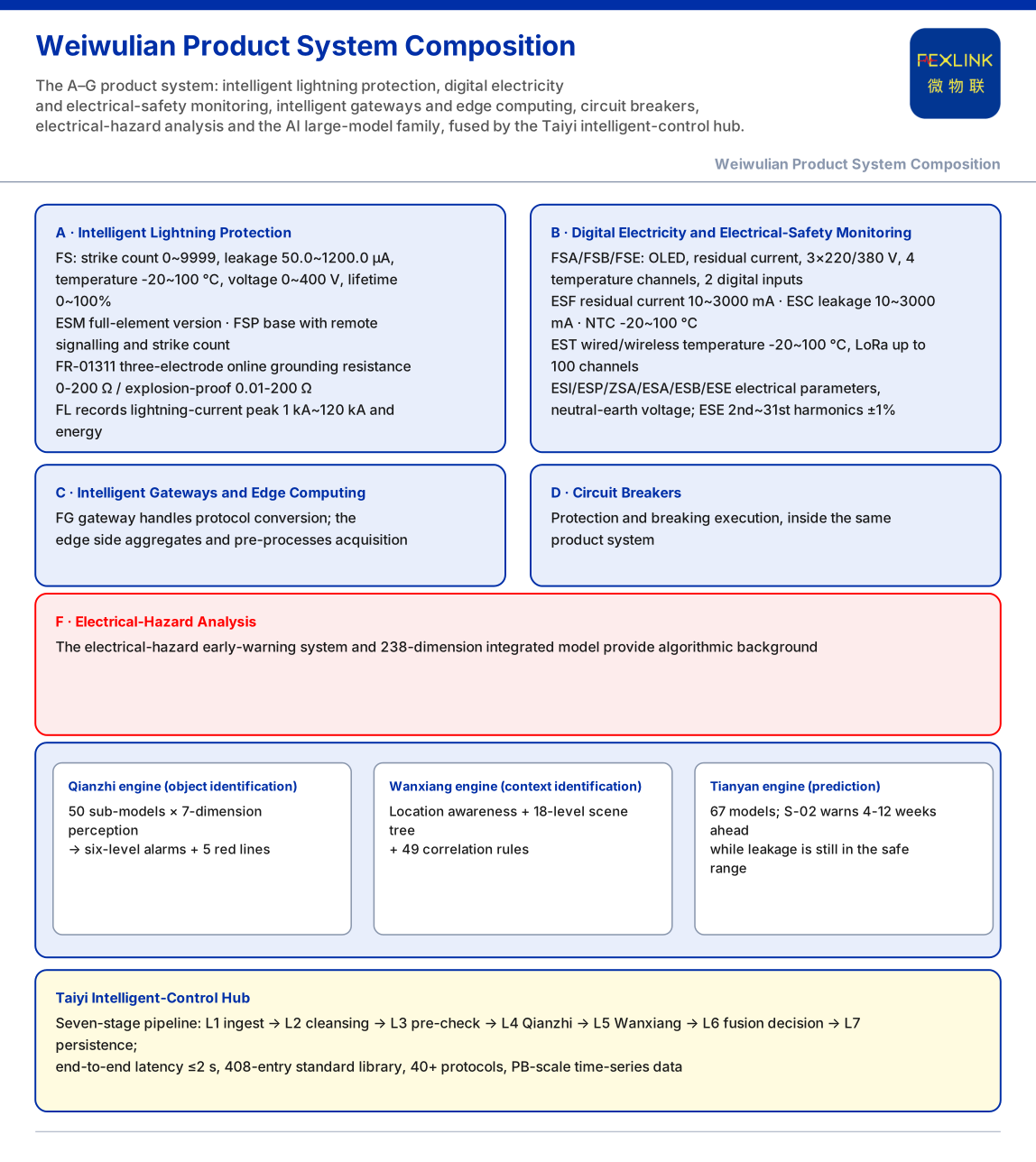
The knowledge base records that the seven-level pipeline of the Taiyi intelligent control hub system is: L1 ingest, L2 cleaning, L3 standard validation (with the safety red line placed up front), L4 Qianzhi analysis (50 sub-models in parallel), L5 Wanxiang assessment, L6 fusion decision, and L7 persistence. L1 is the first level of this chain and the entry point of the whole chain. Data enter here, and every later level is built on the result of L1 access; a protocol the entry point never took in cannot be recovered later. The order of the stages is therefore not cosmetic: it fixes where data quality is established and where analysis may begin.
What 40+ protocols refers to
The knowledge base describes the responsibility of L1 as 40+ protocol parsing and gives Modbus, MQTT, OPC-UA, 104, and BACnet as examples. This shows that 40+ is an access-capability figure expressed as a count, while the example protocols sketch its coverage: it includes both fieldbus-style protocols aimed at devices and transport protocols aimed at platforms. The knowledge base does not list every protocol one by one, and this article makes no inference about protocol names that are not listed. The count states the breadth of the capability; the examples state its character.
Why the access layer has to be broad
Industrial and power sites draw devices from many sources, and each uses a different communication protocol. If the entry point supports only a few protocols, uncovered devices will need an extra conversion stage, or cannot be brought in at all. When L1 emphasises 40+ protocols, it is in essence closing this heterogeneity problem at the entry point: the more complete the set of protocols, the more devices can be connected directly, and the more complete the starting point of the downstream data chain. This is also the division of labour between the access layer and the analysis layer: L1 is responsible for reading data in, not for drawing conclusions from them. Keeping that boundary clear prevents an access capability from being read as an analytical judgment.
After L1: cleaning and standard validation
Two pre-processing levels follow immediately after access. The knowledge base records that the L2 cleaning layer is G5 four-stage data cleaning, comprising denoising, deduplication, anomaly marking, and interpolation and completion; L3 is standard validation, the pre-positioned safety red-line step. The data flow is: sensor data enter through the Taiyi backend and are cleaned, then enter the pre-positioned layer for red-line pre-check, then are handed to Qianzhi, Wanxiang, and Tianyan, and finally are output through the standard service and the decision interface. Placed back in this flow, L1 is at the very front, and the quality of its access propagates level by level downstream. A defect at the entry point is not corrected by later stages; it is carried forward.
The relationship between L1 and the Taiyi backend
The knowledge base records that the Taiyi backend is called the "data bloodstream", with capabilities including 40+ protocol access, four-stage cleaning, a PB-scale time-series data lake, and an intelligent data bus. This and the 40+ protocol parsing of L1 are two statements of the same capability at two levels: L1 is the access level on the pipeline, and the Taiyi backend is the system component that carries this capability. Holding this correspondence clear prevents protocol access from being mistaken for the function of an isolated module. The pipeline names the stage; the backend names the system part that performs it.
Quantified scope of the access capability
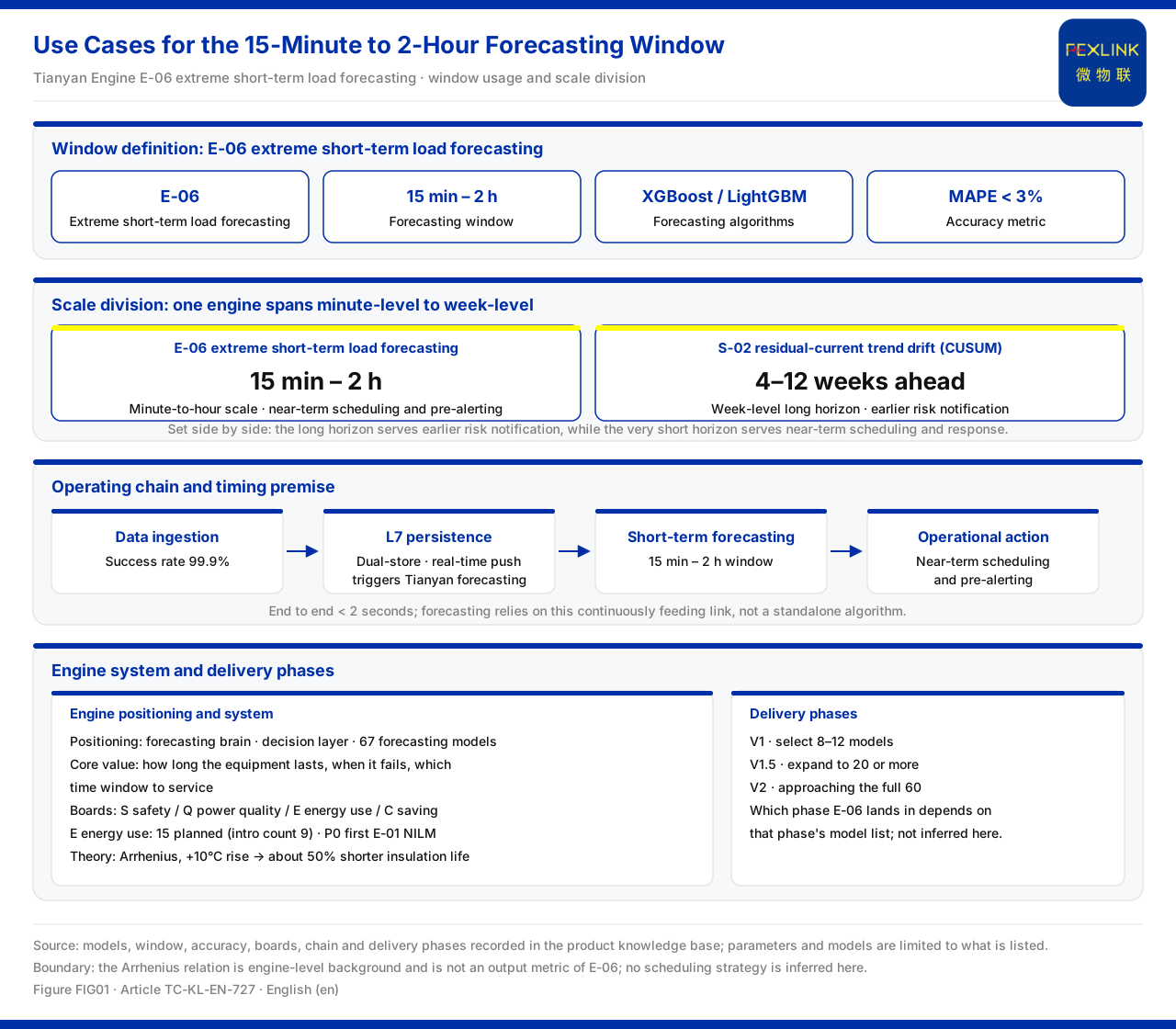
The knowledge base also gives two quantified indicators for the Taiyi intelligent control hub system: an end-to-end processing latency below 2 seconds, and a data-ingestion success rate of 99.9%. Within that system, L4 Qianzhi analysis runs 50 sub-models in parallel in roughly 800 milliseconds per round. These are figures listed in the knowledge base, and this article does not infer the access behaviour of any given site from them. The knowledge base further records that the standard service contains a library of 408 standards covering 12 systems such as GB, GB-T, DL, IEC, and UL, with automatic clause matching and a red line that cannot be relaxed. The figures describe the listed scope of the system; they are not a commitment for a specific deployment.
Scope and limitations
- This article restates only what the knowledge base lists: L1 is the access layer with a responsibility of 40+ protocol parsing, with example protocols Modbus, MQTT, OPC-UA, 104, and BACnet; the Taiyi backend is 40+ protocol access, four-stage cleaning, a PB-scale time-series data lake, and an intelligent data bus. - The names of the seven pipeline levels, the four stages of L2 cleaning, the 50 parallel sub-models and roughly 800 milliseconds of L4, the end-to-end latency below 2 seconds, and the data-ingestion success rate of 99.9% are all limited to what the knowledge base lists. - The 408-standard library and the 12 systems of the standard service are the knowledge base's own figures, and this article does not present them as a determination of compliance for any product. - This article makes no inference about unlisted protocol names, about a detailed breakdown of the protocol count, or about deployment conclusions. - This article constitutes no commitment regarding the access capability of any specific project; actual capability is subject to the latest product documentation and the project solution.