
Direct answer
Power quality at a photovoltaic grid-connection point usually concerns harmonic content, three-phase voltage imbalance, current imbalance, power factor, voltage sags, and voltage fluctuations at the connection point. The knowledge base records that its harmonic fingerprint library contains 14 device fingerprint classes, one of which is the photovoltaic inverter, usable for harmonic-source identification at a photovoltaic connection point; the harmonic monitoring of the power-quality monitor (ESE-22111-R) spans harmonics 2–31 at an accuracy of ±1%. These items are not all of one kind: some describe what can be measured at the point, and others describe how a judgment is reached. Separating the two kinds is what allows the list to be read without turning a measurable item into a verdict, and it keeps identification, acquisition, and analysis as distinct items rather than collapsing them into one figure.
Harmonic-source identification
The harmonic fingerprint library in the knowledge base contains 14 device fingerprint classes, and the photovoltaic inverter is one of them, usable for harmonic-source identification at a photovoltaic connection point. This point shows that harmonic mitigation at a connection point first requires determining which class of device the harmonics come from, and only then fixing responsibility and countermeasures accordingly. Identification and mitigation are therefore successive steps: a reading of harmonic level alone does not tell the operator which device to act on. The library supplies the identification step by class, and the classes are what make the subsequent responsibility question answerable.
Available monitoring horizon
The knowledge base records that the power-quality monitor adds harmonic monitoring on top of phase monitoring, covering harmonics 2–31 at an accuracy of ±1%. This is a harmonic monitoring metric that can be obtained directly on the device side at a connection point. It states the order range that can be acquired and the tolerance of that acquisition, and nothing beyond that range is carried by the monitor entry. As a device-side metric it describes acquisition, not judgment, and it should be read as such.
Available analysis horizon
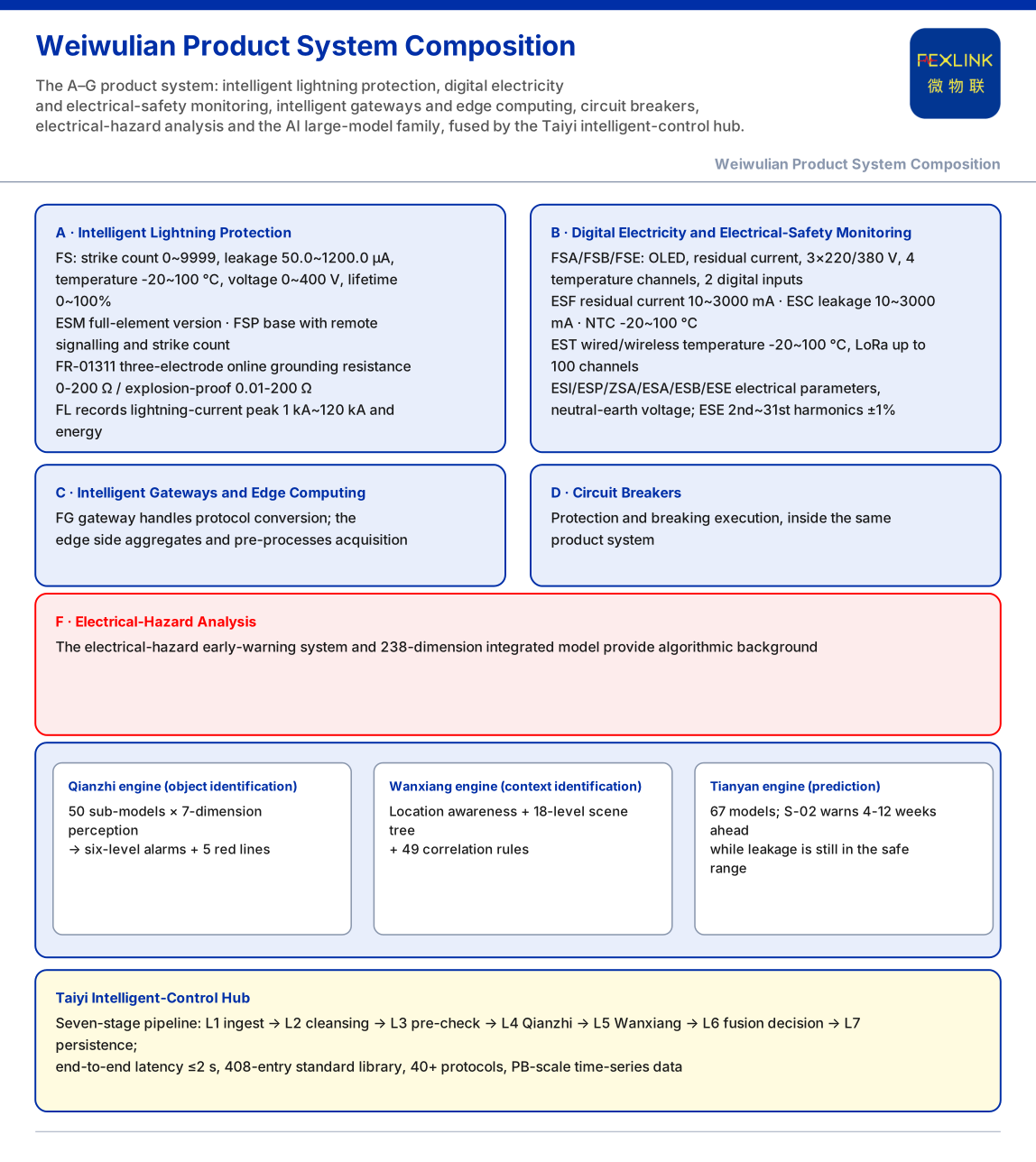
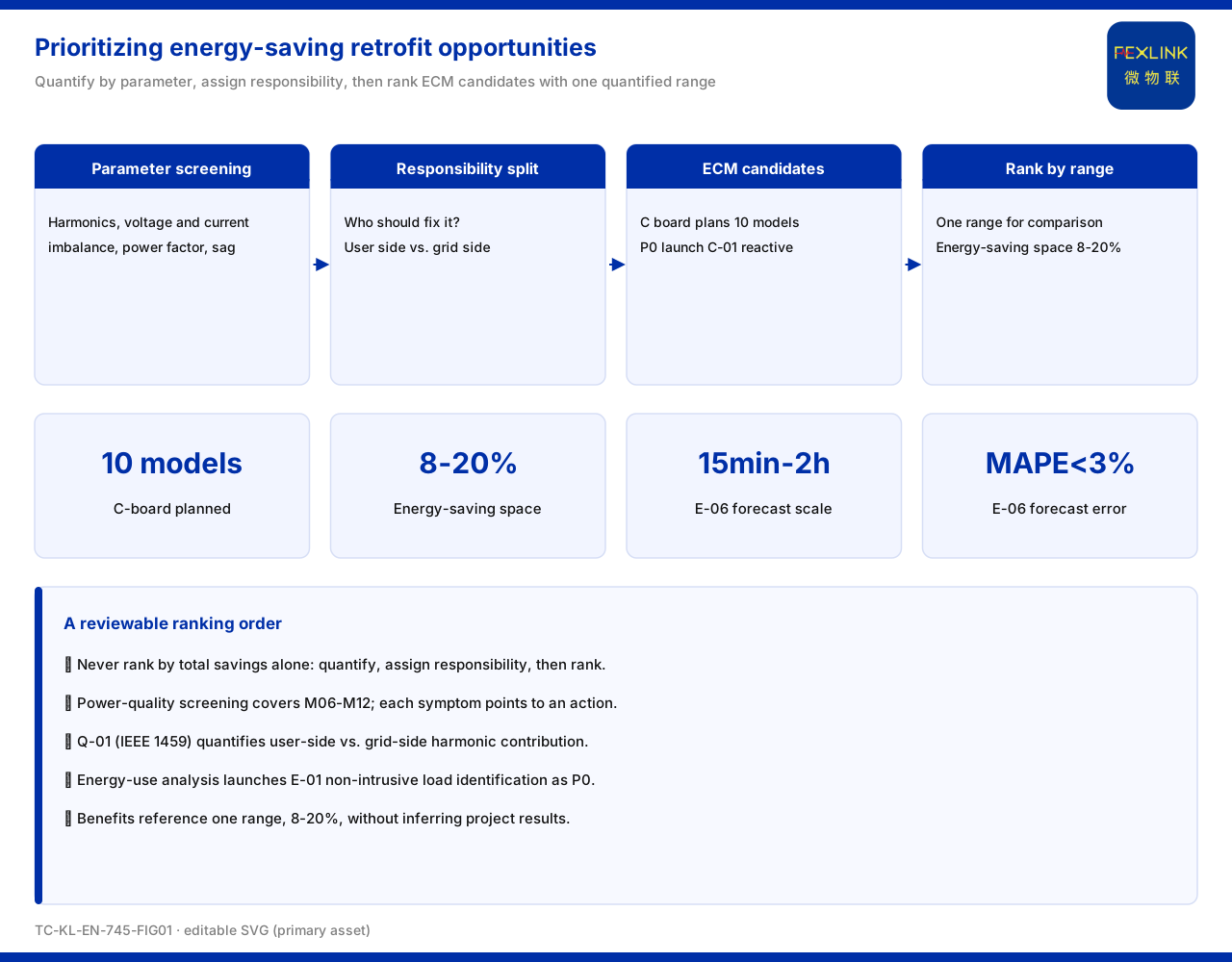
The knowledge base records that the power-quality checkup of the Qianzhi engine is composed of a group of submodels from M06 to M12, covering harmonics (2–50 plus total harmonic distortion), voltage imbalance, current imbalance (sequence components), power factor, voltage sag (ITIC and SEMI F47), voltage fluctuation (IEC 61000-4-15), and interharmonics. The trigger condition for three-phase voltage imbalance is greater than 15%, with GB/T 15543 as the governing standard. This horizon is broader than the device-side harmonic range because it spans several power-quality phenomena, and it belongs to a set of analysis submodels rather than to a single monitor. Its breadth is a property of the analysis block, not a measurement capability of any one device.
Focus points at the grid-connection point
From the horizons available in the knowledge base, power quality at a connection point can be viewed along two lines—a device side and an analysis side. On the device side, the monitor gives the harmonic order and accuracy; on the analysis side, the engine checkup gives the coverage items such as harmonics, imbalance, power factor, sags, and fluctuations. The two lines use different horizons and should be checked separately, rather than equating a device metric directly with an analysis conclusion. Keeping the lines separate is what allows a measured order range and a judgment coverage list to be compared honestly instead of being treated as the same figure. The two can be used together in practice, but only after each has been read on its own terms.
Standard coverage and location awareness
The knowledge base records that the Qianzhi engine covers 13 major standards, including GB/T 12325, GB/T 14549, and GB/T 15543, of which GB/T 14549 is the standard related to harmonics in the public power grid. Standard coverage states the body of standards the engine works against and does not enlarge any of the horizons above; it is a list of standards, not a measurement range.
The knowledge base also records that the location awareness of the Wanxiang engine maintains independent thresholds and risk models for 5 electrical topology position types, namely the public connection point, the main distribution panel, the distribution panel, the feeder line, and the load terminal. The same phenomenon can therefore be judged differently depending on where in the topology it is observed, which is why the position types are listed separately rather than merged into one threshold. Location is thus a parameter of the judgment, not a background detail.
Common misreadings
One common misreading performs harmonic monitoring only and omits harmonic-source identification, ignoring that the harmonic fingerprint library can be used to judge which class of device the harmonics come from. A second applies the harmonic-order horizon of the power-quality monitor directly to the results of the engine checkup, treating an acquisition range as a judgment range. A third handles the voltage-imbalance problem and the harmonic problem together, ignoring the difference between the two in trigger condition and governing standard. Each of these errors drops a distinction that the document keeps between identification, acquisition, and analysis. The remedy in each case is the same: name which of the three is being discussed before drawing a conclusion from it.
Scope and limitations
First, this article restates only what the knowledge base lists and does not infer the test results or mitigation conclusions of a specific connection point. Second, harmonic-source identification is limited to the 14 device fingerprint classes of the harmonic fingerprint library and to the photovoltaic inverter as one of them. Third, the monitoring horizon is limited to the 2–31 and ±1% of the power-quality monitor, and the analysis horizon is limited to the coverage items of M06 to M12 of the Qianzhi engine; the two are not converted. Fourth, the trigger condition and governing standard for three-phase voltage imbalance are limited to what is listed, namely greater than 15% and GB/T 15543. Fifth, standard coverage is limited to the wording of the 13 major standards listed, and the 5 location-awareness types are limited to the names listed in the knowledge base.