
Direct answer
NILM stands for non-intrusive load monitoring, and it can identify devices from their start-up signature. The knowledge base records that the E-01 NILM model of the Tianyan engine requires no additional hardware, identifies specific devices from the current waveform, and combines the start-up signature, steady-state power, and harmonic signature. The start-up signature is therefore only one criterion in the recognition chain, not the sole basis. Reading the entry this way keeps the emphasis where the document puts it: on a joint method and on a device-level target. The name of the technique and the entry for the model agree on that scope, and neither extends beyond it.
Where the start-up signature sits in recognition
The knowledge base describes the recognition method of E-01 NILM as a combination of three feature classes: the start-up signature, steady-state power, and the harmonic signature. These three classes participate together in identifying a specific device rather than each completing the decision on its own. The start-up signature contributes the transient behaviour at switch-on, steady-state power contributes the sustained load level, and the harmonic signature contributes the spectral shape; the document presents them as a joint method, not as a ranked list. This article restates only this combined horizon and does not extend to the specific algorithm, sampling method, or recognition accuracy of any feature class. Naming the three contributions individually is a way of marking the joint method, not a claim that any one of them is sufficient on its own.
A note on wording
"No additional hardware," as used here, means that the recognition method itself does not presuppose dedicated acquisition hardware; its data still come from the current waveform. The knowledge base describes the recognition target as a "specific device," which shows that the goal is to reach device level rather than to stop at aggregate energy statistics. This wording delimits the recognition target and the hardware premise; it does not touch recognition speed or accuracy. The two clarifications matter because the phrase could otherwise be over-read—either as a claim that no sensing exists at all, or as a claim about how well the method performs—and neither reading is what the entry states. The entry fixes what the method uses and what it targets; performance claims are outside it.
Position of E-01 NILM in the product system
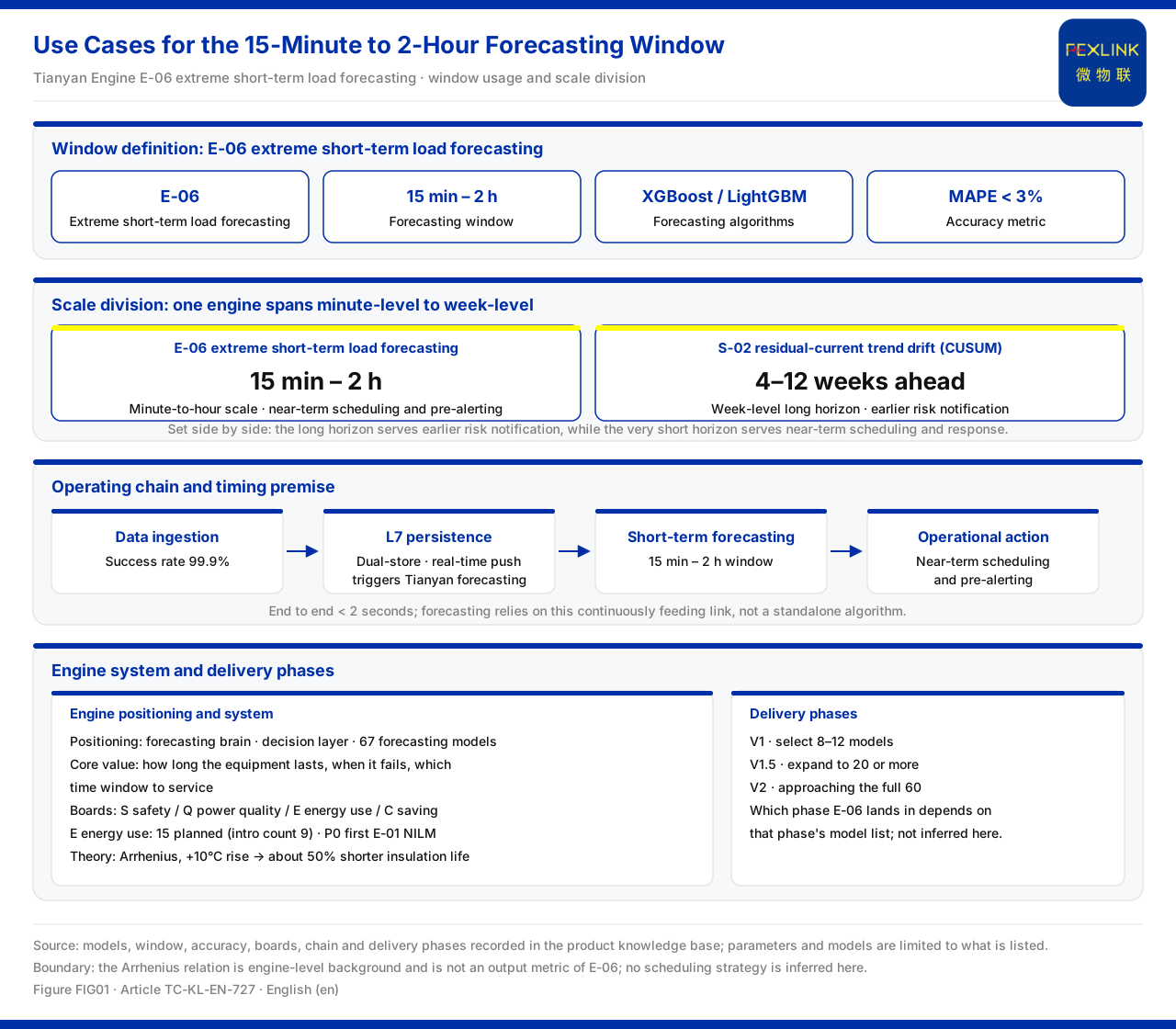
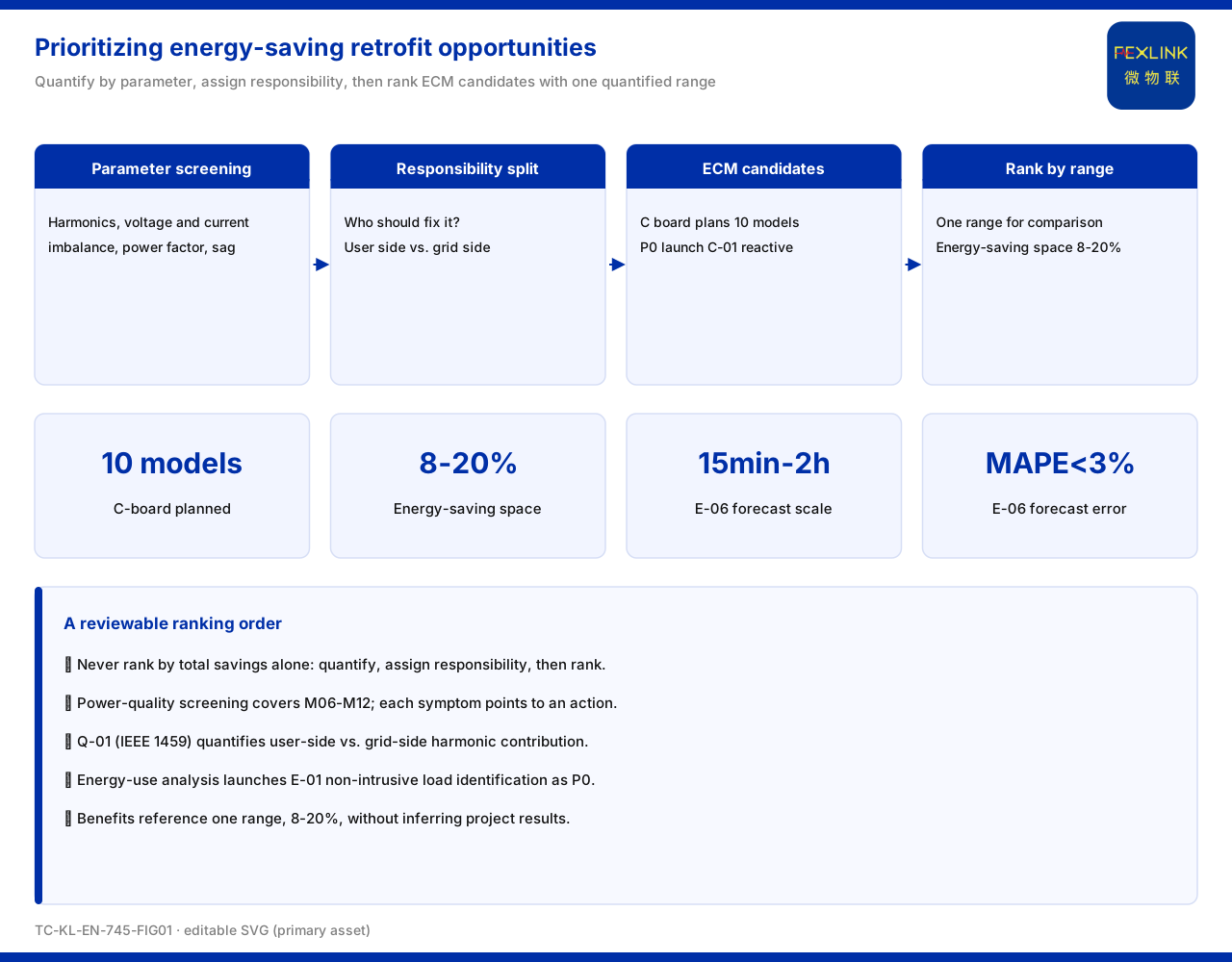
The knowledge base records that E-01 NILM belongs to the E energy-analysis block of the Tianyan engine and is listed as that block's P0 first-release model. The block has a model count of 15, with a documented introduction horizon of 9. In other words, the model is placed at a priority-release position within its block. The block assignment and the release position are two separate pieces of information, and both come from the document's own description of the engine's structure. A model can be important within a block without the block's count changing, and the two facts should be read side by side rather than inferred from one another. The release designation concerns order, while the count concerns breadth; the two answer different questions.
Relationship to the Wanxiang engine's evolution direction
The knowledge base records that the evolution direction of the Wanxiang engine V5.0 is the non-intrusive load fingerprint, with related materials including the Wanxiang Engine Upgrade Technical Plan V5.0 and the Wanxiang V5 NILM advancement plan. The selection comparison table gives the combination for non-intrusive load monitoring as "Tianyan E-01 plus the Wanxiang V5.0 load fingerprint." The capability thus spans two engines, the Tianyan and the Wanxiang. The table's combination is itself the evidence that responsibility for the capability is split across the two engines rather than carried by either one alone. Each engine is listed for what it contributes, and the combination is what the table presents as the complete route.
Relationship to the Qianzhi engine
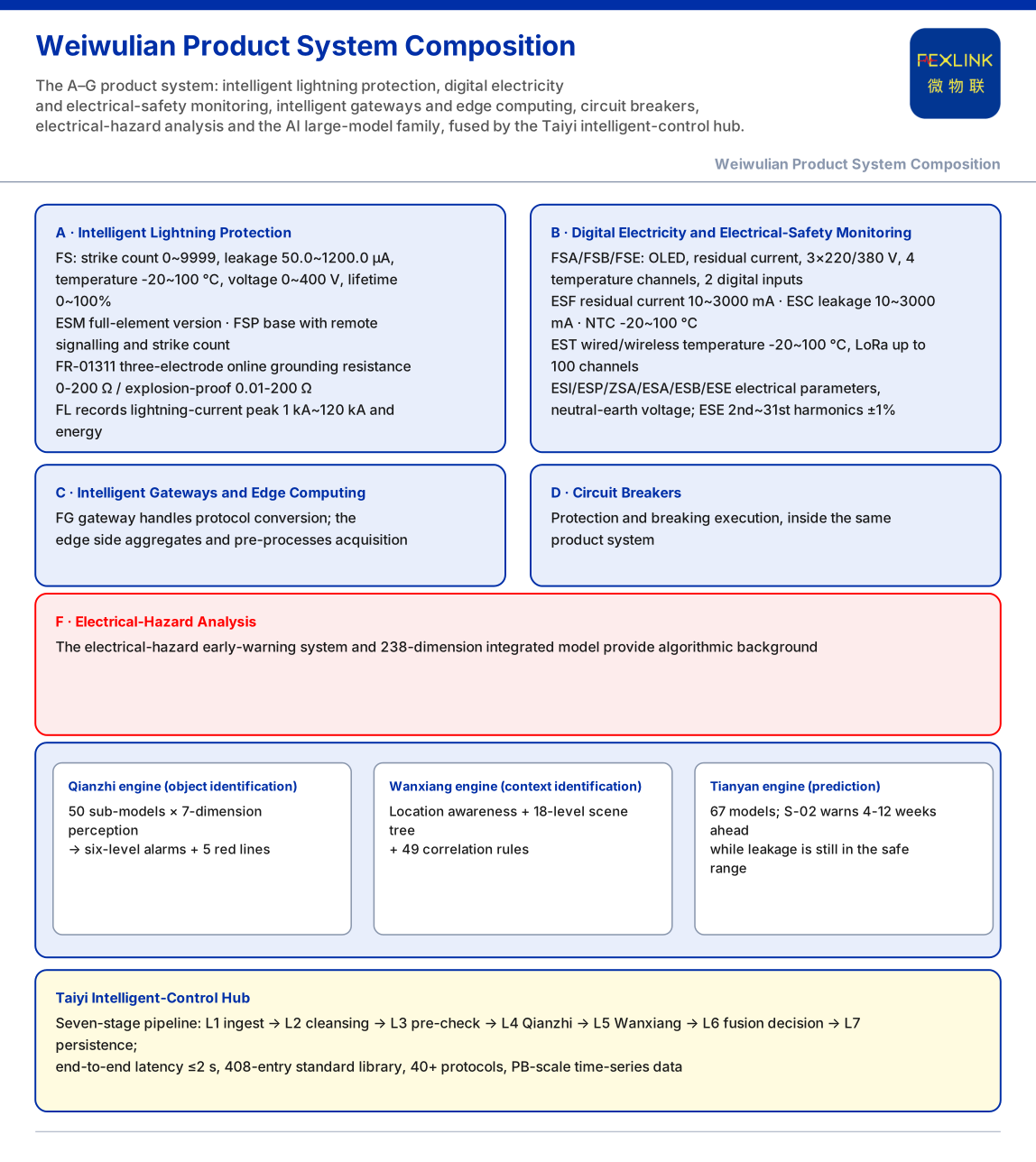
The knowledge base records that the Qianzhi engine currently forms a parameter-level perception system from 20 core submodels together with 7-dimensional sensing. The NILM-related load fingerprint belongs to the evolution direction of Wanxiang V5.0, not to an existing submodel of the Qianzhi engine. Assigning the load fingerprint to an existing Qianzhi submodel would conflict with its block and its evolution status. The distinction between a current submodel and an evolution direction is the point: the one exists in the present architecture, while the other is described as a direction of development. Merging them would credit the present architecture with a capability the document places in a future one. The current architecture and the evolution direction are separate descriptions and should not be conflated.
Common misreadings
One common misreading takes the start-up signature as the only basis for NILM recognition, ignoring that the knowledge base lists a combination of three feature classes. A second counts NILM directly as an existing submodel of the Qianzhi engine, ignoring that it belongs to the evolution direction of Wanxiang V5.0. A third reads the two engines in the selection combination as interchangeable, ignoring their different roles in recognition and in analysis. Each misreading collapses a distinction the document keeps—between features, between submodel and direction, and between the two engines. Distinguishing a feature from a method, a submodel from a direction, and recognition from analysis keeps the entry inside the scope the document gives it.
Scope and limitations
First, this article restates only the recognition method listed in the knowledge base—no additional hardware, identification of specific devices from the current waveform, and a combination of the start-up signature with steady-state power and the harmonic signature—and does not extend to algorithm, sampling, accuracy, or installation parameters. Second, the block assignment and P0 first-release positioning of E-01 NILM are limited to what the knowledge base lists. Third, the model count of the E energy-analysis block follows the document's horizon, that is, 15 (with an introduction horizon of 9). Fourth, statements about Wanxiang V5.0 are limited to its evolution direction and the listed materials. Fifth, the relationship between NILM and the existing submodels of the Qianzhi engine is limited to what the knowledge base lists, and the two are not merged into one another.