
Many distribution systems already have electrical parameter acquisition capability and can see data such as voltage, current, power, energy, power factor, and harmonics. Yet problems still arise on site: plenty of data but few conclusions; plenty of alarms but unclear causes; plenty of curves but little action.
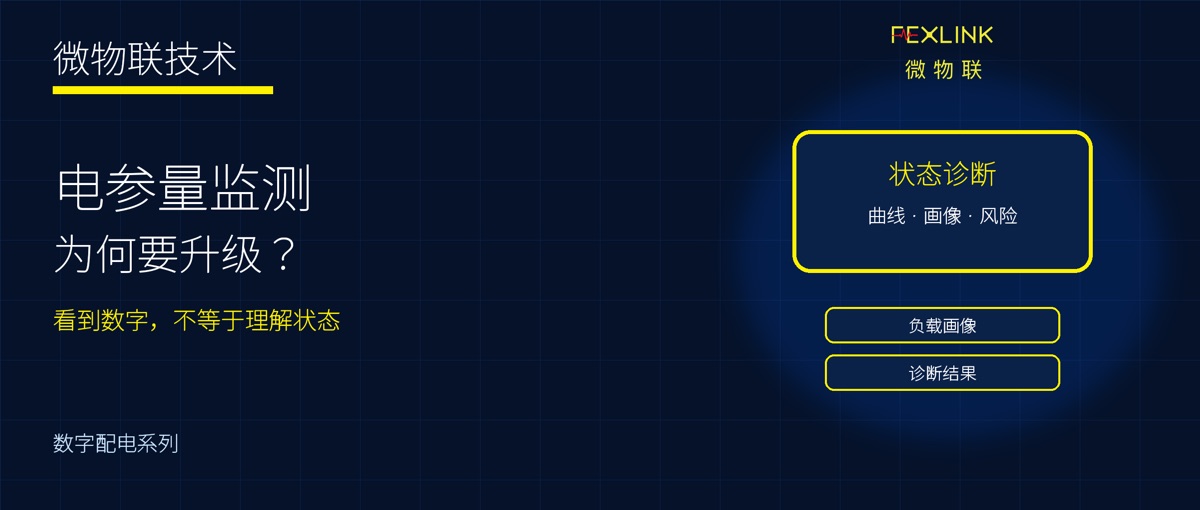
This shows that digital distribution cannot stop at "how much data has been acquired" but must move on to "what status does this data reveal."

1. What Did Traditional Electrical Parameter Monitoring Solve?
Electrical parameter monitoring solves the foundation of visualization. It lets users know whether the current voltage is normal, whether the current is excessive, how the power load changes, what the energy consumption is, and whether the power factor and harmonics are abnormal.
These data are very important and form the foundation of digital distribution. But baseline data do not automatically equal diagnostic capability. Without models and logic, a platform merely moves field numbers onto a screen.

2. Why Isn't Looking at Electrical Parameters Alone Enough?
Seeing the current rise does not necessarily tell you whether it is normal production, an equipment abnormality, or an overload risk; seeing voltage fluctuation does not necessarily tell you whether it is power supply quality, load impact, or a contact problem; and seeing a temperature rise does not necessarily tell you whether it is an environmental effect or a connection hazard.
The hard part of digital distribution is explaining the causes behind the numbers. Otherwise, O&M personnel still have to hunt for clues across numerous curves based on experience.

3. What Questions Should Status Diagnosis Answer?
Status diagnosis should answer at least five types of questions: whether the equipment is healthy, whether the line is abnormal, whether the load is reasonable, whether the risk is rising, and whether maintenance is needed. It focuses not only on the current value of data but on long-term trends, pattern changes, and anomaly combinations.
For example, if the current of a circuit gradually rises, the temperature rises in sync, and harmonics change noticeably, it may indicate a load or contact status problem; if voltage fluctuates frequently while equipment alarms increase, attention should be paid to power supply quality and the impact on sensitive equipment.

4. How Does Digital Distribution Build Diagnostic Capability?
Digital distribution needs to combine electrical parameters, equipment status, environmental conditions, and O&M records to form load profiles, anomaly patterns, risk scores, and handling recommendations. It is not an upgraded version of remote meter reading, but an interpretation system for the operating status of the distribution system.
Edge devices are responsible for high-real-time acquisition and preliminary computation, while the platform side is responsible for trend analysis, cross-site comparison, and O&M closure. Only by combining the two can the system move from monitoring to diagnosis.

5. How Does FEXLINK Approach Digital Distribution?
FEXLINK believes that the core of digital distribution is not "devices being online," but "status being knowable, risks being assessable, and energy efficiency being optimizable." What FEXLINK aims to do is produce data from electrical signals that can be used for diagnosis, early warning, and optimization.
When distribution data can explain equipment status, line risk, and load patterns, digital distribution truly gains management value.
Conclusion: Digital Distribution Must Move from Seeing Numbers to Understanding Status
Electrical parameter monitoring is the foundation of digital distribution, but not the end point. True digital distribution turns data into diagnosis, diagnosis into action, and action into a long-term O&M asset.